In his twenty-fifth year of cinema, Karan Johar brings Rocky Aur Rani Kii Prem Kahaani forward by looking back at his earlier films. Written by the trio of Ishita Moitra, Shashank Khaitan, and Sumit Roy, the film is a love story rooted in traditional values but gets a modern makeover. Swad Wahi, Soch Nayi. The film stars Ranveer Singh as Rocky and Alia Bhatt as Rani—the eponymous couple of the prem kahaani. Rocky is the scion of the (Punjabi) Randhawas; Rani is the star journalist daughter of the (Bengali) Chatterjees. The duo starts living in each other's house to convince their families that they are suited for each other; after all, family is often the backseat driver in every relationship. The cross-cultural clash allows the film to emphasize that times have changed. It is all about loving your parents, but that love has to be earned. Respecting your parents does not have to come from fearing them.
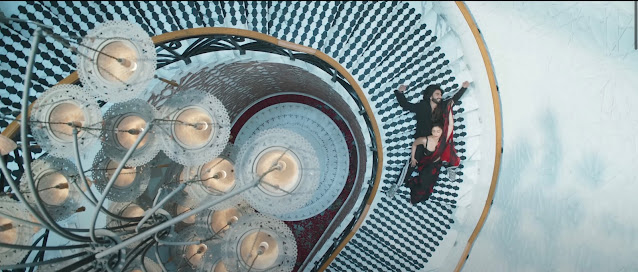
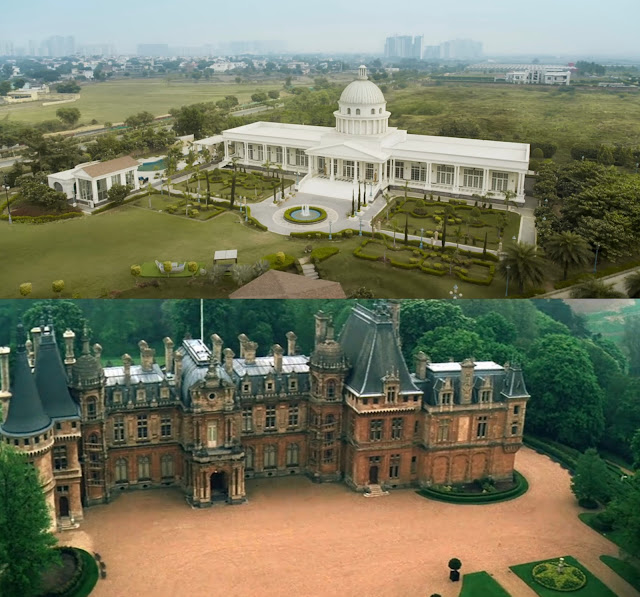
Rocky Aur Rani Kii Prem Kahaani is the antidote to Johar's own Kabhi Khushi Kabhie Gham. This film challenges the ideology presented in his second film. Many elements and sequences of Rocky Aur Rani Kii Prem Kahaani are similar to or an inversion of Kabhi Khushi Kabhie Gham. Rocky Aur Rani Kii Prem Kahaani opens with the house of crazy rich Indians—the Randhawas—who live in Delhi in what seems to be a replica of the White House. The film makes a joke out of it. The crazy rich Indians of Kabhi Khushi Kabhie Gham—the Raichands—also lived in Delhi, but their house, in all seriousness, was the Waddesdon Manor in the United Kingdom, which had no relation to Delhi. The rich Randhawas of Rocky Aur Rani Kii Prem Kahaani are engaged in the business of selling sweets; however, it was the poor family in Kabhi Khushi Kabhie Gham, the Sharmas, who owned the mithaai ki dukaan.
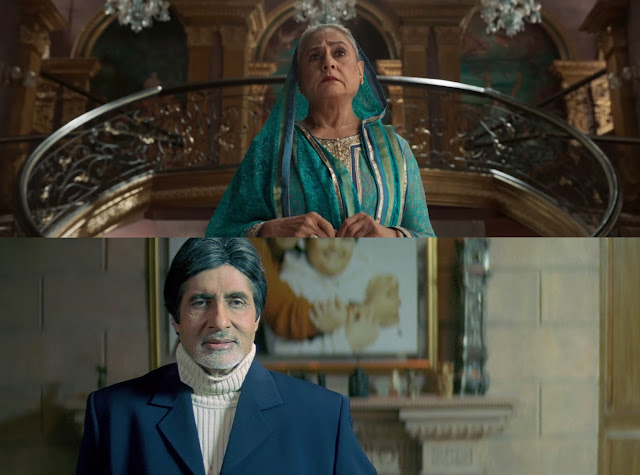
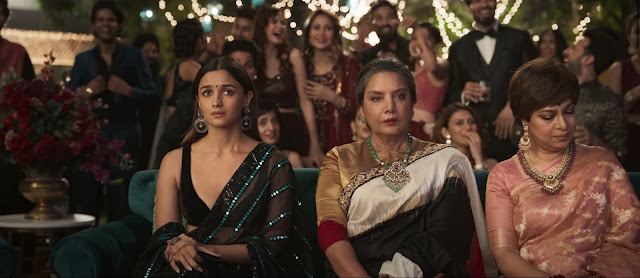
The family matriarch of the Randhawas is Dhanlakshmi Randhawa, who is played by Jaya Bachchan. It is her writ that runs in the family. The family patriarch of the Raichands is Yashwardhan Raichand, who is played by Amitabh Bachchan (the reel- and real-life husband). Not only are their names similar (dhan), but even their thoughts and beliefs are similar. At one point, Dhanlakshmi even says Yashwardhan's iconic dialogue—Keh diya na, bas keh diya.
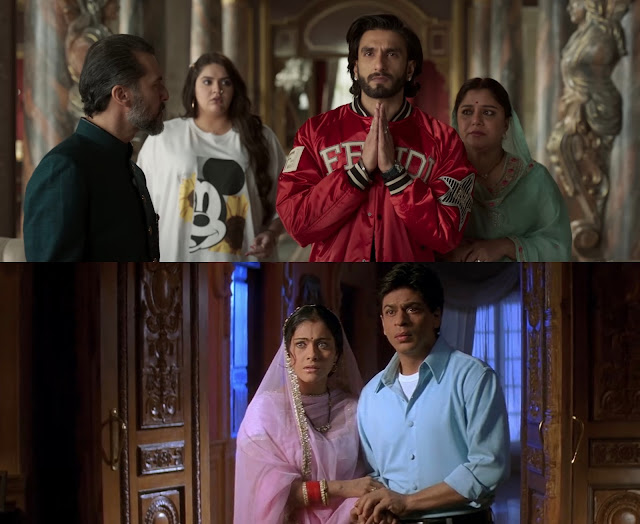
At one stage in the film, Rocky proposes to his family that Rani should live in their house for three months. After some trepidation, Dhanlakshmi relents. She tells her son and Rocky's father, Tijori (Aamir Bashir), that she agreed because if she had not, then Rocky, their family's sole heir, would leave them, and there would be no one to take care of the business. This was precisely what happened in Kabhi Khushi Kabhie Gham when Rahul (Shah Rukh Khan) left the house after he eloped with Anjali (Kajol) and moved to London. When Rahul comes home after his wedding, Yashwardhan tells him that he has proved that he is not his blood. Rahul was an adopted child, but never made to feel like one, but these words broke their relationship. Rahul silently leaves. During the final moments in Rocky Aur Rani Kii Prem Kahaani, Dhanlakshmi says the exact words to Rocky, that he can't have the same blood as her. Rocky schools her, "Khoon ke rishtey aur mohabbat ke rishtey ek jaise nahi hote. Mohabbat ke rishtey banaye jaate hain." The funeral scene in the film is also a throwback to Kabhi Khushi Kabhie Gham when Tijori (the father) joins hands with Rocky (his son) to light the pyre of his father. In Kabhi Khushi Kabhie Gham, Rahul (the son) joined hands with Yashwardhan (his father) to light the pyre of his grandmother.
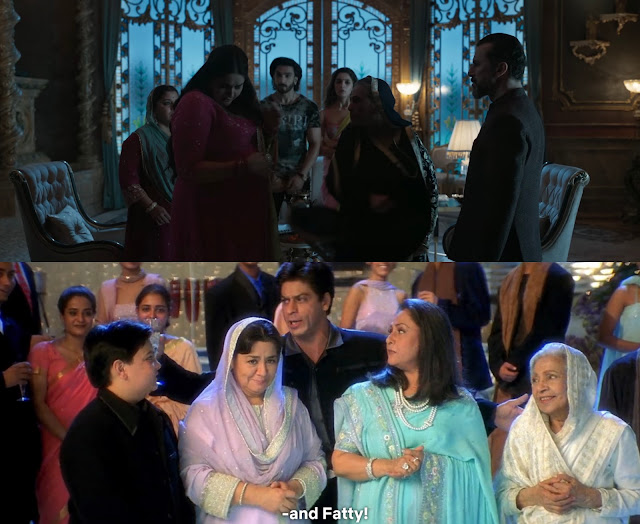
In Rocky Aur Rani Kii Prem Kahaani, there is Rocky's sister, Gayatri (Anjali Anand), who is called Golu because she is overweight. Her family members' continual ill-treatment and fat shaming made her suffer from self-doubt. She calls out the despicable behavior of her family. In Kabhi Khushi Kabhie Gham, Rohan (Kavish Majumdar) was called Laddoo because he was a bit overweight. He was fat-shamed by his brother all the time. The film treated him as a comic trope.
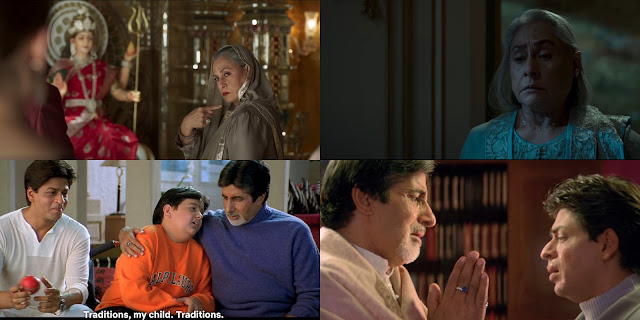
In Kabhi Khushi Kabhie Gham, Yashwardhan Raichand gave the excuse of tradition. He said that his grandfather attended the university, so his sons had to attend the same university. In Rocky Aur Rani Kii Prem Kahaani, it is Dhanlakshmi who propagates the tradition. Her mother-in-law was rude to her. So, she behaves in the same way with her daughter-in-law, Punam (Kshitee Jog). In Kabhi Khushi Kabhie Gham, Yashwardhan is given a redemption arc and comes around. However, Dhanlakshmi is not given such treatment here. She is left feeling lonely because the film suggests that some people, especially those with huge egos, cannot truly change.
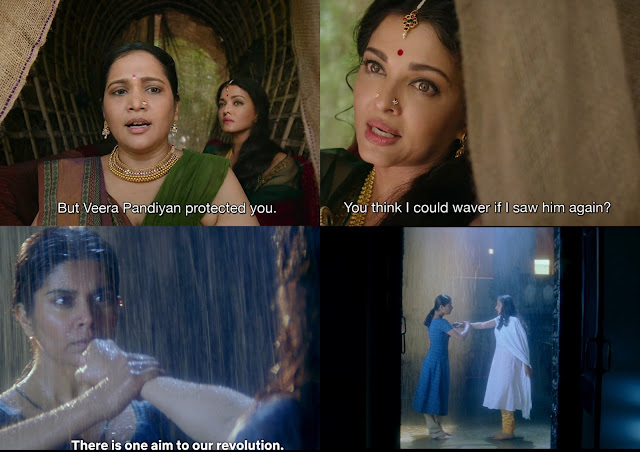
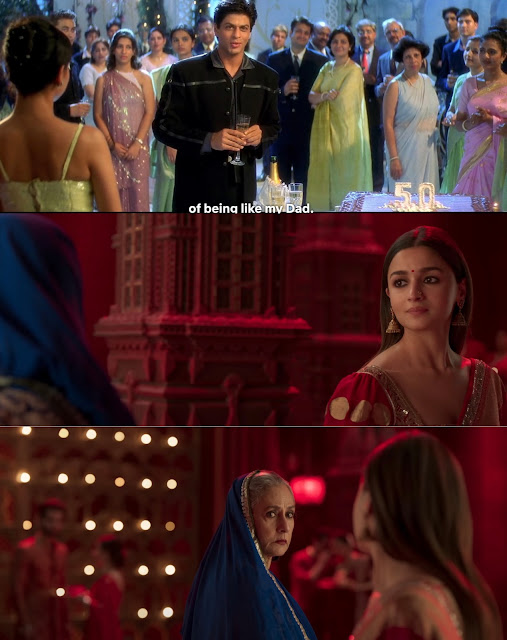
In Kabhi Khushi Kabhie Gham, there was a moment in the film when Rahul enacted his father's style to try to become like him. He wanted to be his father. In Kuch Kuch Hota Hai, the young Anjali (Sana Saeed) tries to become the old Anjali (Kajol). In Rocky Aur Rani Kii Prem Kahaani, old and young people also compare themselves. Early in the film, Rani tells Dhanlakshmi that they are alike. Dhanlakshmi disagrees and says their beliefs are different. Toward the end, Rani breaks her relationship with Rocky after the Durga Puja celebration because she believes the one who could not stand for her mother how will he stand up for her. After all, he is the son of his toxic father. Again, her grandmother Jamini (Shabana Azmi) intervenes and tells her story of her abusive husband, who used to beat Rani's father, Chandon (Tota Roy Chowdhury). Still, he turned out different from his father. Rocky Aur Rani Kii Prem Kahaani points out that we are not our parents, and we can break the shackles of intergenerational trauma cycles. How our parents made laddoos is not the only way to make them. There are other ways to make them.
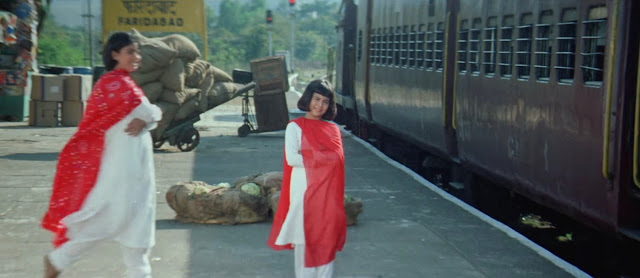
The incomplete love story of Jamini also finds resonance in the love story of Rani. Jamini tells Rani that she could not get a chance to fulfill her love story because of family, but she advises Rani to fulfill hers. She does want her to end up like her. Rocky and Rani did not make the same mistakes that their grandparents did. Their love story will not remain incomplete because of their family.
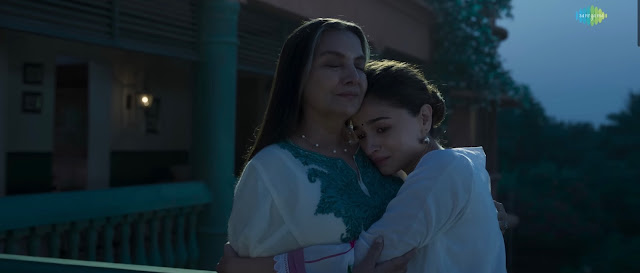
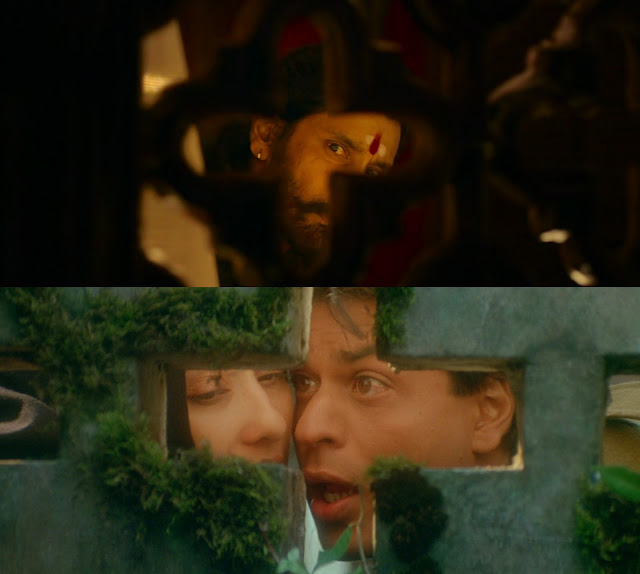
The theme of unrequited love, a motif in Johar's oeuvre, again comes to the fore in Rocky Aur Rani Kii Prem Kahaani. Jamini had fallen in love with Rocky's grandfather, Kunwal (Dharmendra), in 1978 during a trip to Shimla. They spent seven days together, which gave them a lifetime of love. Rocky finds a photograph of Jamini and tries to reunite her with Kunwal. This premise is not very different from Kuch Kuch Hota Hai, where Anjali reads her mother's letters to reunite her father, Rahul (Shah Rukh Khan), with his college friend Anjali (Kajol). A few other moments keep reminding us of Johar's first film. Before leaving college, Anjali had given her red dupatta to Tina (Rani Mukerji). Here, Jamini sends Kunwal a red muffler. Yeh Laal Rang Kab Mujhe Chhodega. At another point, Rocky and Rani stealthily bring Jamini to make her meet Kunwal using the ladder, just like the way Rahul came to meet Tina in college.
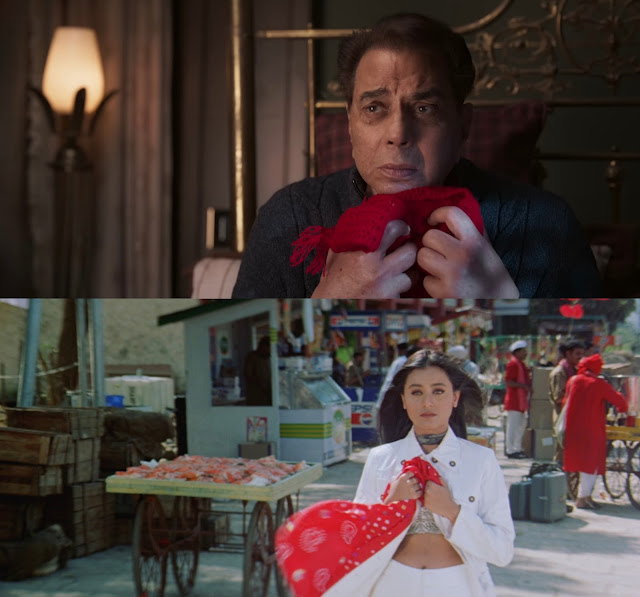
Laal mere dil ka haal hai, kya Subhash Ghai ki picture Taal hai.
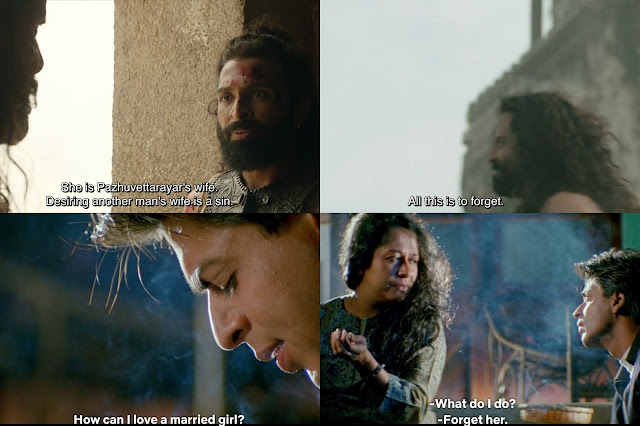
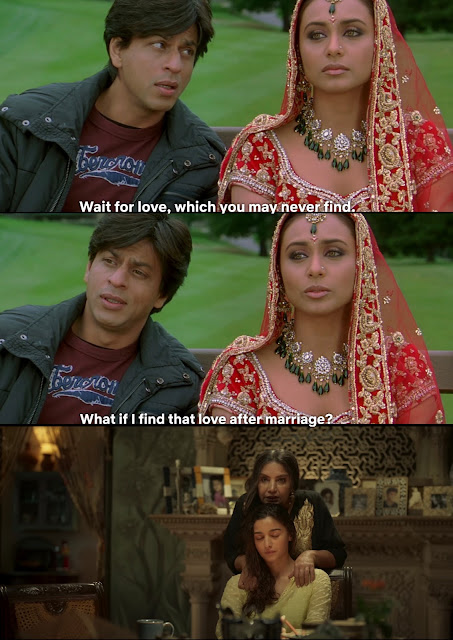
The story of Jamini, however, bears more resemblance to that of Maya (Rani Mukerji) from Kabhi Alvida Naa Kehna. In the introduction scene of that film, Maya meets Dev (Shah Rukh Khan), and they discuss the concepts of pyaar and mohabbat. Maya is not sure about her marriage to Rishi (Abhishek Bachchan) and wonders what if she finds her soulmate after her wedding. As things turn out, she does find love with Dev many years after her wedding. They have an affair but then decide to part ways. However, their families find out about the affair, leading to an irreparable breakdown in their marriages. Likewise, Jamini finds love with Kunwal many years after her wedding. They both were trapped in loveless marriages. When they met at a conference, sparks flew. "Kabhi kabhi do pal ka saath bhi aap ko zindagi bhar ka mohabaat de jaata hai," she says. He became her soulmate. She says, "Pehli baar laga jaisa koi meri rooh ko pehchanta hai." Rooh—the word for soul. At Kunwal's cremation, she again says that he was her soulmate. However, they had decided to not be together because of their families and remained trapped in unhappy marriages all their lives, waiting for love. Kabhi Alvida Naa Kehna is even more audacious because it suggests that people can stray in marriages, even with great partners. However, what is admirable about Rocky Aur Rani Kii Prem Kahaani is that the film portrays the romance between two older individuals, who are often not afforded the same luxury in films. They are even shown kissing each other.
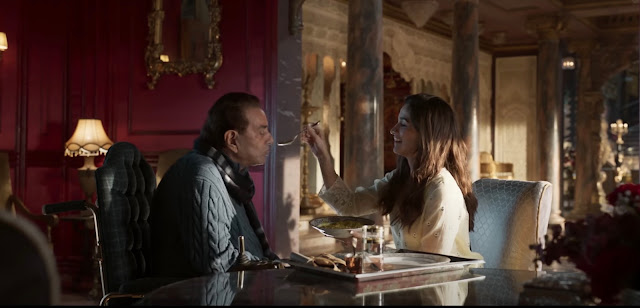
Jamini and Kunwal also get relive their romance through the medley of old songs in the film. Rani says that the love that her thakuma (grandmother) has for these old songs is actually for the memories she associates with the songs. Memories, in fact, play a particular part in the film. After his accident, Kunwal becomes unwell, and his memories come and go. Rocky brings back Jamini in the hope that memories of love can heal him. At another point, Tijori is surprised that his father remembers Rani by her name. He never heard his name being called by him. When Rani goes to Kashmir, the song Tum Kya Mile plays out in her memory. When Somen (Namit Das) hugs her, the memory of how Rocky used to hug her played in her mind.
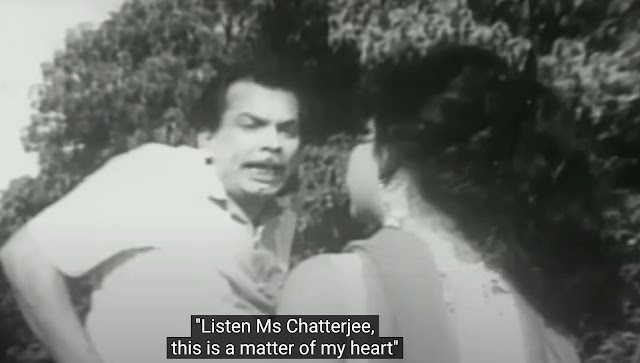
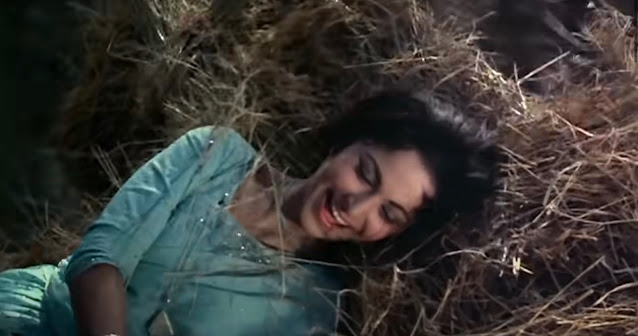
The old songs also reflect Johar's love for Hindi cinema. In Bombay Talkies, he used one of his favorite songs, Lag Jaa Gale. He added many more songs to Ae Dil Hai Mushkil. However, the use of old melodies in Rocky Aur Rani Kii Prem Kahaani works way better. There are songs from every era. They blend seamlessly when Jamini and Kunwal relive their old days. Yeh Laal Rang Kab Mujhe Chhodega from Prem Nagar becomes the calling of Kunwal early in the film. Later, Kunwal starts singing Abhi Na Jao Chhod Kar from Hum Dono, and both women—Jamini and Dhanlakshmi—are thrown off their feet. Later the same song becomes the proposal song of Rocky and Rani. There were some other great uses of songs in the film. Rocky uses Aaja Mera Gaadi Me Baith Jaa; later, Rani uses the same song. This song is from Miss 420, starring Sheeba, who appeared in the film as the woman Kunwal assumed to be Jamini. One of the other charming moments was Rani's birthday when Rocky takes her to the old shop. He plays Suno Suno Miss Chatterjee from Baharen Phir Bhi Aayengi.
One of the best song scenes in the film is related to Rocky's mother, Punam, who secretly sings when no one is watching her. She wanted to become a singer, but then she got married. Her dream remained a dream. "Sapnon se behtar toh samjhaute hain na, kam se kam roz toh nahi tootate," she says to Rani. Some of Ishita Moitra's dialogues are lovely. (Remember the samjhauta moment in Kuch Kuch Hota Hai. Meri beti samjhauta karegi aur pyaar nahi, yeh toh maine kabhi socha hi nahi tha.) Rani signs her up for an audition at a singing competition. She is angry at Rani for putting her in trouble, but then she shows some spine and decides to go. At the audition, she sings Aaj Phir Jeene Ki from Guide, which is a song in which a woman Rosie (Waheeda Rehman) sings about her newfound freedom. When the line "Tod ke bandhan" comes, Punam takes out her ghoonghat, as if she is also breaking the bandhan. And, then, she gets to complete the words in front of her husband. It is a beautiful moment. And, during the film's last few moments, when she and Tijori go to Rani's house, she no longer wears the ghoonghat. It also echoes Rani's earlier comment in the film when she said that she felt suffocated by the ghoonghat that her mother and grandmother wore. The ghoonghat is now gone.
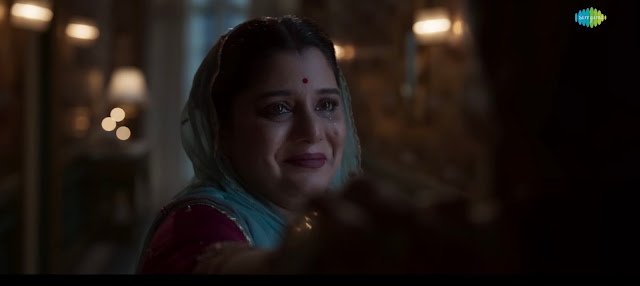
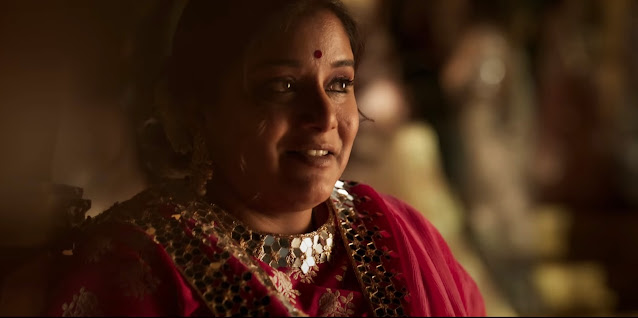
The ghoonghat is gone.
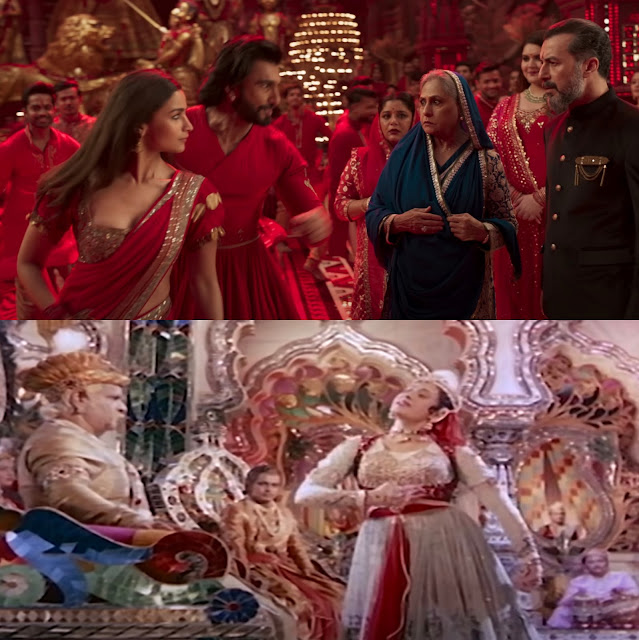
Other echoes in Rocky Aur Rani Kii Prem Kahaani keep coming back in the narrative. In the opening moments, Rocky dances on Heart Throb. He asks his friend to watch out for his family because they do not like his dancing. Later, after meeting Rani, he invites her to an akaadha where he will be dancing. It does not seem that he has lachak in him, Rani tells him. The bodybuilder Rocky then displays his lachak on What Jhumka. Then, he finds out that Rani's father, Chandon is a Kathak dancer—a profession that is not as common with men. Chandon believes that men of today do not have the rhythm. Girls like the rhythm of their men. Once Rocky starts living with the Chatterjees, and learns more about dance. Izzat kabhi aadhi nahi hoti. Later, Chandon takes on the stage at a Punjabi wedding and dances with full fervor on Kahe Chhed Mohe from Devdas. The audience, not used to seeing a man perform a Kathak dance with grace and elegance, makes fun of him. At home, Chandon recounts his life story, where he had been humiliated for his passion for dance since his childhood. His father even hit him. But ultimately, his mother encourages him because "Hunar ka koi gender nahi hota." It is my favorite sequence from the film, and Tota Roy is magnificent in it. It is so moving the pain that people carry in their hearts. This also seems to be the personal story of Johar, where he has recounted in interviews that he used to love dancing as a kid but was mocked for the same. Finally, this dance trope culminates during Durga Puja, where both these men—Chandon and Rocky—dance together on Dola Re from Devdas. The iconic dance was filmed on two women—Aishwarya Rai and Madhuri Dixit—in the original film. Two men dance to the same song, as they said, hunar ka koi gender nahi hota. And then, Rocky dances again with Rani in front of his family on Dhindora Baaje Re which is inspired by Jab Pyaar Kiya To Darna Kya from Mughal-E-Azam. Arey ishq kiya toh sharm kya, they sing and dance without fear, with all the lachak and rhythm, while Dhanlakshmi looks on. The dancing arc that started in the beginning ends with defiance.
This brings us to the terrific performance of Ranveer Singh as Rocky, who is truly the heart throb of the film. (Side note: The lyrics of Heart Throb are pretty catchy. Bhed bhav nahi karta main, kaliyon mein aur phoolon mein.) Rocky has the charm of Bittoo from Band Baaja Baaraat without his street smartness. He is into bodybuilding, but at the same time, he calls himself 'fragile.' He is sensitive as he is hurt by people making fun of him. His gold-plated name card matches his heart of gold. The color of the clothes he wears matches the color of his cars. He does not seem to hide anything. Whatever he has in his heart, he says it. When Rani's family questions her on the suitability of Rocky, Rani tells them that he has a good heart. In her fight between the heart and the mind, she decides to go with the heart and chooses a man who has a good heart. I kept wondering if there was some other actor, would he have made Rocky as likable as Ranveer does and making us forget the flaws of his character.
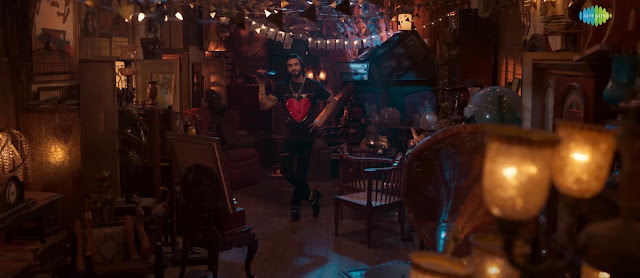
Rocky speaks English in his peculiar style. It was not clear why would the third generation of a wealthy family who is born and brought up in the poshest parts of Delhi not be able to speak good English. He is also not very smart in terms of general knowledge. He fails to answer the question about the president of India. It was the same question that Alia Bhatt incorrectly answered in her infamous Koffee With Karan episode. Therefore, the film educates him (and the audience) on racism, feminism, and patriarchy. At the same time, it does not judge him harshly because he is the way he is because he was told those things from childhood. His speech on cancel culture is a plea to treat others with kindness because nobody is perfect. Na woh perfect hai, na hum. Aur pyaar kahan perfect hota hai. In this aspect, the film does not portray the Bengali family as the paragon of virtue. It shows their flaws as well. It also calls out the shady behavior of men like Somen, who seem to be liberal but can also be very obnoxious.
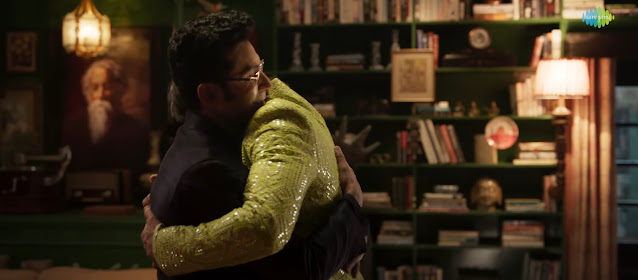
Related to this aspect, it is also worth observing the interiors of the houses of the two families. The house of the Randhawas feels claustrophobic and suffocated. There is less light, even in the daytime. For instance, the sequences when some family comes to see Gayatri for matchmaking are so dark. There is also a golden statue of Dhanlakshmi outside their house. There is also a massive portrait of her in their office boardroom. So, when Rocky sees Rabindranath Tagore's portrait in Rani's house, it is likely that someone like him would think that he is her grandfather. The house of the Chatterjees looks so airy. There is an open verandah for the dance. Their house is all culture and has Raja Ravi Varma paintings.
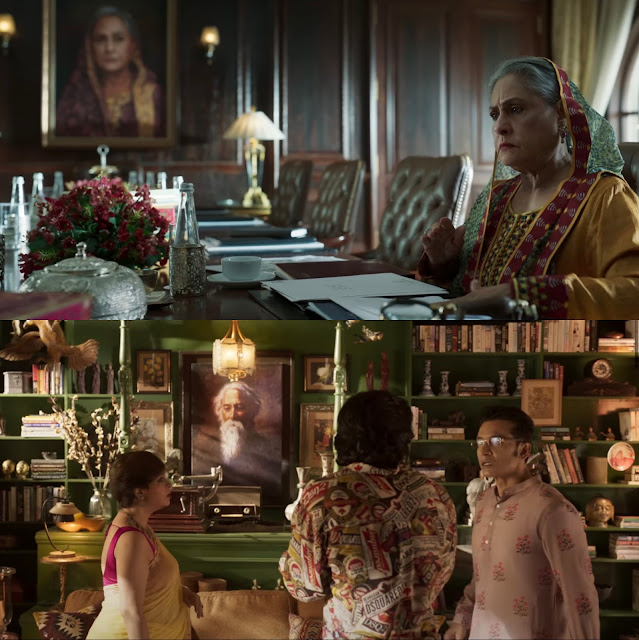
Dhanlakshmi and Tagore
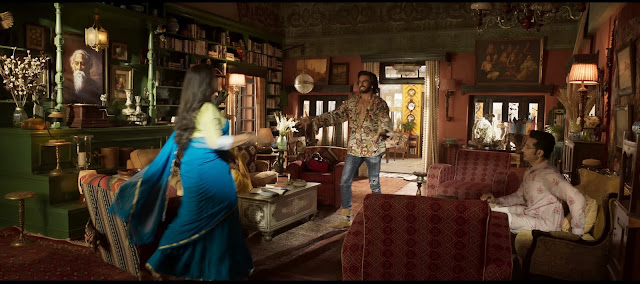
Galaxy of Musicians by Raja Ravi Varma
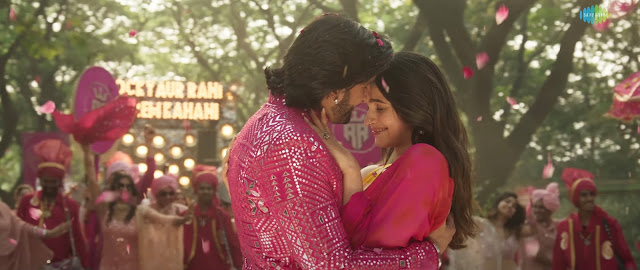
Alia Bhatt as Rani is all kinds of amazing. There is not one false note in her performance, but her character is so perfect, which makes her not as interesting as Rocky. She says the right things. She supports all the people. She is like an activist. The one time the film (rightly) admonishes her is when she signs up Rocky's mother for an audition without telling her. She realized that there are consequences to her actions. But together, Rocky and Rani are fire. The way Rocky wipes off the lassi on Rani's upper lip and puts it in his mouth is the sexiest scene in the film, which again shows that desire can be shown in fascinating ways without any skin show. Lassi Te Phassi clearly. I also loved the moments the two realized that they are falling in love. Rocky fell in love with Rani during What Jhumka when he looked at Rani and paused for a minute, wondering what is happening to her. On the other hand, I felt that Rani fell in love with Rocky when she asks herself why he is still smiling after a chat with him. This is also a Karan Johar moment where these inexplicable feelings are explained by Kuch Kuch Hota Hai. His characters fall in love first and then have an epiphany that they are in love. Think of the scene where Anjali thinks to herself about Rahul's comment on pyaar dosti hai in Kuch Kuch Hota Hai.
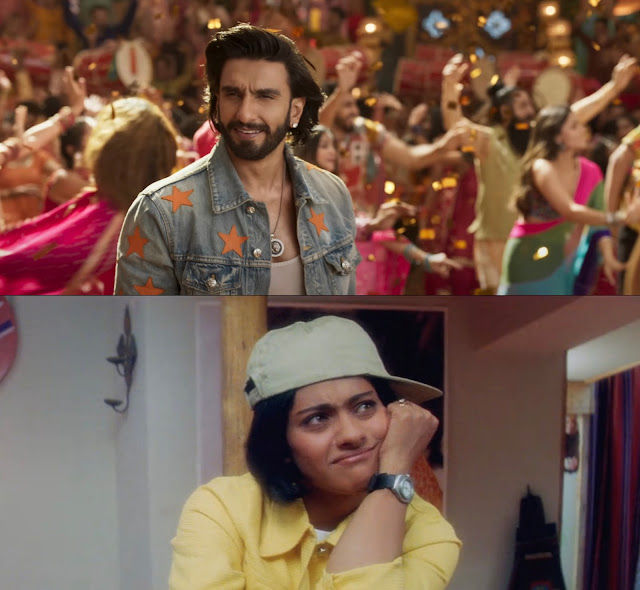
Kuch Kuch Hota Hai
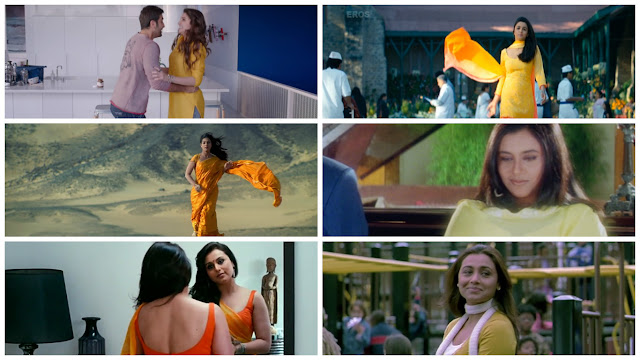
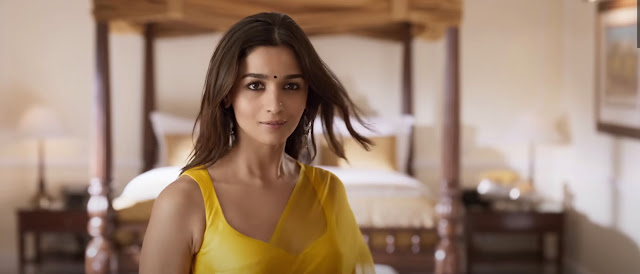
Yellow
The supporting cast is fantastic. I liked Tota Roy Chowdhury and Kshitee Jog. Churni Ganguly is hilarious. There is a lot of sadness in the character of Shabana Azmi, and she plays it beautifully. Jaya Bachchan seems to have the most fun but was reduced to a caricature. Dharmendra did not have much to do, given his health issues, but he was good in what he could do.
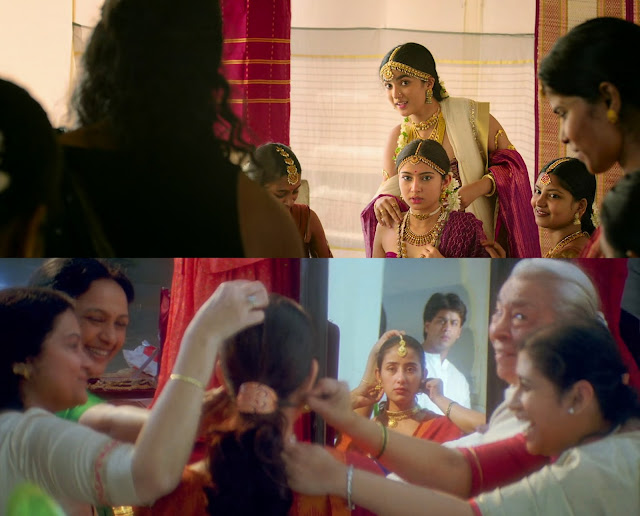
We also see other tropes from Johar's earlier work. Death makes an appearance yet again in this film. There is nary a full-length feature film by Johar where there is not a death of a character. There is also the motif of hands which has been seen in other films by Johar well, primarily Kuch Kuch Hota Hai and Student of the Year. Early in the film, there is a particular sequence when the growing apart of Tijori and his father Kanwal is depicted through their hands moving away from each other. At another stage, when Rani proposes to Rocky in the middle of the road, they hold each other hands while Abhi Na Jao Chhode Ke plays. Later, when they decide to live at each other's house, yet again, we see them holding hands before they separate. This culminates beautifully in the wedding during Kudmayi, where the father of the bride and the father of the groom perform the daan of their child to the other. There is again a beautiful shot of hands in the subversive sequence. Kudmayi is the most beautifully shot song in the film. There are some other moments. Like how the groom cries (instead of the bride) while getting ready. Like how the bride's father (instead of the mother) makes her ready.
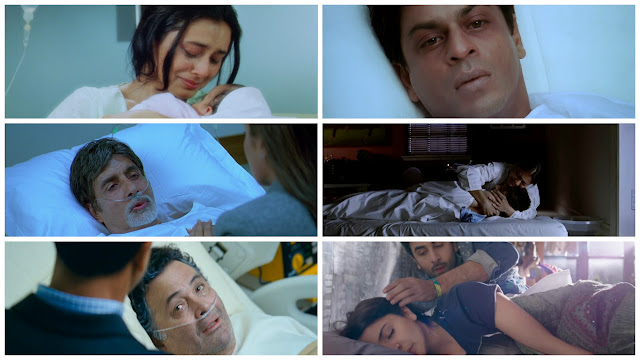
Death
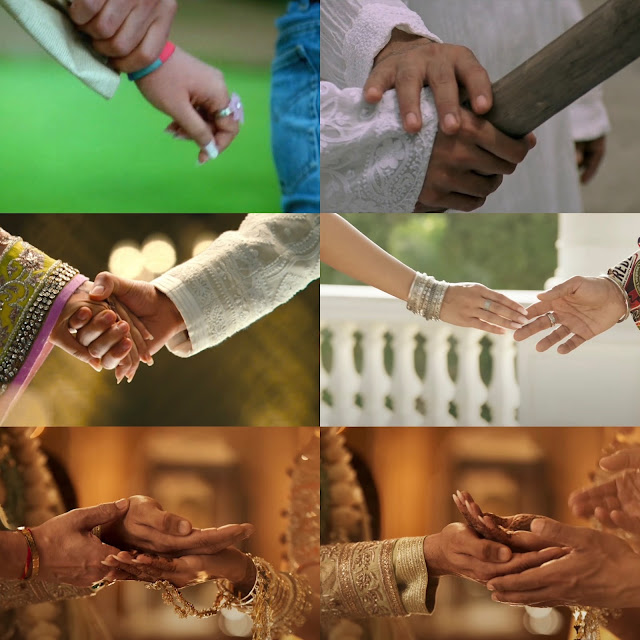
Hands
In fact, I loved the other songs as well. They slowly grow on you after seeing the context of the movie. Ve Kamleya and Ro Lain De are beautiful. Heart Throb is cool. I wished they had added Shreya Goshal's version of Tum Kya Mile in the film; after all, if Rani is imagining the song, it should be the female version.
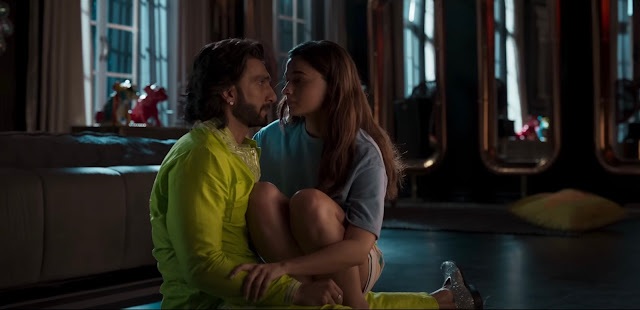
I was also reminded of Zoya Akhtar's filmography, especially, in two scenes in the film. Rani finds Rocky's mother eating cakes at night. Women finding comfort in food has been a motif in Akhtar's oeuvre, especially, the famous cake-eating scene in Dil Dhadakne Do. Toward the end, Rocky stands up for his mother before his father and grandmother. We have seen Ranveer Singh doing a similar act in Gully Boy. Another little factoid is that the sher by Firaq that Jamini mentioned was also referred to in Zindagi Na Milegi Dobara.
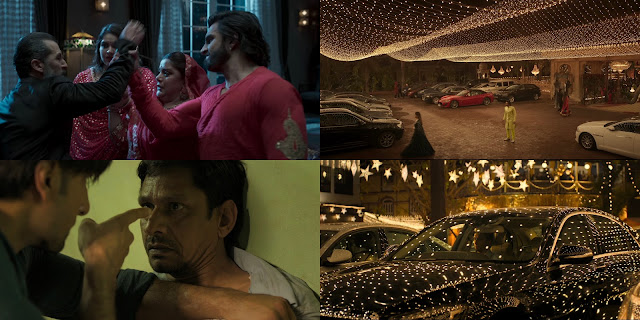
Not everything is perfect, though. There are some things in the film that underwhelm. The second half becomes too preachy. The bra shopping scene did not work for me. Later, Rani helps the Randhawas conceptualize and modernize an ad campaign with a feminist theme, which is quite generic. The campaign is titled Swad Wahi, Soch Nayi. It is reminiscent of Star Plus' revamp campaign—Rishta Wahi, Soch Nayi. The story of Chandon and his dance worked wonderfully because it integrates well with the narrative of the film. However, these other sequences seemed heavy-handed. I also did not get the whole joke about Kunwal 'Lund', if that was a joke, I assume. Also, I felt that the love between Rocky and Rani happens far too suddenly. When they take their grandparents out, they also start dating or having fun without any phase of falling in love.

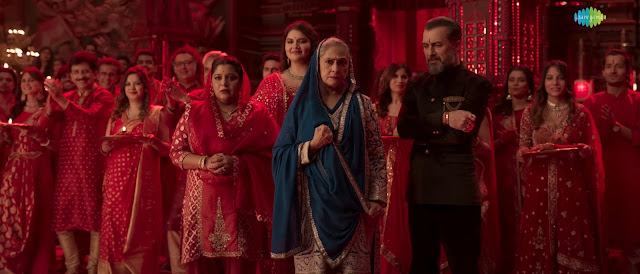
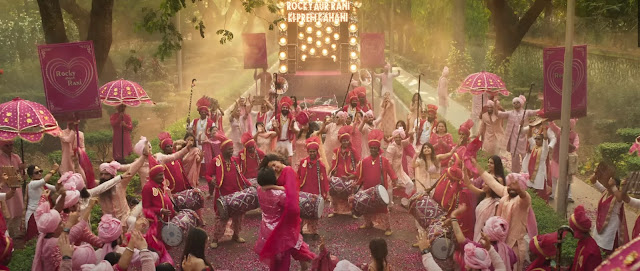
What I also felt was missing in the film was the beauty that has become the hallmark of Johar's cinema. I miss the sheer gorgeousness that we have seen earlier. Think of the bouquet scene in Kabhi Alvida Naa Kehna. Or the Tumhi Dekho Naa sequence. Here, the film has scale, but it does not seem to have that elegant beauty. It is not the costumes and colors which are magnificent here. I felt the issue was the sets. They did not seem to have that classic Johar style. For example, the What Jhumka and Dhindora Baaje Re sets looked garish and gaudy. We do see some flashes of his beauty in them. In Dhindora Baaje Re, everything is red, and everyone is wearing red except Dhanlakshmi and her son, who stand out because their thoughts don't blend in this world. Likewise, in Tum Kya Mile, the poet sings, "Berange the din, berangi shaamein, aayi hai tum se rangeeniyan." She brings color to his life. And, then, in the end, Rocky says to Rani, "Tera rang chaddh gaya hai. Everything Rani pink." Everything around him is actually in Rani pink. I wish there were more such gorgeous moments.
Nevertheless, I still thoroughly enjoyed Rocky Aur Rani Kii Prem Kahaani, and it gave me a lot to ponder. The film is Johar's attempt to move forward with the times by evaluating his past work. After twenty-five years, he is growing up, like his movies. Johar is often overtly critical of his earlier work. They were good films for their time and for the era in which they were made. Perhaps, he should remember the words of Rocky, "Hum sab itni jaldi ek dusra ko cancel karte rahe na toh life me kabhi koi kuch seekh nahi paayega."
Trivia:
1. A snippet from Karan Johar's old interview with The Big Indian Picture.

2. Jamini sings Go Chini Tomare, Ogo Bideshini, which was written by Rabindranath Tagore. It was also shown in Charulata.
Other Reading:
1. On Kabhi Alvida Naa Kehna—Link
2. On Ae Dil Hai Mushkil—Link
Dialogue of the Day:
"Hunar ka koi gender nahi hota."
—Chandon, Rocky Aur Rani Kii Prem Kahaani
—Chandon, Rocky Aur Rani Kii Prem Kahaani