Saturday, January 28, 2023

The Wonder Women of Ponniyin Selvan: I

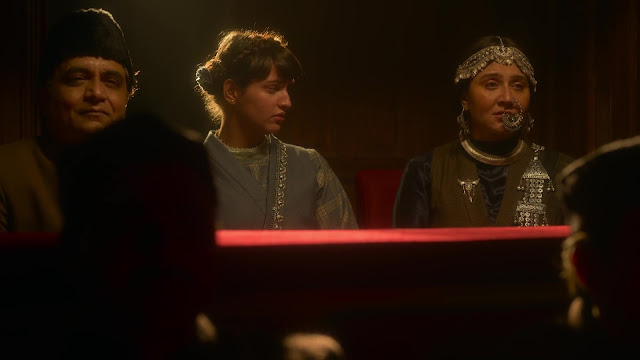
In Ponniyin Selvan: I, Mani Ratnam brings to life the epic 1955 novel of Kalki Krishnamurthy. The story revolves around the succession battle in the Chola kingdom and the ensuing threat from the Pandyan rebels who want revenge against the Cholas. Vandiyathevan (Karthi), a young soldier, sets out across the Chola land to deliver a message from the Crown Prince, Aditya Karikalan (Vikram), to his father, Emperor Sundara Chola (Prakash Raj), and his sister, Princess Kundavai Devi (Trisha), about a conspiracy. The other son of Sundara Chola, Arulmozhi Varman (Jayam Ravi), also known as Ponniyin Selvan, is fighting a battle in Lanka. There is Nandini (Aishwarya Rai), Aditya's ex-lover and the wife of Periya Pazhuvettaraiyar (R. Sarathkumar), the chancellor of the Chola Empire who is conspiring against Sundara Chola to install Prince Madhurantakan (Rahman) as the king. 
Ponniyin Selvan: I has its fair share of politics, war, violence, palace intrigue, and mystery, but what stands out in the film is its wonderful women characters. Women in the film are protectors, nurturers, rescuers, manipulators, conspirators, and strategists. They have a role and, more importantly, a voice. They are beautiful, and they are intelligent. And the most interesting aspect of these wonder women is that they enter and thrive in spaces that are dominated by men. They rule those spaces and do a better job than the men themselves. It is worth looking at these women in more detail.
Nandini
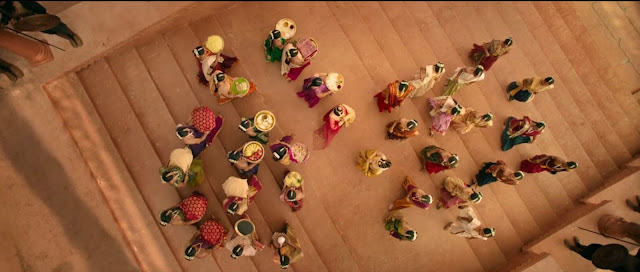
Nandini is the wife of Periya Pazhuvettaraiyar, the chancellor of the Chola Empire. She was earlier in love with Aditya, but things did not work out between them, as his family did not want an orphan like her to become the queen of the Chola kingdom. She then disappears from his life and eventually marries Pazhuvettaraiyar, a man much older than her. 
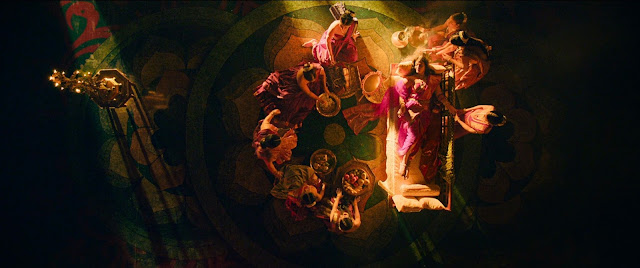
The first time we see Nandini is in her palanquin when Vandiyathevan tries to meet her thinking there is Madhurantakan in it. Her luminous face partially bows out from behind the curtains. This luminosity and this mystery become the hallmark of Nandini throughout the film. When Vandiyathevan visits Nandini in the palace, light falls on her face making her shine like a diamond. Nandini then guides him through a secret passage and asks him not to be tempted by the treasure inside. "I stand before a shining diamond," he replies, mesmerized by her beauty. Nandini was indeed the shining diamond. Likewise, in the same scene, the closing of the door gradually hides her face, reminiscent of the earlier scene in the palanquin. Later, a similar scene appears again when Aditya talks about his past, where he met her taking care of his enemy Veerapandiyan. Her face gradually appears from behind the door, adding to her mystery.
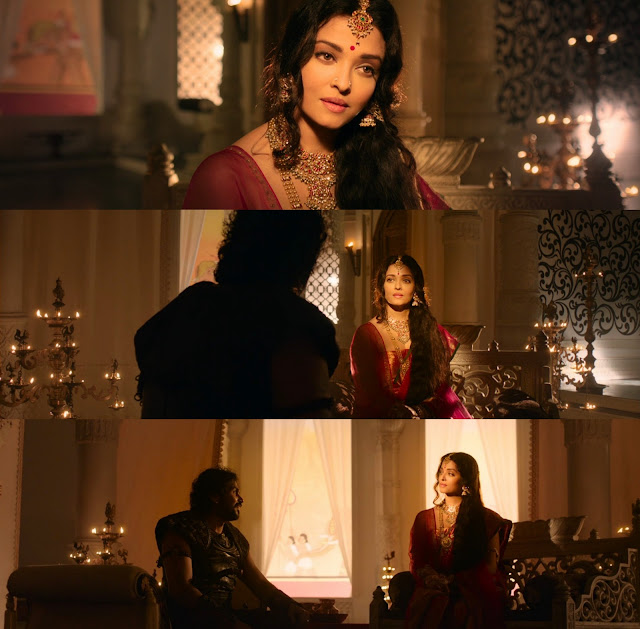
I stand before a shining diamond.
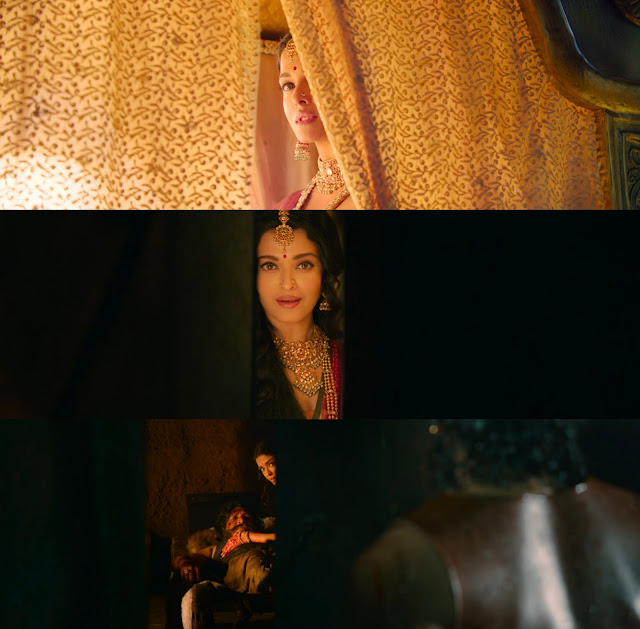
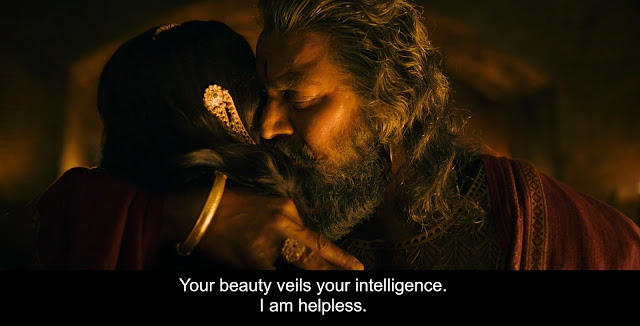
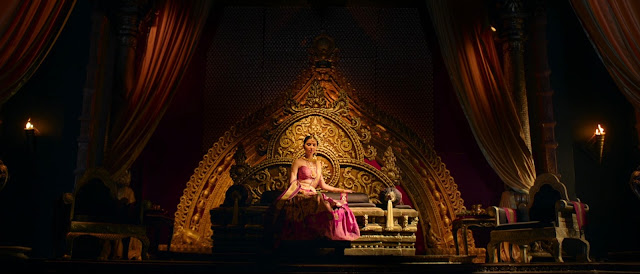
Nandini is the most fascinating character in the film. Her husband might be one the most powerful men in the kingdom, but she controls him through her beauty and intelligence. She is the mind behind her husband's strategic maneuvers. She advises him on political matters leading to consternation among the other chieftains that he is following his wife's orders. She has strong political instincts and strategizes for the future. She is the only woman in the film who dreams of herself on the throne. She has a manipulative streak in her. When her husband is angry with things not going as planned, she uses her charm to disarm his anger and manipulates him into agreeing to a risky idea for breaking the unity of the Chola princes. All she has to do is to turn around and ask him to take off her jewelry. In another similar moment, she tries to entice Vandiyathevan to think about getting back his kingdom as if trying to bring him to her side.
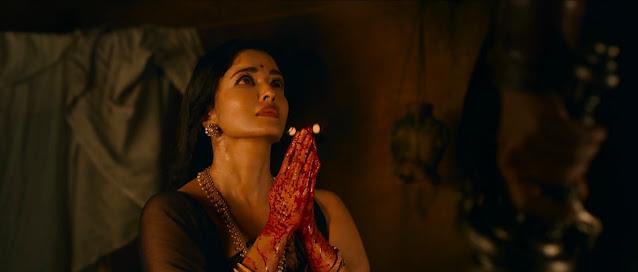
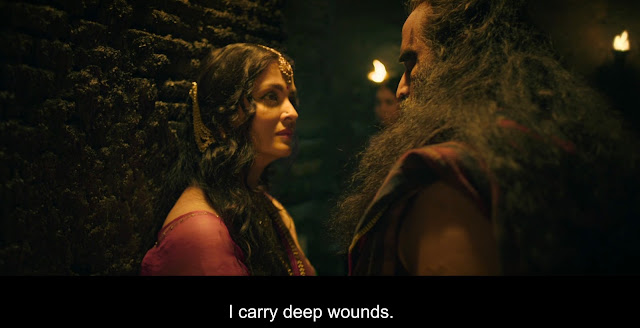
Nandini is in complete control of her emotions and does not let anything come to her. When she is threatened by Ravidasan (Kishore), a Pandya rebel, with a knife, she does not feel scared. He accuses her of forgetting the promise to destroy the Cholas and becoming enchanted with her luxurious life. She shuts him down by saying she carries deep wounds and does not forget anything. The men in the film are praised for their external scars. Her husband, Pazhuvettaraiyar, is described as someone with sixty-four battle scars. There are scars on Aditya as well. Nandini is the one who is battling her inner scars to get her wishes to come true. The only time she shows vulnerability is when she is in her past, requesting Aditya not to kill Veerapandiyan (Nassar).
Nandini exerts control not only over her husband but also over her past lover Aditya. He does not want to return to Thanjavur because he will see her there. She still controls his life even in her absence. He says he has become a walking corpse as he has died multiple times because of her. All the wars that he is fighting are a reflection of his struggle to forget her. She has turned him into this monster, and he became indifferent to her tears. Since then, day and night, she has continued to haunt him. In the film's beginning moments, Aditya spares the life of a king he defeated in war, saying he did not want to kill an unarmed man again. It is later revealed that he had killed an incapacitated Veerapandiyan when he saw her with Nandini. The man was unwell, and in a fit of rage, Aditya simply killed him mercilessly, even when Nandini begged him to not harm him.
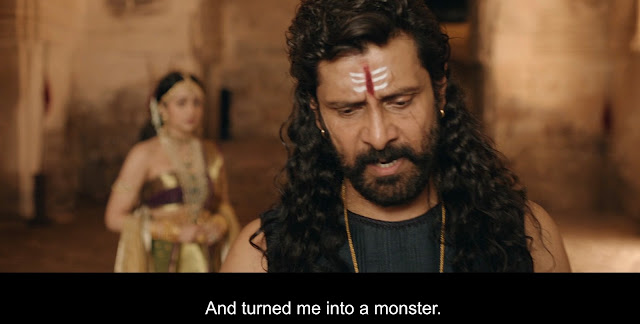
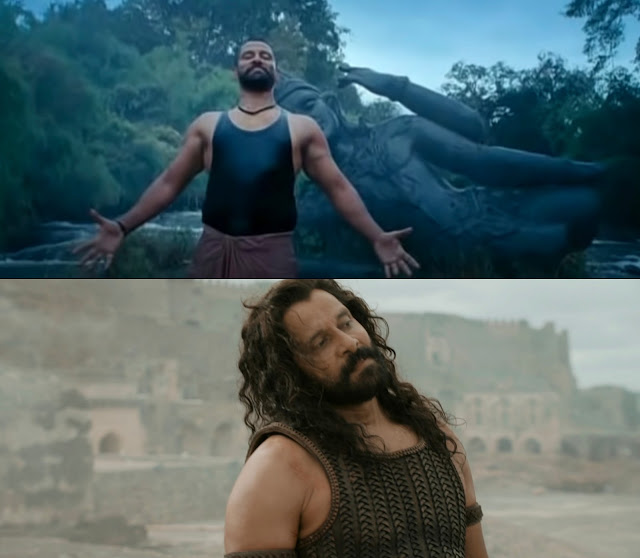
The inability of Aditya to be with Nandini is reminiscent of the forbidden love of Veera (Vikram) for Ragini (Aishwarya Rai) in Mani Ratnam's Raavanan, again played by the same actors. Both these men have feelings for the wife of another man. They know they are breaking societal mores even by entertaining the very thought. In one particular moment in Raavanan, Ragini prays to the broken statue of Lord Vishnu, asking not to make her weak by showing the goodness of the villagers. The statue is a stand-in for her husband Dev (Prithviraj)—her Ram. Veera asks Ragini about her husband. She tells him that Dev is like bhagwaan. Veera feels jealous of her husband because he gets to be with Ragini and has also fallen in love with her. Jealousy makes him feel like Dev's equal. He acknowledges his human and emotional side. The background music when Aditya talks about Nandini in Ponniyin Selvan: I is also reminiscent of the one in the statute scene from Raavanan.
Kundavai Devi
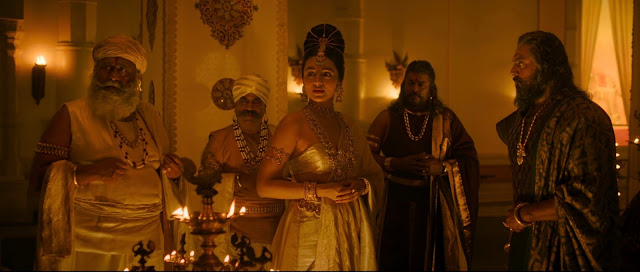
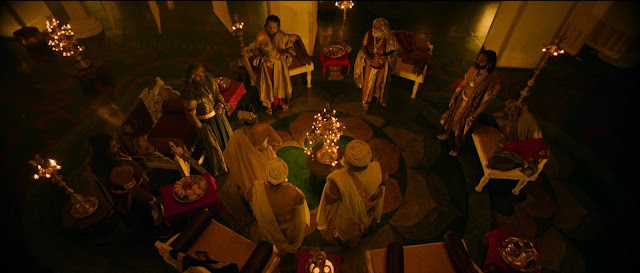
Kundavai Devi is the daughter of Sundara Chola. She is the second child of the king and has two brothers, one elder and the other younger. The two brothers are busy fighting wars for the kingdom, and she becomes the kingdom's protector. Like Nandini, Kundavai is a fascinating character. Her understanding of politics is better than both of her brothers. Her brothers trust her. Her father trusts her. In a telling scene, she becomes the crutch of her ailing father. She is also shrewd and manipulative, but these characteristics come from a place of care for her family. In a superb scene, she barges into the secret meeting of the local chieftains who are plotting the downfall of Sundara Chola. She arrives without prior notice causing nervousness among the chieftains. All these men get scared by this woman. When she arrives, she positions herself in the center, becoming the cynosure of all eyes. She then tries to put a wedge between these men by bringing up the subject of raising taxes to fund the wedding of her two brothers. She knew these chieftains would want their daughters to marry the two princes. With this trick, she simply took the wind out of the plans of the Pazhuvettarayar brothers, who are tongue-tied. In this scene, she is the only woman, surrounded by men, and comes out as the most powerful.
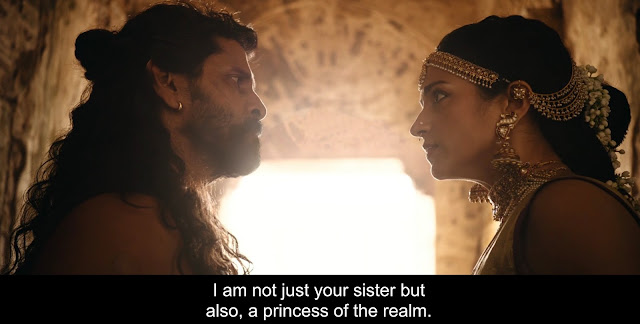
Kundavai reads people very well. She can sense when people are hiding something. It is also the reason she is sent by her father to bring some sense to Aditya and convince him to return to Thanjavur. It is then revealed by Aditya that Kundavai was the one who convinced their mother to take Nandini out of his life. Kundavai believes that an orphan like Nandini cannot be the Chola queen; therefore, she opposes her brother's relationship. Here again, she displays a penchant for realpolitik. It might be unfair to Nandini and Aditya, but she plays the role of a princess instead of a sister. She understands that people won't accept Nandini. She knows the pulse of the people. Notice the question she asks the prime minister when she arrives at Thanjavur is again about the people. She asks, "What concerns the people these days?"
The meeting between Kundavai and Vandiyathevan is absolutely charming. He tells her that his life belongs to her. If Aditya had shades of Veera from Raavanan, Vandiyathevan was like Karthik (Madhavan) from Mani Ratnam's Alaipayuthey. Kundavai then asks Vandiyathevan to jump into the river, just as Shakthi (Shalini) asked Karthik to jump from the moving train in Alaipayuthey.
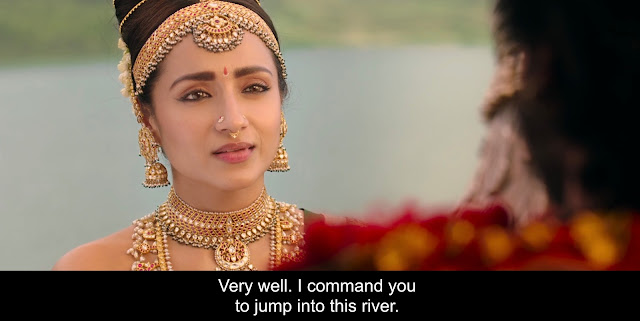
Poonguzhali
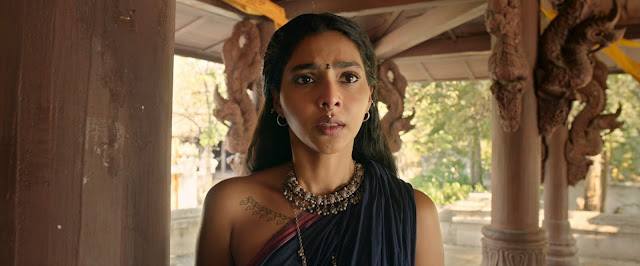
Poonguzhali (Aishwarya Lekshmi) is the boat woman who guides Vandiyathevan to Lanka. She gets a fantastic dramatic entry scene where she comes out of the sea while Vandiyathevan looks mesmerized by her. It is again worth noting her unconventional profession as a boater, something which has been dominated by men. All the other boaters in the film are men. She is also the one who hunts for fish while Vandiyathevan, the warrior, remains in the boat, feeling afraid as his horoscope said that he will have a grave in water. She then takes out a sharp weapon when he tries to flirt with her. Later, when the Pandyan rebels come to Lanka, she can sense something is wrong. Like Kundavai, she also goes to a meeting of the men of the Chola Kingdom, who were discussing war strategy among themselves. She reveals to them the plan of the Chola soldiers to arrest Arulmozhi. She speaks before the men without hesitation and agrees to help Arulmozhi even if the other commanders were asking her not to do it. In the final moments, she again plays a critical role in the confrontation between Arulmozhi and the Pandyan rebels.
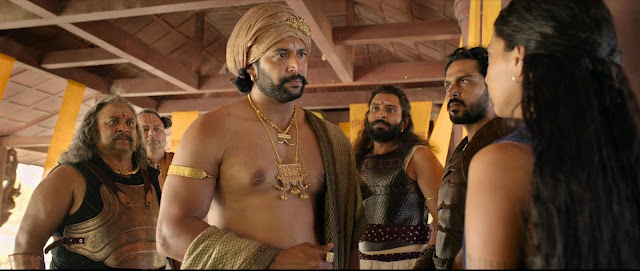
Oomai Rani
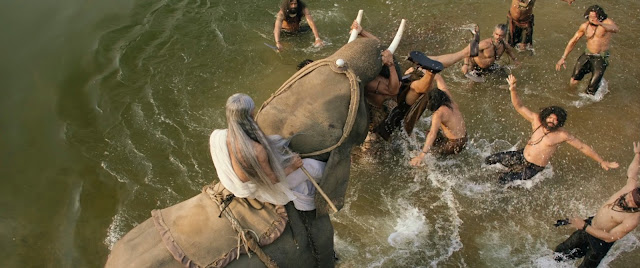
Oomai Rani (Aishwarya Rai) is the mysterious woman who rescues Arulmozhi and Vandiyathevan when ambushed by the Pandyan rebels. She uses the might of the elephant to force the rebels to retreat. It is again worth noting that she is the only woman in the scene who comes to rescue the men signifying a sense of power in her. Arulmozhi realizes that he has seen this mysterious woman before in his life. She was the one who saved him when he fell into the river Ponni when he was a kid. Legend was that it was mother Ponni who saved him, but in reality, it was Oomai Rani. In the film's final moments, Oomai Rani reprises her role as a rescuer when she jumps into the sea to again save Arulmozhi and Vandiyathevan.
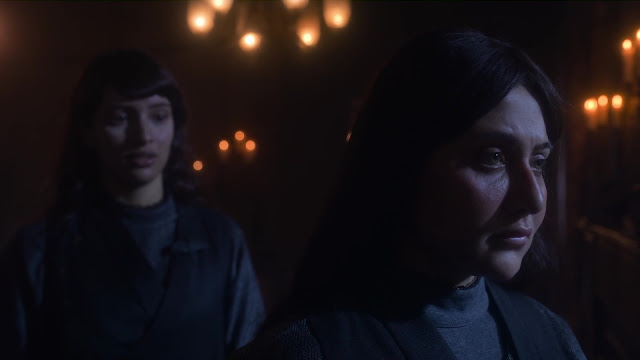
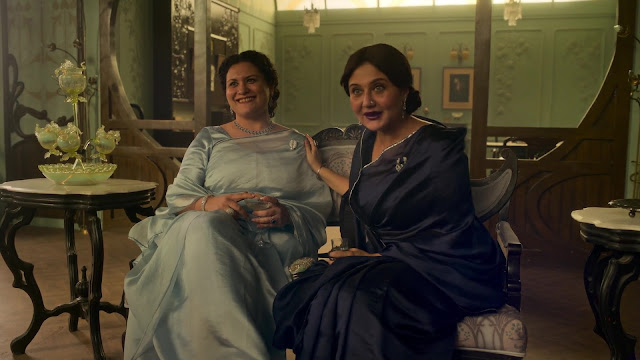
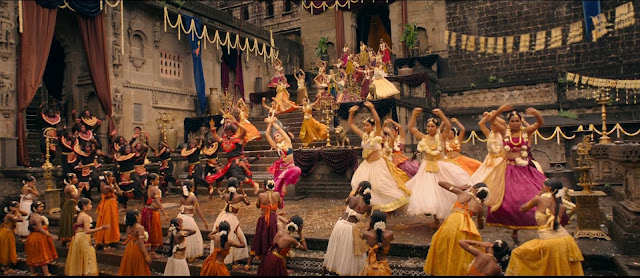
The other women in the film might have a small role, but they also make their presence felt. There is Vaanathi (Sobhita Dhuilpala), the princess of Kodumbalur. She has feelings for Arulmozhi and expects to marry him. In the gorgeous Ratchasa Maamaney, she plays the role of Lord Krishna and battles Vandiyathevan, who plays Kansa Mama. The song is a rare one as it does not show Radha-Krishna as seen in other similar songs but focuses on the Krishna-Kansa battle. Then, there is also Sembiyaan Mahadevi (Jayachitra), the mother of Madhurantakan, who opposes his plan to ascend the throne. She refuses to give her consent to him to become the king. And, of course, the film is titled after the son of mother Ponni—Ponniyin Selvan. It is about the son but also about the mother. The film's opening song Ponni Nadhi pays a beautiful tribute to River Cauvery. In the stunning meeting between Nandini and Kundavai, the song in the background says, "Can thunder and lightning coexist together?" It is a perfect description of not only these two amazing women but all the other women who light up the film with their charm, beauty, and intelligence.
Trivia:

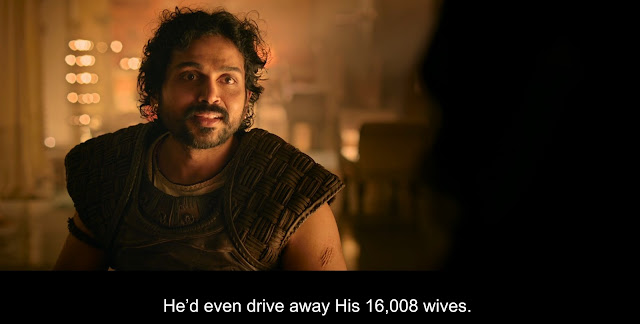
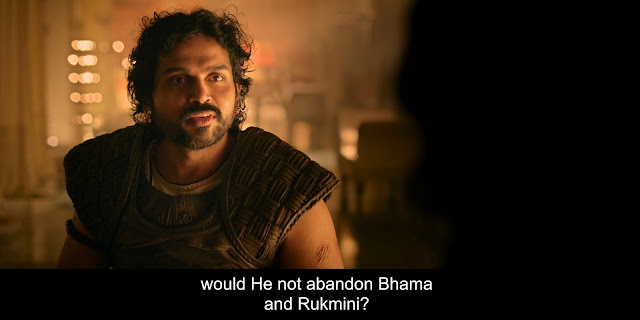
1. The film mentions Lord Krishna and his 108 wives along including Bhama and Rukmini.

2. Parallels between Raavanan and Ponniyin Selvan: I.

Other Reading:
1. On Raavan and Khal NayakLink

2. On SaathiyaLink


Dialogue of the Day:
"The lust for power surpasses the lust for beauty."
—Kundavai, Ponniyin Selvan: I
Saturday, December 31, 2022

Qala and the Many Ms

Anvitaa Dutt's Qala is the story of a singer Qala Manjushree (Tripti Dimri), and the gradual degradation of her mental health. The film begins with her winning the prestigious Golden Vinyl award. Qala wants to share the news of her win with her mother, Urmila Manjushree (Swastika Mukherjee), but they are not on talking terms. The film then brings forth the demons from Qala's past that eventually lead her to lose her mind. Her past involves another notable singer Jagan Batwal (Babil Khan), an orphan from Solan, who was adopted by Urmila as her protégé. Jagan's arrival strains the fraught relationship between Qala and Urmila and leads to events that change their lives. The film is set in Calcutta and the fictional town of Debisthan in Himachal Pradesh. The period is never explicitly mentioned, but it seems to be sometime between the 1940s and 1960s based on the names of historical figures mentioned in the dialogue.
The themes of Qala can be broadly categorized by the letter M. These M-related themes are as follows:

Mother
Qala is the story of a daughter trying to make a home in her mother's heart. Qala spent all her life trying to get her mother Urmila's approval. She wanted to win the Golden Vinyl award not for herself but for her mother. She was not naturally inclined to music but did it all for Urmila. When a potential suitor asks her if she likes music, she replies she hates it. Her mother, however, harbored some resentment against Qala since her birth. When Qala was born, the doctor told her mother that Qala's twin brother died shortly afterward as he was not healthy. He adds that in the case of twins, one child can suck away all the nutrition from the mother leaving little for the other child. Qala was this healthy child who survived while her brother did not, which became the cause of her mother's resentment towards her. At one early point in the film, in what seems like a dream situation, her mother even tries to smother Qala.
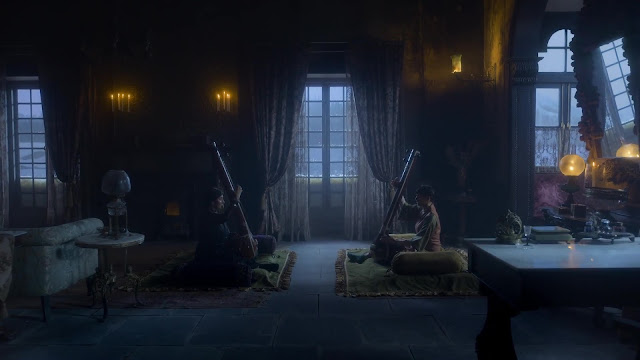
While growing up, Qala learns music from Urmila. When Qala does not meet the rigorous artistic standards of her mother, she is thrown out of the home as punishment. Qala pleads with her mother to let her in while she braves the biting cold outside. In her first public performance, Qala sings a song about why she is losing her mother's home. Babul mora naihar chhooto hi jaaye. Soon afterward, Urmila adopts an upcoming singer Jagan as her protégé and moves with him to Kolkata. Qala is disappointed that her mother prefers him over her. Her mother tries to marry her off to some wealthy suitor. An anxious Qala wonders if she can go back home where she can live with her mother. She even proposes to marry Jagan so she can live with her. Her mother does not relent. After Jagan's death, Qala asks her mother's permission to record a song in Calcutta. Urmila says she cannot allow a gaanewali to live in her home and asks her to move out. Qala decides to take a chance and leaves. She achieved much success when she started singing professionally. She won many awards and always sent them home to her mother. After winning the Golden Vinyl award, Qala calls home to speak to her mother, but she never answers. Qala's mental health continues to suffer. Towards the end, her mother has a change of heart and decides to take Qala back home. But it is too late. Early in the film, a journalist asks Qala how she felt after winning the Golden Vinyl. She replies, "Thak ke ghar pahunchi hun, aur maa ne darwaaza khola hai." She felt like she had reached home exhausted, and her mother had opened the door for her. Qala's death happens in the same way, foreshadowing her words. Her mother opens the door to take her back, but a mentally exhausted Qala had decided to take her life. Qala wanted to go to her mother's home, but death had other plans.
Urmila had an indelible impact on Qala's life. Qala imitates her mother in many ways. She copies her mother's hand movements while listening to music. She copies her mother's dressing style. At one point, Qala sees her mother with the singer Chandan Roy Sanyal (Samir Kochhar) in an intimate position and adopts the same trick to woo Sumant Kumar (Amit Sial). Qala did horrible things to Jagan to make him lose his voice so that her path to success was clear. She wants to become successful to win her mother's acceptance. Qala is not an exceptional singer like Jagan, but she tries. Jagan, however, sang only for himself. Here, Qala reminds one of the similar themes in Chaitanya Tamhane's The Disciple. Is it worth it to sacrifice one's life in pursuing art if someone is mediocre in it? Can one get better, or will one be destined to remain average? Urmila is not against Qala singing as such. She wants her to learn classical music and not film music. A teacher suggests to Urmila that Qala continue her family's legacy of thumri. Urmila is against that, perhaps, because this musical form is connected with dance, dramatic gestures, and mild eroticism. The term "thumri" is derived from the Hindi verb thumkaana, which means "to walk with a dancing gait in such a way that the ankle-bells tinkle." Urmila believes that there should be a Pandit in front of Qala's name and not a Bai in the end.
Hindi cinema often glorifies the loving and sacrificial nature of mothers. In this regard, Urmila is not like these mothers. The thing to note is that she is not a monster as such as well, but she is not also as supportive. Last year, Renuka Shahane's Tribhanga also tried to depict a different aspect of the mother-daughter dynamic where the mother was interested in pursuing her professional life, often ignoring her motherly responsibilities. There was also Yash Chopra's Jab Tak Hai Jaan, where Meera (Katrina Kaif) became estranged from her mother because she left her marriage with her father to be with her lover.
Mind, Maze, and Mercury
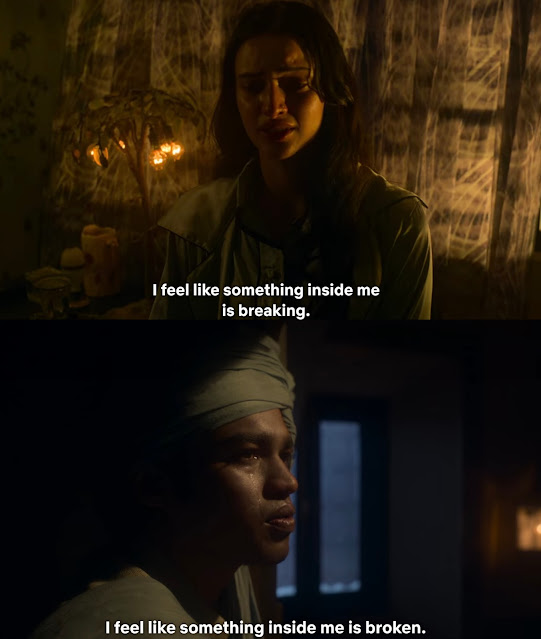
Qala is also a story that depicts the mental degradation of an artist. Qala describes her depression as if something inside her is breaking. A doctor dismisses her problem as nothing serious. Qala, however, continues to hear noise in her head and experience fear in her heart. These were the exact words and actions Jagan used to describe his mental state after he lost his voice. He died by suicide when he hung himself on a tree as he felt he had no identity without his voice. Qala also dies by suicide in the same way when she hangs herself on a ceiling fan. The guilt of what she did to Jagan and her mother's continued indifference toward her took her mental health down the spiral. She never recovered, and her end comes the same way as Jagan's. Another thing that kept coming to me while watching Qala was how it was designed to represent Qala's mind. The events played in the film are like memories. Another discernible thing was how the character placement in some scenes was as if they were standing in different corners of the mind. In one corner, Jagan is standing. In one corner of her mind, her mother is standing. It is as if these people and memories occupy different parts of her mind.
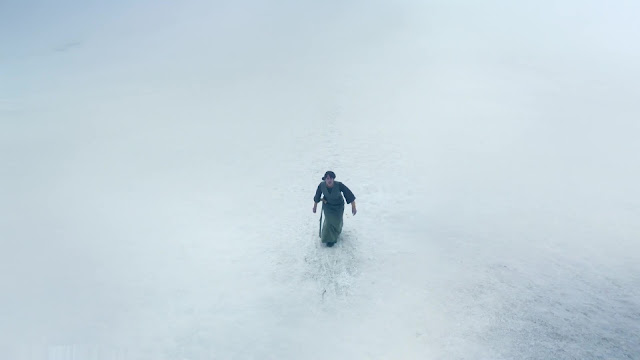
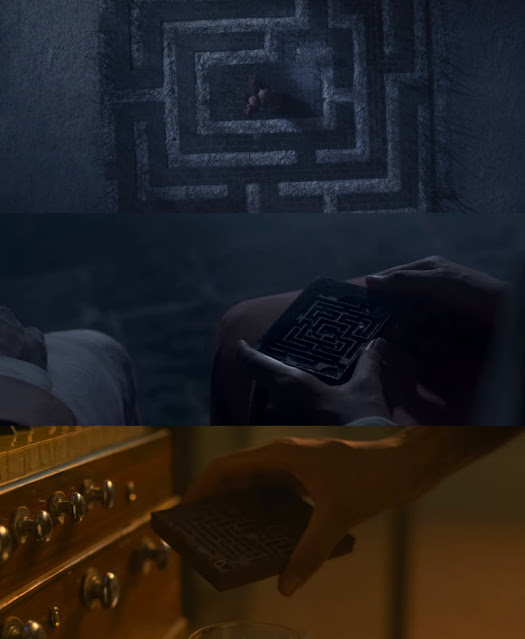
The film uses a maze to depict the mind games between Jagan and Qala. Jagan's arrival threatens Qala's position as a singer. In one scene, Qala goes outside her house and sits on the floor. It starts snowing, and Jagan comes outside to cover her up. The camera pans to the top view to reveal that they are stuck in a maze together. This same maze reappears later as a game when Qala plays with the mercury in it. Finally, it is the same mercury that Qala uses to make Jagan lose his voice. In another stunningly-designed scene, Qala plays with her sleeping pills that turn into mercury fragments. I felt it was pretty clear early on that mercury was put in Jagan's milk by Qala, so the reveal at the end did not come as a surprise.
Motifs and Metaphors
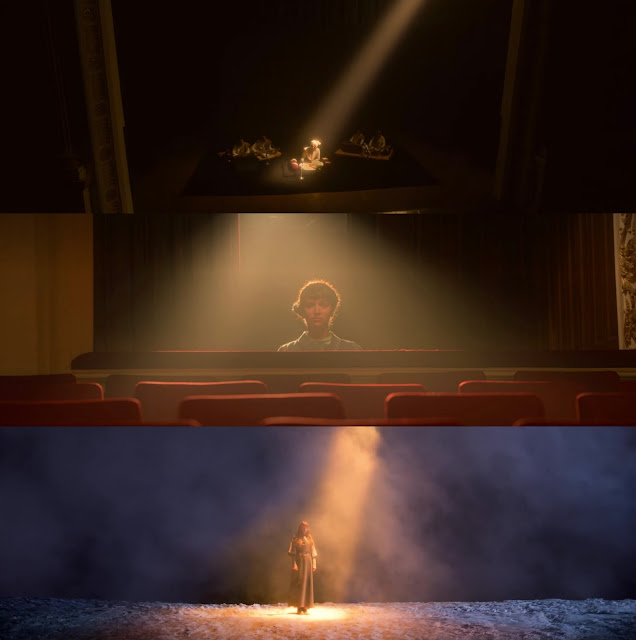
Qala is teeming with many motifs. A prominent one is a moth. It is everywhere in the film, from the opening credits to the costumes and even the light fixtures. A moth is attracted to the flame; 'like a moth to a flame,' as they say. When the moth touches this flame, it dies. It is attracted to the thing that can destroy it. The implication here is that Qala was gradually moving toward her death. At one particular stage, an animated moth flies from Jagan's eyes to Qala's eyes. At another point, there is a Black Swan-type moment where Qala dances in a dress with wings. The film also uses flashes of yellow light to depict this motif. There is also the use of light in other ways. For instance, when Jagan sings for the first time, a spotlight flashes upon him while Qala looks at him from the audience. When Qala performed, there was no light on her. Only after Jagan passes away does the same light show up on Qala, as it is her time to shine.
Moths
Light
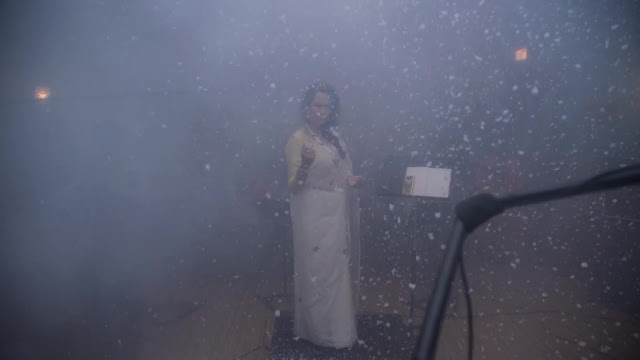
There is also the motif of snow. The cold weather represents the chilling state of depression. This is mainly seen in the sequence when Qala records a song for Naseeban Apa (Tasveer Kamil), and she cannot sing. She is frozen as if she is stuck in snowfall. She is not able to move her hands and legs. The surroundings depict her mental state. In the opening credits of the film, Vikramaditya Motwane is thanked. His film Lootera also used snow to represent the coldness of love.
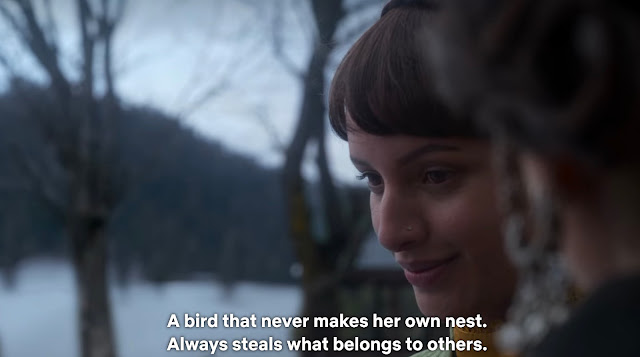
Just like the way she took life from her brother, Qala snatches the life of music from Jagan. A music producer calls her a koel. Her mother concurs that Qala is indeed a koel, not for its musical voice but for the way a koel lays her eggs in some other bird's nest. The implication is that Qala stole Jagan's success, and she did not deserve to be there.
Majrooh
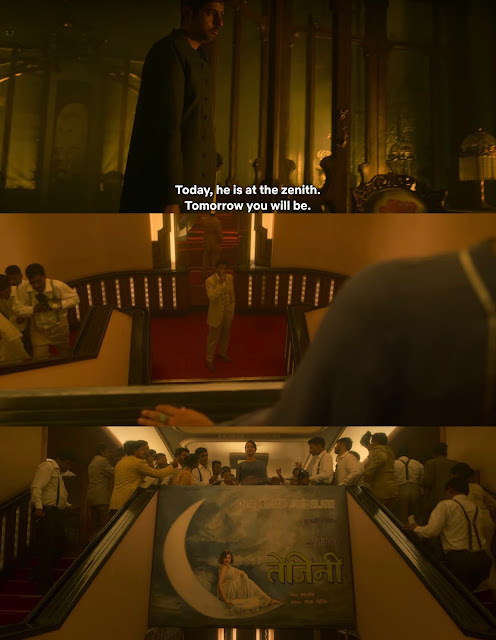
Qala has a friend and confidante in lyricist Majrooh (Varun Grover), likely named after the famous Majrooh Sultanpuri. Like Dr. Sudip (Parambrata Chatterjee) from Bulbbul, Majrooh is the feminist ally. He wears red nail paint on all his fingers. He is also some kind of prophecy teller. When he observes Qala's emotional turmoil, he tells her that if she keeps her feelings bottled, a day will come when the dam will burst. Sab kuch apne andar daba ke rakhogi, chhupa ke rakhogi, duba ke rakhogi, ek din sailaab aayega. Qala kept her feelings within her and eventually could not take it anymore. Later, Majrooh sees Qala's continued sexual abuse at the hands of Sumant Kumar. He tells her if she allows it, it will keep on happening. Today, the producer has the power; tomorrow, she will have the power. Times will change. Daur badlega, daur ki yeh puraani aadat hai. In the next moment, his prophecy comes true. The camera people who used to follow Sumant Kumar started following Qala. The film depicts this power change through height, where Qala is on a higher pedestal while Sumant Kumar watches her from below. She is mobbed by the media while he stands alone.
Me Too
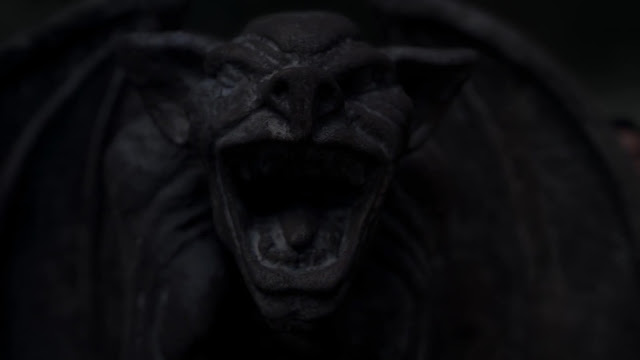
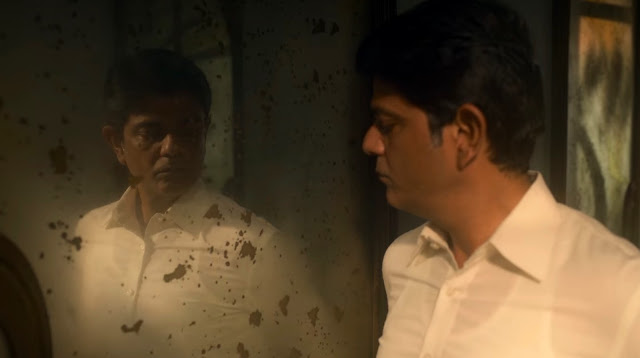
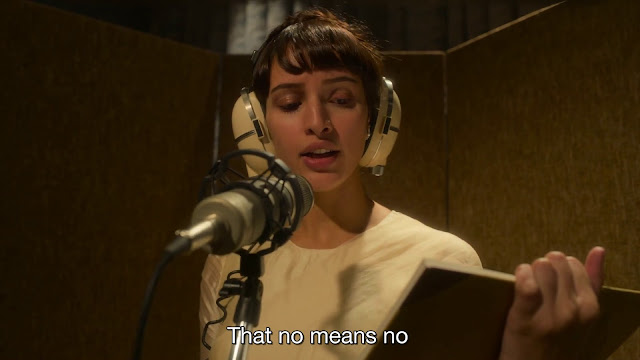
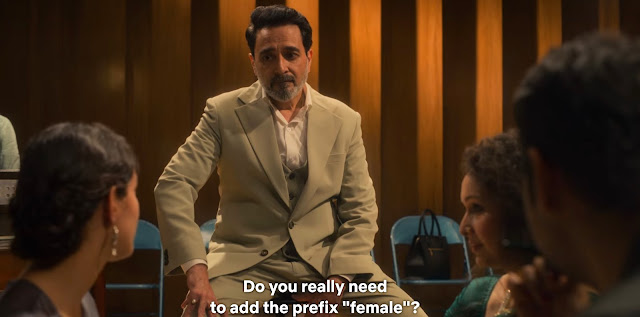
Qala makes many points about the state of women in the music industry. When a producer questions her about hiring a female secretary, she says it is unnecessary to call her female. She demands higher pay than her male counterparts. During her media interactions, she brings a woman photographer to the forefront. The first song Qala records for Sumant Kumar is Ghodey Pe Sawaar which is about the dynamics of consent. The lyrics talk about the lover's hesitation while her beloved tries to get impatient during their courtship. Sajaniya ke mann me abhi inkaar haiQala might be set in the past, but its narrative shows similarity with the contemporary Me Too movement. In her first recording, Qala struggles to sing as per the requirements of music producer Sumant Kumar. He suggests that she is not ready yet to sing professionally. A desperate Qala does not want to return to her home at this stage. So, she agrees to give him sexual favors in return for his support. Here, the film uses gothic imagery to depict her situation. A gargoyle in the shape of a predatory bird is seen next to Sumant Kumar during the act, representing his predatory nature. Thereafter, Qala is repeatedly sexually abused by him. When Naseeban Apa tries to help her, Sumant Kumar tells Qala to avoid her. But, as Majrooh said, time slowly turns. She became famous and got power. Thereafter, she refused to work with him. In another symbolic moment in the film, he comes to Qala's house, hoping to sign her for his next movie. He looks at himself in the mirror, wearing a pristine white shirt. The mirror, however, is stained and rusted, making his shirt appear dirty, symbolizing the stains in his past.
Meenal Agarwal and Sidharth Diwan
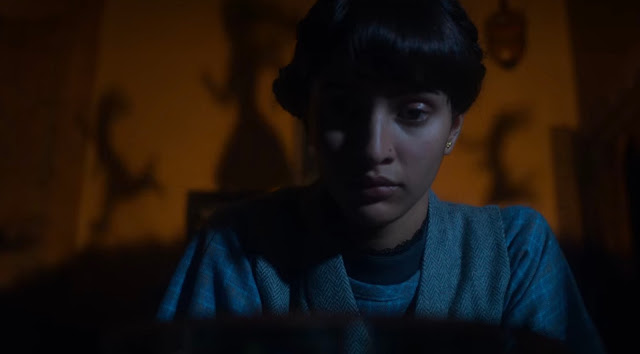
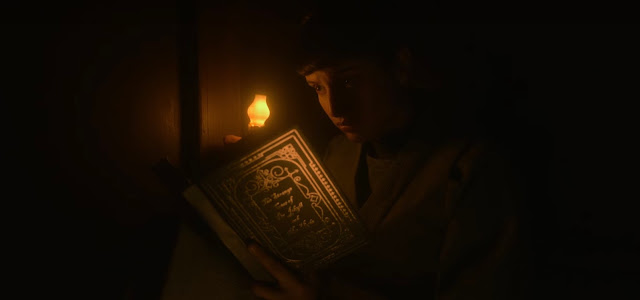
Qala would not be what it is without the production design of Meenal Agarwal. Every frame has been intricately designed. The film's architecture is inspired by Gothic themes. The cinematography of Sidharth Diwan complements the design. Both these aspects bring out the inner turmoil of the film's characters. The moving shadows on curtains and walls, and the blue-green color palette adds to the film's Gothic themes. At another stage in the film, Qala reads Robert Louis Stevenson's Strange Case of Dr Jekyll and Mr Hyde, a defining book of the Gothic horror genre. The book has greatly impacted popular culture, where the phrase Jekyll and Hyde is often used to refer to people with an outwardly good but sometimes shockingly evil nature. Qala displayed similar traits where there is both good and evil in her. I did feel that the production design took over the proceedings of the narrative in some scenes, and the frames felt a bit suffocated, especially in the darker ones where there was no light. 
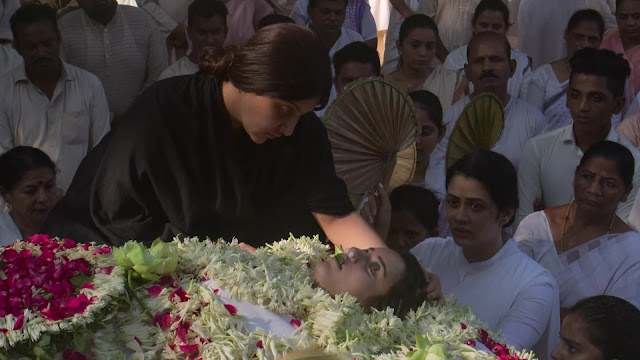
The period when the film is set is not mentioned as such. However, it can be deduced based on some conversations. There is the mention of Gandhi coming to Shimla, most likely around the days of India's struggle for independence. When Qala grows up, she mentions Indira, likely referring to Indira Gandhi. Qala is also referred to as Didi, the same name Lata Mangeshkar was also popularly called. Other characters' names are also a throwback to the famous industry people of that era. Apart from the above, the film has lovely details, like how the women held wooden fans in their hands at Qala's funeral. There were bronze coins kept in her eyes.
Music
Like other aspects of Qala, Amit Trivedi's music is also a character adding to the themes of the narrative. The lyrics are meaningful and add to the storyline. Ghodey Pe Sawaar is perhaps my favorite. Shauq is beautifully picturized. The film also credits Sant Kabir for some of its songs. There is also a folksy lullaby which is beautiful. Its lyrics, where a mother and daughter are talking about killing a peacock, mirror the story of Jagan and Qala. While the music is lovely, I am unsure if I will listen to it repeatedly. It requires a certain mood, unlike music from Manmarziyaan, which has a lot more repeat value.
Meta
Anvitaa Dutt brings her own real-life experience to her films. Her characters often talk about writing, music, and storytelling, similar to her profession. Her films also have understated feminist angst compared to the overt rage of other filmmakers, such as Alankrita Shrivastava. Before Qala, writer-director Anvitaa Dutt has also been closely associated with writing Anshai Lal's Phillauri, Prosit Roy's Pari, and her debut film Bulbbul. These films were also intricately designed and often set in a particular time or place, bringing fantastical elements into them. These films also have feminist and progressive elements in their narrative, with the woman being the central character. Phillauri is the story of a poetess Shashi (Anushka Sharma), in the early 1900s, who turns into a ghost and comes back to life. Pari was a layered story of the horrors women go through in their everyday lives. Every month, the witch Rukhsana (Anushka Sharma) used to take out poison by biting a dog (or a human), a metaphor for menstruation. Bulbbul was about the horrors women had to go through in the nineteenth century and were about a chudail (Tripti Dimri) who eats up the men who harm women in the village.
Majnu
Tripti Dimri made her acting debut in Sajid Ali's Laila Majnu where she played the role of the eponymous Laila. In that film, her lover Qais (Avinash Tiwary) got so obsessed with Laila that he did not even need her to be physically present. He saw her everywhere. Ultimately, he went far too ahead to be the Majnu and became a complete "paagal" consumed by his passionate love for Laila. It is a reversal of sorts for Dimri, who now essays a similar role. From being invisible to becoming the golden light, Qala got everything in life except the love and acceptance of her mother. Sometimes, one can get everything in life, but that one missing thing takes life away. 

Trivia:
1. Veera Kapur EE, the consumer designer of Qala, makes a special appearance in the film. She was also the costume designer of Bulbbul and made an appearance in that film, too.
2. The opening credits of Qala reminded me of Bulbbul's.
3. The website the film mentions in the ending credits is WannaTalkAboutIt.Com.
4. Tasveer Kamil who plays Naseeban Apa in Qala is the wife of Irshad Kamil. 
Other Reading:
1. On BulbbulLink
2. On PariLink
3. On Laila MajnuLink
4. On PhobiaLink
5. On Looop LapetaLink

Dialogue of the Day:
"Daur badlega, daur ki yeh puraani aadat hai."
—Majrooh, Qala