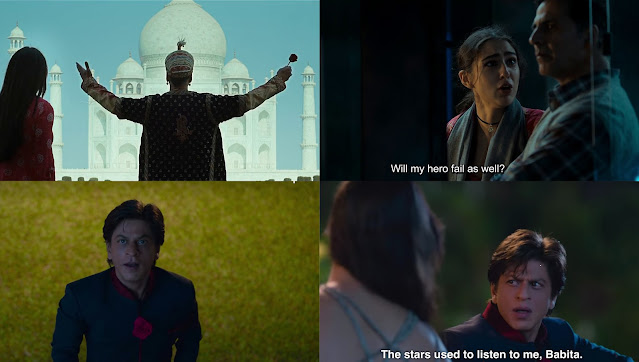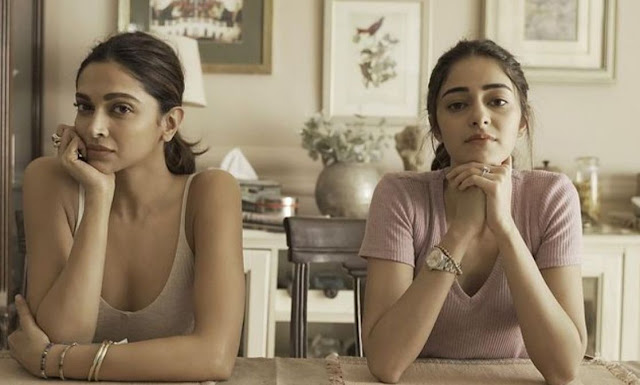
At one point in Woody Allen's Midnight in Paris, the struggling novelist protagonist says, "The past is not dead. Actually, it's not even past. You know who said that? Faulkner. And he was right." A person's past makes up who they are; so, the past lives on within the person forever. Shakun Batra also casts the long and enduring shadows of the past over the protagonists of his third film Gehraiyaan. It is the story of how the past of its characters—Alisha (Deepika Padukone), Karan (Dhairya Karwa), Tia (Ananya Pandey), and Zain (Siddhant Chaturvedi)—continues to impact their present and their future. "I can't live in the past," says Zain. "And, I don't know how to let go of mine," replies Alisha.

Gehraiyaan, meaning depth, portrays that the lives of the children are closely tied to the past of their parents. They inherit their genes, but they also inherit their destiny. And, then, they pass the same to their children, as if traveling through a loop. Early in the film, a young Alisha, in a moment of sartorial frustration, tells her mother, "I feel stuck. I feel stuck. I cannot breathe," when she struggles to wear a shirt. Her mother used to cry by herself in the nights, saying the same thing, "I feel so stuck." Alisha keeps wondering if she will end up like her mother. Stuck. Helpless. Alone. The feeling of being stuck becomes her lifelong companion as she grows up. Her friends moved to the US for studies while she was stuck behind to build a life of her own. She wants to start a fitness app but is struggling to get funding. In the middle of her presentation, her app gets stuck. She has been in a six-year-long relationship with her childhood friend Karan in which, too, she feels stuck. "I don't like being at home. I feel so stuck," she says.
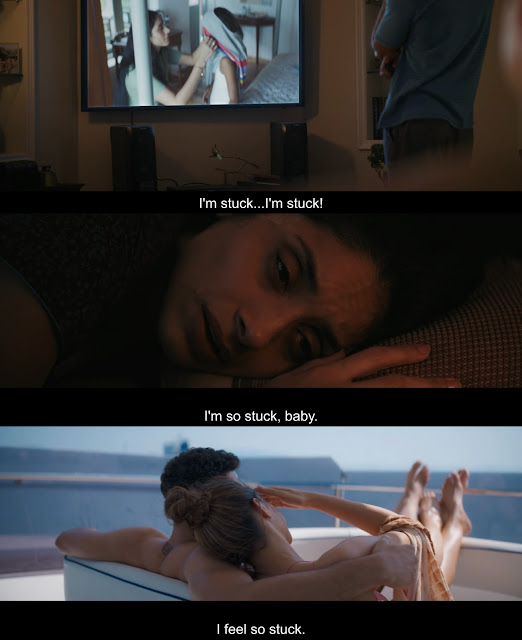
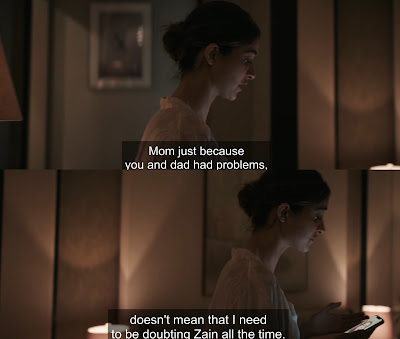
Alisha believes that Karan and her father are the same; they only think about themselves. Her mind takes her back to her father's shifting silhouette on the doors when he fought with her mother, the same way that Karan does when he fights with her. She has an affair with Zain even though he is engaged to her cousin Tia. Alisha's life again replicates her mother's. Perhaps, like Alisha, her mother saw something special in Tia's father, with whom she had a secret affair. The past keeps returning to Alisha, reminding her that her fate is tied to her mother's.
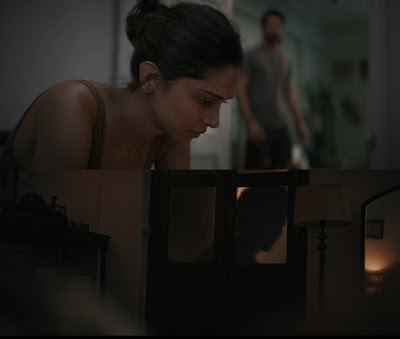
Tia's life also follows her mother's. Like her mother, Tia trusts people easily. Her mother keeps warning her to be cautious with Zain as she does not want her to end up with the same fate as her own. Tia's father had an extra-marital affair with his brother's wife leaving his wife to fight legal battles. Therefore, Tia's mother wants to protect her. Even Zain's life starts resembling his parents. He abandons Alisha, like the way he left his mother. His father physically hits his mother; he does the same and even goes to the extent of trying to kill Alisha.
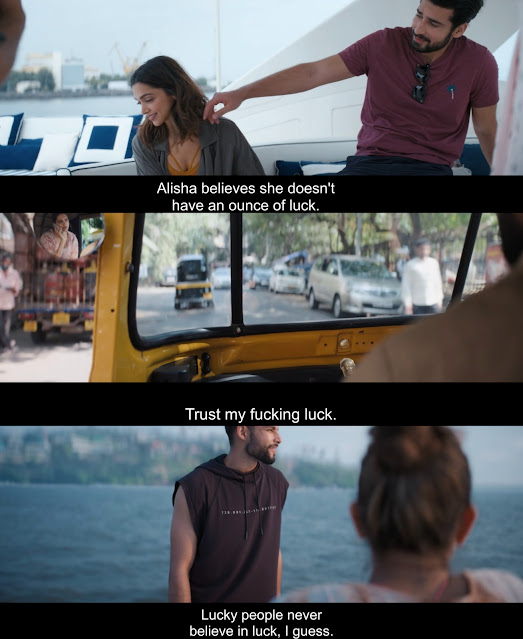
But can they really escape the past? Gehraiyaan suggests that they can try, but it won't be easy. They have to make different choices; they have to take chances and start again. Because there is a difference between being stuck and choosing to stay; between being found and finding yourself. Alisha thinks that she has the worst luck in the world. When her presentation does not go well, she blames her luck. Zain tells her to dream big in life. He was not born with a silver spoon either, but he rose in life. He tries to escape the fate of his family. He was lucky, Alisha presumes. "Lucky people never believe in luck," she tells him. But lucky are the people who make different choices to get the things they want, not waiting for something to be given to them. Even the bird then shits on Zain, another sign of luck.
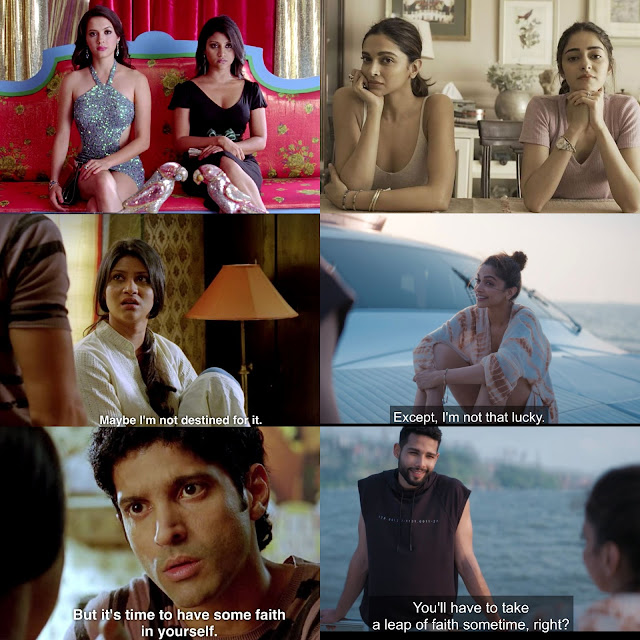
Gehraiyaan's most moving scene is between Alisha and her father, Vinod (Naseeruddin Shah), who tells her that she has to accept the past and choose to move on. There is no need to run away because we all are bigger than our mistakes. "Do my choices even matter, Papa?" she asks him. "Yeh jaanane ka toh ek hi tareekha hai. You give yourself a chance," he comforts her. A young Alisha and her mother had played a game of snakes and ladders. Her mother lost the game when the counter landed on a snake. "Bad luck, I guess," she says. Alisha, too, used to blame her ill-fated luck. Luck, however, is nothing but the probability of an unbiased die. There is an equal chance of getting any number when the die is cast. Her father had advised her mother that one can always start again even after losing. It is a choice even though it is difficult. Like Zain told Alisha, sometimes, one needs to take a leap of faith to get the life one wants.

Gehraiyaan has been compared with Woody Allen's Match Point for its narrative similarity, but its theme of luck and chances is more in common with Zoya Akhtar's Luck By Chance, another story of the outsiders trying to make it big in the film industry. There was Vikram Jaisingh (Farhan Akhtar), a struggling actor who would do anything to get the opportunity to become a hero. There was Sona Mishra (Konkona Sensharma), a talented actress, also struggling to fulfill her dream. There was Nikki Walia (Isha Sharvani), the daughter of yesteryear superstar, preparing for her debut launch. Sona thinks she did not become a big star because it is not in her kismet to be an actress. Vikram disagrees as he believes that kismet is for those who do not have the strength to make their own lives. Will some other person tell her that she cannot be an actress? Chances are not given; they are made. Kamayaabi hum tak nahi aati, humein kamyaabi tak jana hota hai. Ab apne aap par bharosa karo. Vikram was ruthless and selfish. He would do anything to work his way up, even if it meant betraying Sona in the process. He would stab his friends in the back. He would have an affair with Nikki; he would even flirt with her mother. In Gehraiyaan, Zain has a manipulative streak like Vikram. He does not feel any guilt for his actions. "Jab koi tumhare baare me na soch raha ho na, khud ko apne baare me sochna padta hai." He is in a relationship with the rich Tia as her father helped finance his dream project. "Ya phir wahan bhi kismat ka intezaar kar rahi ho," Zain tells Alisha to take a leap of faith to do something big instead of waiting, echoing Vikram's words to Sona. Zain might be ruthless, but I did feel he genuinely loved Alisha. However, when she started to take down all that he built, he chose to eliminate her. His ambition was larger than his love. Because for him, too, starting all over again was not possible.
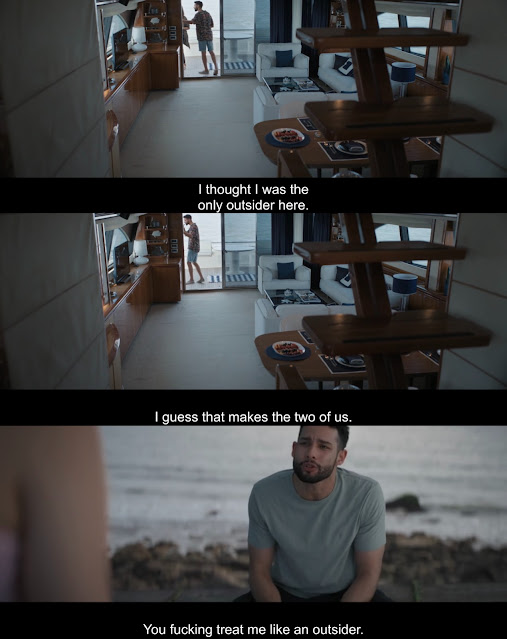
Gehraiyaan also talks about the outsiders. Alisha is the emotional outsider. Alisha, Karan, and Tia grew up together as kids. Alisha moved away from the city due to family circumstances. Physical distances led to emotional distances. Karan and Tia became better friends; Alisha was isolated. Zain is the physical outsider who left behind poverty and abuse to climb up the ladder of upward mobility. He does not like it when Tia and her mother keep reinstating that he is an outsider, as if he did not deserve to be there. In the alphabet, the letters A and Z lie on the two outer ends of the alphabet. Alisha and Zain lie on the two outer ends trying to fit in. They both forge a connection as they have other things in common. They both are scarred people. She carries the emotional scars from her childhood following the death of her mother. He carries the physical scars from his childhood following the abandonment of his mother.
Gehraiyaan has many themes that were also seen in Shakun Batra's earlier films—Ek Main Aur Ekk Tu and Kapoor & Sons. There are commonalities in the characters. Rahul (Imran Khan) in Ek Main Aur Ekk Tu is scared of dogs. Rahul (Fawad Khan) in Kapoor & Sons is afraid of rats. Alisha in Gehraiyaan is a little afraid of dogs. There is Riana (Kareena Kapoor), affectionately called Ri, in Ek Main Aur Ekk Tu. There is Tia (Alia Bhatt) in Kapoor & Sons, affectionately called Ti. There is again Tia, also called Ti, in Gehraiyaan. There are characters who are writers in Kapoor & Sons and Gehraiyaan. There is an undercurrent of sibling rivalry and slight resentment in Rahul and Arjun (Sidharth Malhotra) in Kapoor & Sons and between Alisha and Tia in Gehraiyaan. Dysfunctional families play a critical role in the three films. Buried secrets come to the surface in the three films. Memories associated with the old school (Bombay) and family houses (Conoor and Alibaug) also play a small role in all three films. In Kapoor & Sons, the mother turns out to be a symbolic villain. Sunita (Ratna Pathak Shah) gave the idea of Arjun's story to Rahul, who became a bestselling author. In Gehraiyaan, Sonali (Pavleen Gujral) had an affair with her brother-in-law while Alisha blamed her father for her mother's emotional state.

Dysfunctional Families in Shakun Batra's Films
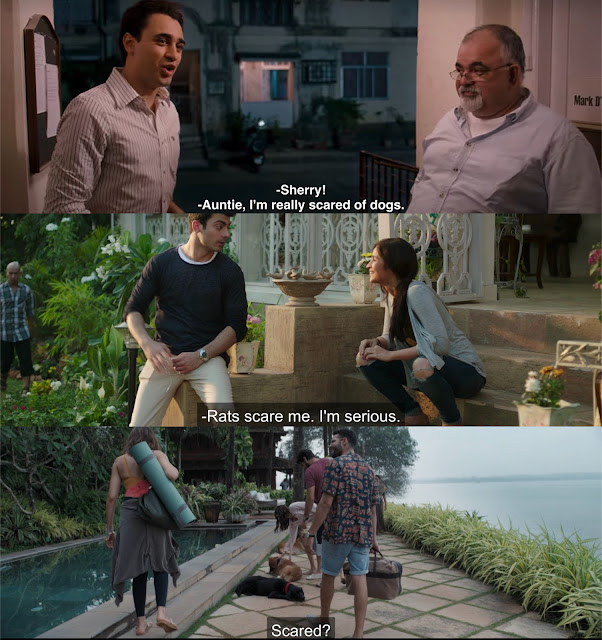
Characters are scared
And, then, there are the photographs in the three films. Ek Main Aur Ekk Tu used photographs to depict the emotional distances between the family members. Ri gifts Rahul a camera. Kapoor And Sons is also teeming with photography-related scenes. The dying wish of Dadu (Rishi Kapoor) is to have a picture clicked with his entire family. The family bonds while looking over old photographs. Arjun clicks pictures from his cellphone. He clicks Rahul's picture while smoking; later, when Rahul damages the car, he poses to get his photograph clicked. Rahul also looks at the pictures on the house wall. Tia's house is also full of her photos with her parents. Sunita finds about Rahul's secret through his photographs. Gehraiyaan also features similar photograph scenes. Alisha looks at the photographs of her childhood when she visits the house in Alibaug after years. She clicks a picture of her family but crops out her father keeping only her mother and herself in the frame. Later, she crops out Zain from a photograph as their relationship was still private.
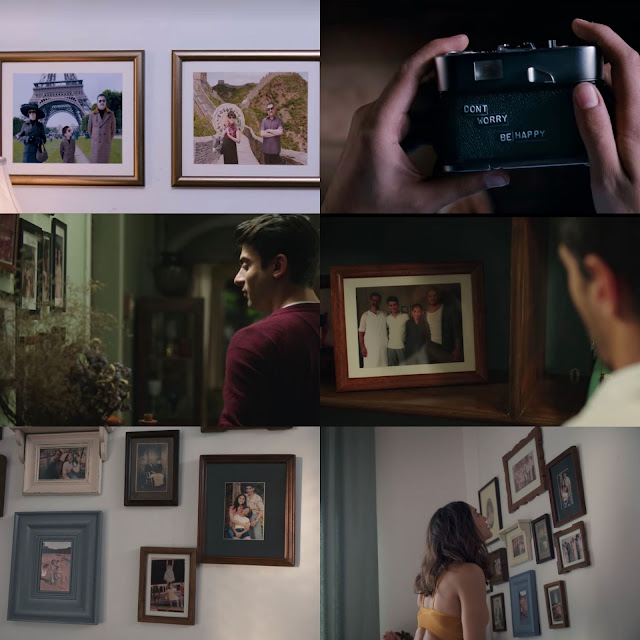
Photographs in Shakun Batra's Films

Cropping out
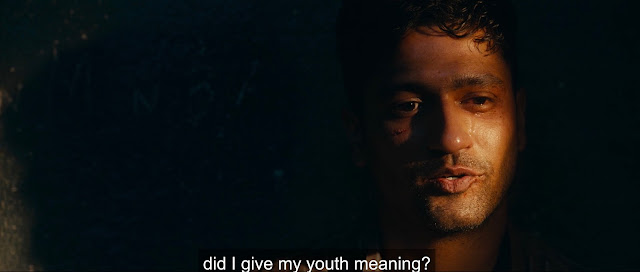
In one of the beautiful shots from Ek Main Aur Ekk Tu, Rahul visits Ri. Their feet are shown suspended in the air. I still remember it after all these years. In Kapoor & Sons, there are some lovely close-up shots of hands. In Gehraiyaan, too, intimacy is depicted through the many shots of feet. In addition, there are also repeating shots of the hands of the characters. The camera focuses on the hands, primarily of Alisha, at different stages, representing her anxiety. When her mother had died, Alisha's hand was shaking. The trauma of that event stayed with her in her adulthood. She is often twitching her hands in stressful situations. At one stage, she cuts her hands with a pair of scissors, punishing herself for keeping her father distant. Alisha says that she does not have the strength to start over again in the final moment of reconciliation. Her father comforts her, saying that her strength lies in her hands.
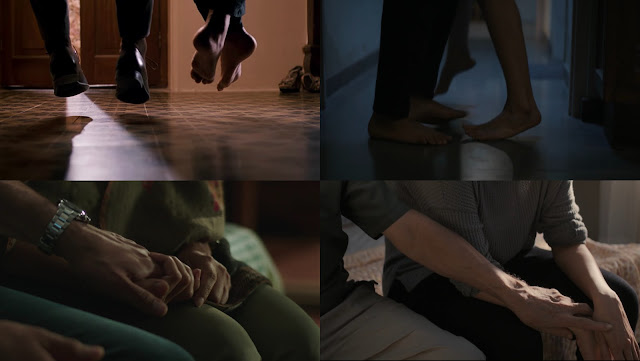
Hands and Feet in Shakun Batra's Films
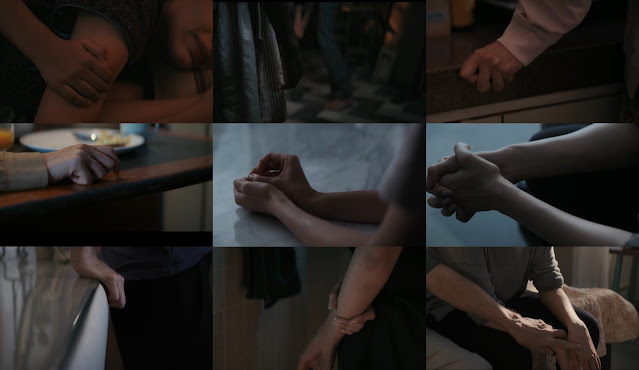
Alisha and her hands in Gehraiyaan.
There are other motifs in Shakun Batra's film. In Ek Main Aur Ekk Tu, there is the feeling of claustrophobia, represented by the ties and the balloons. "Udne ki chah to bahut thi, lekin koshish karne ke pankh bahut kam," says Rahul. In Kapoor & Sons, there is the shadow of death that looms everywhere in the film. In Gehraiyaan, there is the theme of the past. And the turmoil of the characters is represented by the turbulence of the waves.

In the film's final act, there is the sudden death. It was sort of clear from the film's trailer that there would be an incident related to the waves and the water. There is the concept of Chekhov's gun that says, "If you say in the first chapter that there is a rifle hanging on the wall, in the second or third chapter, it absolutely must go off." We can also say that the premise of Chekhov's ship also holds true. A narrative set on a boat will have someone who will fall or jump off it. In fact, at an earlier point in the film, Zain imagines throwing Tia off the ship. It did not come as a huge surprise to me, though the moment it happened was surprising. There was a sudden death in Kapoor & Sons as well.

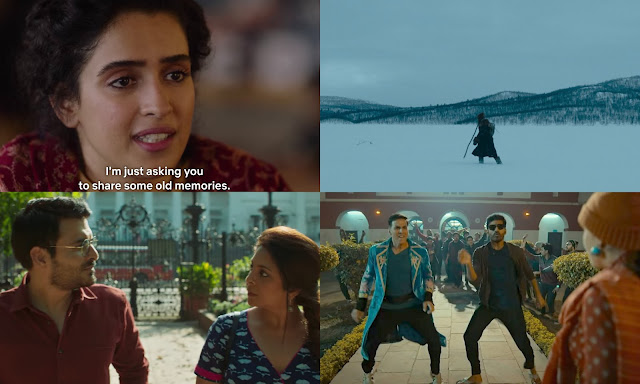
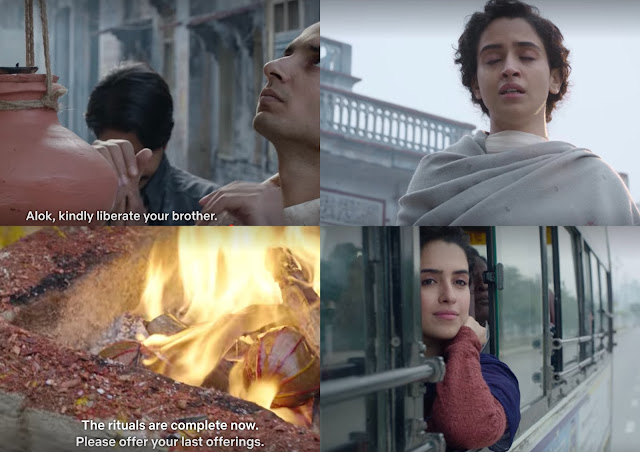
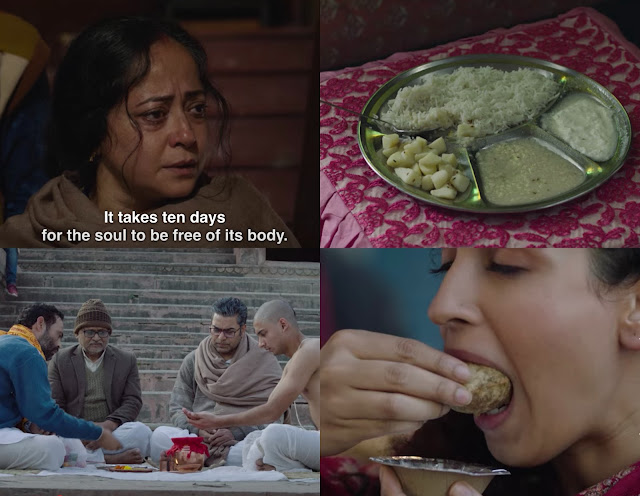
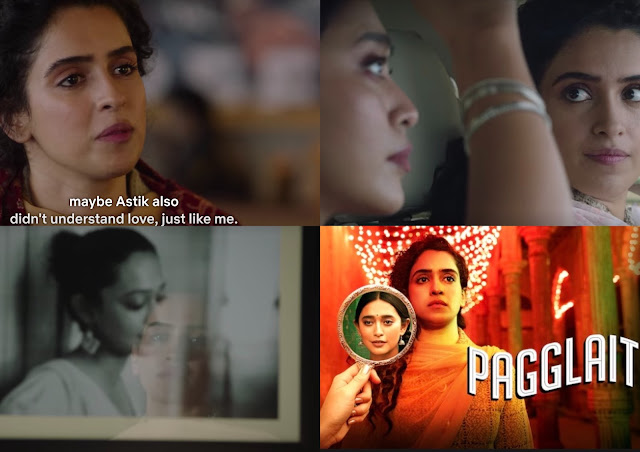
The dubbing in the film seems a little off at many places. Characters speak something, but there is another frame in focus. The voice is delayed in many scenes. The editing also feels a bit off. For instance, when Alisha visits her father for the first time in Nashik, the camera angles when she argues with him also seem a little misplaced. The music did not work for me. It fits the film's milieu, but I could not connect with it. Something on the lines of Arijit Singh's music in Umesh Bist's Pagglait would have been fantastic here. But the film's background score is absolutely fabulous. I do wish the film had a little bit more humor and more color.
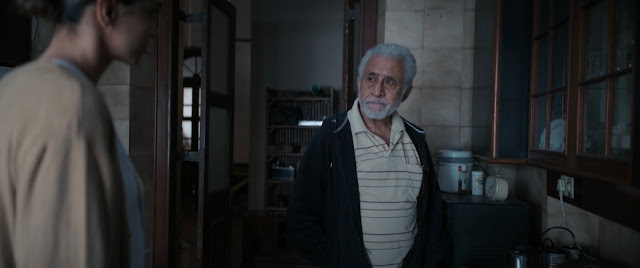
Gehraiyaan has been shot beautifully by Kaushal Shah. There are two kinds of patterns in the cinematography seen throughout the film. Characters are often shot from behind the glass as if the camera is peeping inside, providing an outsider's perspective. There were quite a substantial number of shots where this was visible. I checked if Kaushal Shah also shot Anubhav Sinha's Thappad because that film also had many sequences shot behind the glass walls.
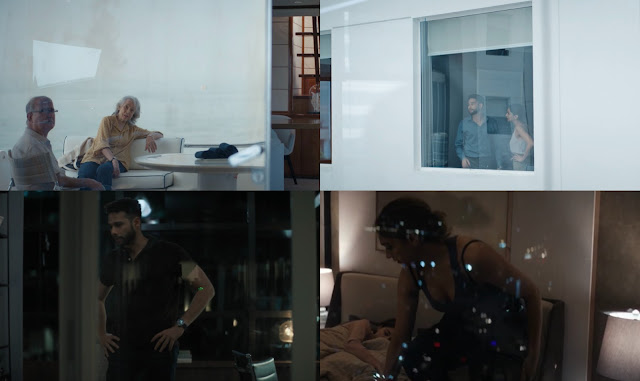
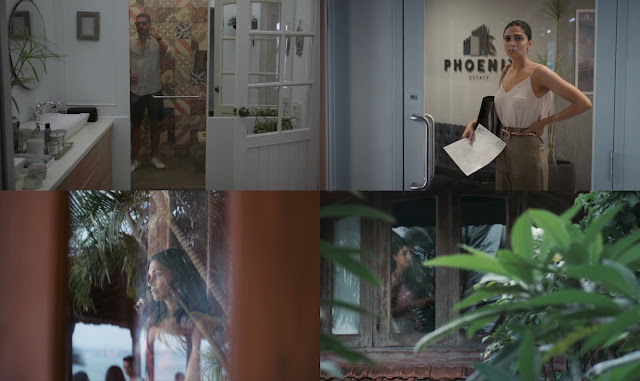
Glass walls
The second type of shot is the diagonal shot of the characters. The conversations between the characters happen when they are placed diagonally to each other. For instance, it can be seen in the scene at the studio where Alisha and Zain talk to each other, or after Zain's death, Alisha and Tia sit across. Each frame seems to be well thought about. Then there are the little moments, such as the shot of the shadows of characters at different stages. In the film, there is one particular moment when Zain calls Alisha to meet at the ship to sort things out. His face is not shown, but his shadow can be seen behind the curtains. Also, whenever Aisha and Zain meet at the Taj hotel, a shot of birds can be seen. Earlier in the film, Alisha closes the curtains in her home. Later, Zain closes the blinds in his office.
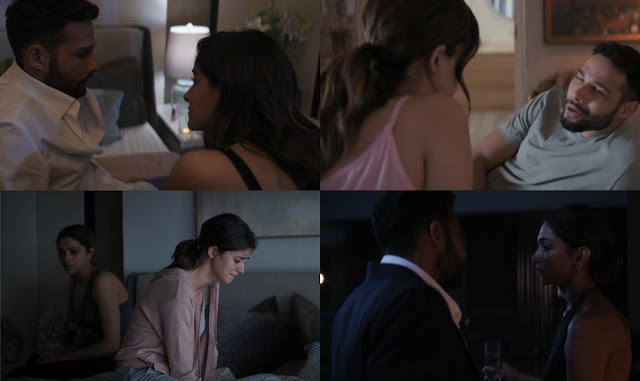
Diagonal conversations
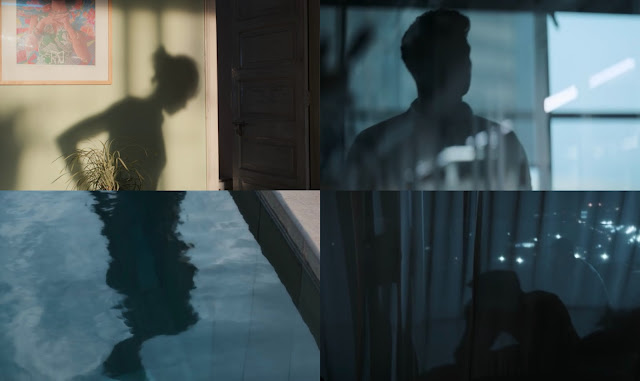
Shadows
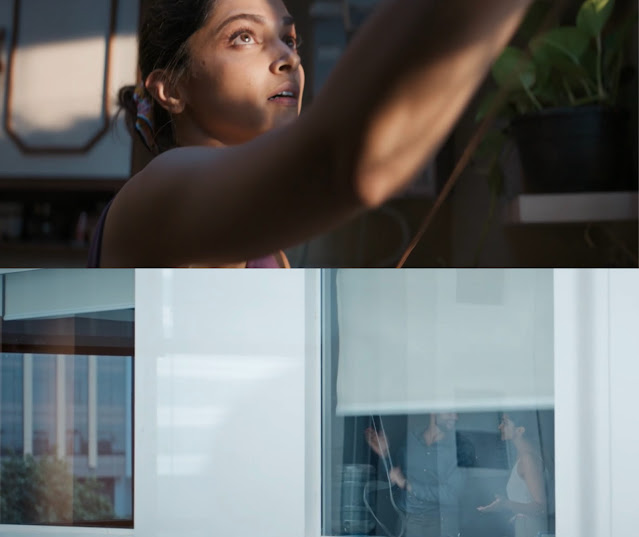
Closing the curtains
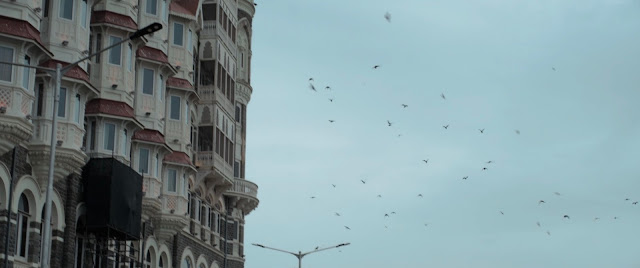
Birds
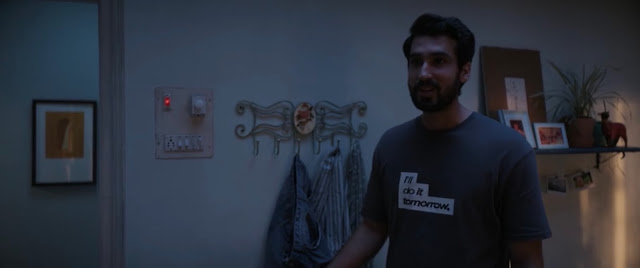
Gehraiyaan is written by Shakun Batra, Ayesha DeVitre, Sumit Roy, and Yash Sahai. Based on the trailer, I assumed Gehraiyaan to be a story about infidelity. But there is nothing much about it. The film was primarily the story of Alisha. The best bits about the film were about her and her parents. Alisha is mature and responsible. She had to become a mother to her father. She says that she has the soul of an old grandmother. When she had an affair with Zain, I did not feel bad for Karan because he treated her like a pushover. Karan makes Tia read his book draft because she was the outsider in their relationship. He gets irritated when Alisha asks for it. Alisha had to take care of the household while he left his "soul-sucking" job in advertising to become a writer. He does not even help her with chores. At one point, he even wears the shirt that says, "I'll do it tomorrow." Having met someone like Zain provides a possibility of a future. Not only Alisha and Zain, but other characters in the film also try to hide something. Tia knows about the paternity of her Alisha, but she keeps it to herself. Alisha's father does not tell her the truth as did not have in his heart to snatch away the happy memories of her mother.
Gehraiyaan might not have the emotional strength of Kapoor & Sons, but it has this feeling of somberness that is again in line with Shakun Batra's oeuvre. It is beautiful in some places. Deepika Padukone is lovely as Alisha. She is always great at portraying these contemporary characters (Meera in Love Aaj Kal, Veronica in Cocktail, Piku in Piku, and Tara in Tamasha). She carries the film throughout. Performances by the other three are also good though there is not much scope for the character of Karan. Naseeruddin Shah feels like he is playing another distant father, like his character from Zindagi Na Milegi Dobara, but it is the reverse. It was Alisha who was trying to be distant from him. In an earlier moment, he had said that Alisha's mother died a good mother while he became the bad father. It was a foreshadowing moment.

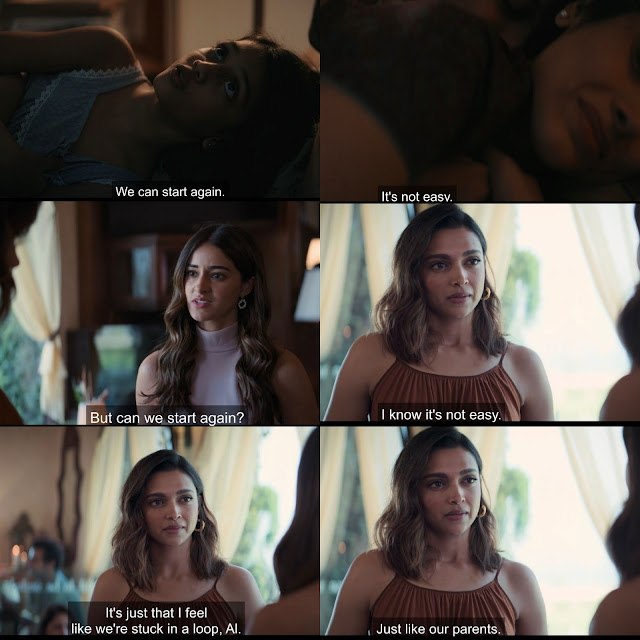
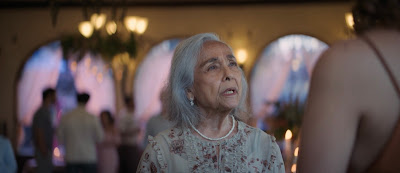
The past, luck, and choices come together beautifully in the film's final moment. Tia and Alisha want to break the loop in which they are stuck like their parents were. They decide to start afresh. Tia wonders, "But maybe if we let go of the past, it will let go of us, too?" But then an old lady from the past comes back again to remind that it is not going to be easy. Because as Faulkner said, "The past is never dead. It's not even past."
Trivia:
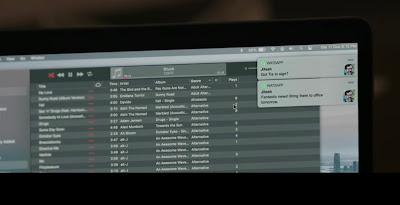
1. Instagram is called Instgram and WhatsApp is called WatsApp.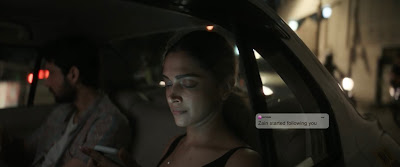
2. The elderly lady (Mohini Kewalramani) who met Alisha at the ship in Gehraiyaan was also the neighbor of Simi (Tabu) in Sriram Raghavan's Andhadhun.
3. Books In Movies: Alisha reads Hippie by Paulo Coelho.

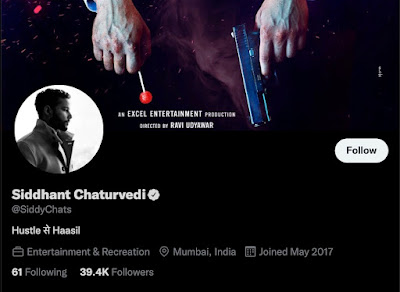
4. The Twitter bio of Siddhant Chaturvedi.
5. An old tweet on Naseeruddin Shah.

"I can't live in the past."—Zain, Gehraiyaan.
"And, I don't know how to let go of mine."—Alisha, Gehraiyaan.