Sunday, September 5, 2021

Location As A Character In Shoojit Sircar's Films

Shoojit Sircar made his debut as a director in Yahaan in the year 2005. The film is the story of a young Kashmiri girl Adaa (Minissha Lamba), who falls in love with Aman (Jimmy Sheirgill), a soldier of the Indian Army who is posted at a bunker near her home in Kashmir. Inspired by a real-life story that Shoojit read in a newspaper, Yahaan is a tale of forbidden love in the land of guns and roses. Shoojit shot the film in the interior parts of the erstwhile state of Jammu and Kashmir. In an interview, he said, "I was just not granted permission to shoot on the locations that I wanted. I didn't want to shoot in the predictable places. I wanted to go where my story takes the characters. I had to meet Jammu and Kashmir Chief Minister Mufti Mohammed Sayeed, and then we were shooting in hardcore militant areas. We shot the film like a guerrilla team, often giving out false shooting venues so that the militants didn't reach there before we did." This aspect can be clearly seen in the film that captures the beauty of the unexplored Kashmir through its cinematography done by Jakob Ihre (who also did the cinematography for the HBO miniseries Chernobyl). The scenes in Yahaan are shot on the fields, bridges, roads, and mountains that bring out a different side of the heavenly land of Kashmir.
In addition to Yaahan, the location aspect is visible in all the other films of Shoojir Sircar. Location is a character of its own in his oeuvre. His films are shot on location without creating any artificial sets. The characters live and breathe the milieu creating a world that feels real. His movies also have scenes shot explicitly in the outdoor settings that capture the vibe of the location. His second film Vicky Donor (2012), about sperm donation, is based and shot entirely in Delhi. The protagonist Vicky (Ayushmann Khurrana), a Punjabi, lives in Lajpat Nagar with his mother Dolly (Dolly Ahluwalia), and grandmother Biji (Kamlesh Gill). Dr. Baldev Chaddha (Annu Kapoor) is a fertility expert who hires Vicky to donate his sperm to couples struggling to conceive a baby. Vicky meets and falls in love with Ashima (Yami Gautam), a Bengali staying in Chittaranjan Park.

Vicky Donor is an out-and-out Delhi film incorporating quirks in its characters inspired by real-life experiences. Vicky lives in Lapat Nagar, a colony built to house the refugees from Pakistan. His house is a three-storey building with his mother's parlor on the ground floor while his room is on the terrace. Talking about it, Shoojit said, "What Juhi and I incorporated into the film was years of my living in and breathing the Delhi air. Of observing the quirks and nuances and the uniqueness of Delhi. In Vicky Donor, the focus was on Lajpat Nagar and a family living there. And everything was set up to lead to that. Everyone in that specific area of Lajpat Nagar, if you notice, lives in those 75 gaj plots. Mostly three-storey buildings, built in a certain style—the small colonies, the interconnected terraces. The people are very Punjabi. Almost every house has a biji or a Dollyji. The terrace is a hub of activity. The clothes lines, the paani ki tanki, which is a main issue of contention in this place. Like Biji says, ‘Paani ki line kaat doongi’. So, the house with the pipes network beneath it is sort of always accorded that slight ‘upper’ status." Ashima lives in Chittaranjan Park—an upscale neighborhood where many members of the Bengali community live. Many other locations of Delhi, such as Connaught Place, Jama Masjid, and Tivoli Garden, are also seen in the film. Vicky Donor also depicts a hilarious clash of cultures, possible in the cosmopolitan state of Delhi. The sophisticated Bengali family of Ashima is shocked by the loud Punjabi family of Vicky at their wedding. The film breaks many taboos, such as sperm donation, adoption, and remarriage, but plays to cultural stereotypes in a non-offensive and hilarious manner. There is another lovely moment in the film when Vicky and Ashima chat on Facebook and he asks her out for a date. He calls her 'Fish,' and she calls him 'Butter Chicken,' alluding to the famous food in their communities. Vicky's dog is also named Whisky. Vicky Donor feels authentic and rooted in the world of its characters.
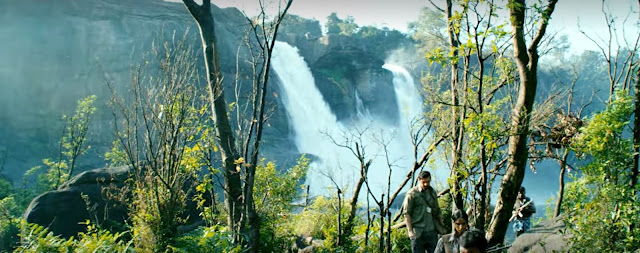
In his next film Madras Cafe (2013), Shoojit takes us to the south of India. The film is a political thriller set in the early 1990s in India and Sri Lanka against the backdrop of the Sri Lankan Civil War and the assassination of Rajiv Gandhi. Major Vikram Singh (John Abraham) is appointed by the Research and Analysis Wing (R&AW) to head operations in Jaffna shortly after the Indian peace-keeping soldiers are forced to withdraw from there. Jaffna is the site of the prolonged battle of Tamils fighting for autonomy from the majority Sinhalese people. Tamils took to arms and joined the Liberation Tamil Front (LTF) leader Anna Bhaskaran (Ajay Rathnam), based on the real-life LTTE leader V. Prabhakaran. Vikram uncovers a conspiracy to assassinate the Indian prime minister by the LTF through the use of plastic explosives but is unable to prevent it. The film was initially titled Jaffna but was renamed Madras Cafe, as the plot to kill the Indian prime minister was hatched at the cafĂ©. Political tensions prevented Shoojit from shooting in Jaffna but he still managed to recreate its milieu successfully in other locations, such as Tamil Nadu and Kerala. He also shot several battle sequences on the outskirts of Bangkok, as firings by Light Machine Guns were not permitted in India. Real AK-47s, 9mm Berettas, and M60s were used. Army personnel were hired to recreate a war sequence. Shoojit Sircar again emphasized the authenticity of the proceedings in the film and said, "We had to shoot some crucial scenes in Thailand and were there for over a week. The scene that recreates the civil war had to look, feel and sound authentic at any cost. So, real bullets and weapons were used. The scenes were shot with a lot of precaution." 
In 2015, Shoojit teamed up again with Juhi Chaturvedi to make Piku, a beautiful slice of life film. The film is the story of Piku (Deepika Padukone), an architect, who lives with her hypochondriac father Bhaskor (Amitabh Bachchan) in Delhi. Her father is perenially complaining about constipation. Rana (Irrfan Khan) is the owner of a taxi company that sends a driver to her every day to drop her at her office. After heavy drinking at a party, Bhaskor suffers an illness and wants to go to his ancestral home in Kolkata, and Rana drives them there. Piku lives in the Chittaranjan Park area of Delhi, which again makes an appearance in his work after Vicky Donor. Piku travels to different places in Delhi. She has a date at Select City Walk. She also takes the autorickshaw. There is also a distinct and genuine Bengali feel to the film. The film's title has a red bindi, one of the most identifiable symbols of Bengali culture. Piku's house has pictures of Ramakrishna Parmahansa and Rabindra Nath Tagore. There are paintings of Raja Ravi Verma. Bhaskor reads books on Holy Mother Sarada Devi. Boroline tubes and The Telegraph newspapers can be seen in the house. When Chabi Mausi (Moushumi Chatterjee) comes to visit Bhaskor, she says to discard homeopathy—the default option in Bengali households—and start allopathy. Bhaskor dances on a popular Bengali song Jibone Ki Pabo Na from Teen Bhubaner Pare (1969). 

Later in the film, the characters take a journey to Kolkata. Piku and Rana visit the famous locations in the city, including Victoria Memorial, Howrah Bridge, St. John's Church, Ganga Ghat, and Bishop Lefroy Road. At one point, Piku points to a site and says that there was once a theater, but now a new building has come up. Rana says that she is also doing the same by selling her own ancestral house Champakunj. She says that she is trying to be practical. He, then, makes a profound statement, "I am not saying tum galat ho. Maybe this is the way forward. Isi ko log development bolte hain. Par apni roots unko agar ukhad do, toh kya bachega." Piku is also the journey of traveling back to your roots to get a sense of closure finally. Bhaskor traveled back to his place of birth which was always in his heart. He cycles the streets of Kolkata, eats the food that he was always avoiding, and has the best shit of his life. Bhaskor learned to let go, and death came to him quietly in the city and on the bed he grew up.

Shoojit Sircar's next film October (2018) tells the story of two hotel management interns, Dan (Varun Dhawan) and Shiuli (Banita Sandhu), working at a five-star hotel in Delhi. During a party, Shiuli falls from the top floor of the hotel and enters into a state of coma. Dan is immensely affected by her condition and takes care of her at the expense of his personal life. Caring for Shiuli gives a purpose to Dan's life, and brings a change in him. October again incorporates the personal experiences of Shoojit Sircar and Juhi Chaturvedi as their respective mothers were also in a state of coma at some point in their lives. It is set and shot on location in the two ends of the hospitality industry—a hotel and a hospital—which again brings an aura of authenticity to the narrative. The film also shows the procedures associated with both the hotel (Radisson Blu Dwarka) and the hospital (Venkateshwar) with clinical detail. Every scene feels real. Delhi is another character in the film. The film opens with a metro rail chugging along in the foggy winter of Delhi. The film's title is based on the change of seasons during the month of October in Delhi, symbolic of the change in Dan's character. The Shiuli flowers blossom in the season. Dan is often found sitting at roadside dhabas. At one stage, Dan fixes Shiuli's car in the middle of the road. Shiuli's mother is a professor at the Indian Institute of Technology. At some other stage in the film, Dan moves to Manali where he finds a job as a hotel manager. The film shows the beauty of Manali as well. Whenever I think of October, I remember all these different locations as well.

Shoojit Sircar's last film Gulabo Sitabo (2020), tells the story of two men, Mirza (Amitabh Bachchan) and Baankey (Ayushmann Khurrana), who share the relationship of a landlord and a tenant, fighting with each other over rent. Set in Lucknow, the film starts with humor, meanders into drama, and ends with a surprising profoundness about the role of greed in life. Like Champakunj in Piku, there is Fatima Mahal in Gulabo Sitabo. And, like his other films, the city of Lucknow is also a character of its own in the film. Every frame of the film, shot exquisitely by Avik Mukhopadhyay, breathes the city of Lucknow. Most films based in Uttar Pradesh usually try to impart the region's language to its characters but miss out on the true ethos of the city. Gulabo Sitabo is rooted and shot in Lucknow. There is a mention of the city's history. For instance, at one point, Baankey compares Mirza to the mother of Aasif-ud-Daula, the erstwhile Nawab of Awadh. There is a mention of the city's geography. Its characters frequently speak about Aminabad, Imambara, Nixon Market, Hazratganj, and Nur Manzil. In one of the most memorable scenes, Mirza holds a balloon in his hand and walks towards the Qaiser Bagh Gate. There is talk about the city's culture in the film. There are no abusive words used in the entire film (except once when Baankey uses the word 'Chutiya', which is also part of the local vocabulary) even though people in the film bicker all the time. The barbs are creative, like calling someone deemak or choose hue aam jaisi sukhi gutli ka chehra. People go to mushairas and use words, such as ulool julool. The tehzeeb of Lucknow can be felt in the film. There is also the depiction of a character belonging to the Anglo-Indian community of Lucknow. Gulabo Sitabo was initially set in Delhi, but they moved to Lucknow, where Juhi Chaturvedi also grew up.

All filmmakers create an internal world of characters in their work. Location is often a prop or a background element in them. The discernible element in Shoojit Sircar's films is that location has been a character in almost all his films. In an interview with National Geographic, he elaborates, "Making a film requires active collaboration across music and costume to cinematography. Location sometimes is woven in the story, and in others, is just a backdrop to a scene. If the backdrop does not go with the characters with a realistic nature (and in my films, I try to be as realistic as possible), then of course you lose out. I spend a lot of time in a city before the shoot. You have to make sure that it becomes so natural to you, that you know the left, right, centre of the city. I know exactly, geographically, where my characters are going and coming from. If you see Gulaabo, you won’t feel the camera—you’ll only feel the chaos and sound of the old city. You have to go there to feel the city. What happens when you sit beside a river, or go to a temple, what are the sounds coming in. Sometimes sounds also create a feel of the city. To bring this out, you have to live there." I also think of his first film Yahaan, where the Muslim girl Adaa has an adopted Hindu sister named Shree who lost her voice after an attack on her family. The film is set in the city of Shrinagar (with the name similar to the mute Shree) whose inhabitants, too, have lost their voice in the shadows of guns. Sometimes, it is also the characters who become an embodiment of their location in films.

Other Reading:
1) On Piku—Link
2) On October—Link
3) On Gulabo Sitabo—Link
4) On Puppets and Ventriloquists in Hindi Cinema—Link

Dialogue of the Day:
"Dilli mein galti kisi ki bhi ho, police danda driver par hi chalati hai."
—Rana, Piku

Saturday, August 14, 2021

Titli—The Cycle of Violence


Films with violence are difficult to watch, but I mustered some courage to watch Kanu Behl's Titli. It is the story of a family living in a colony in Jamna Paar, which, as Pataal Lok also told us recently, is nothing less than hell. There are three brothers—Vikram (Ranvir Shorey), Bawla (Amit Sial), and Titli (Shashank Arora)—living with their father (Lalit Behl) in a cramped house that reeks of claustrophobia. The two elder brothers Vikram and Bawla go on a gasht where they rob cars during the nighttime. They involve their youngest sibling Titli in their business of stealth and violence. However, he decides to rebel and plans to escape the nether world of Jamna Paar by opening his parking lot in a mall in Meerut.
Titli is trapped.

Titli's mother wanted a girl when she was expecting him. But when her child turned out to be a boy, she still kept the name Titli—a butterfly—an unusual name for a boy. Titli is about Titli's quest to fly away from the circumstances he was born into, but it is also about his emasculation. His brothers felt that a woman in the family would be rewarding for their business. They decide to marry him off to Neelu (Shivani Raghuvanshi), aiming to keep him in check from escaping. Neither Titli nor Neelu is given a choice in the matter. On his wedding night, his wife resists all his attempts to get physical with him. Later, he also takes her to her lover Prince (Prashant Singh) and stands outside when they get intimate with each other. Most crimes, including sexual, are often about power. Titli is powerless in front of his brothers, and he gradually tries to control his wife through violence, just as his brothers did. Earlier in the film, when a dining table is delivered to the family, the delivery guy keeps addressing Vikram's wife Sangeeta (Sarita Sharma), instead of Vikram, which triggers him. He, then, beats the guy black and blue. It again depicts the role of power in triggering crime. The authority of Vikram was challenged.

Titli is co-written by Sharat Katariya, who also made Dum Laga Ke Haisha. In terms of structure, there are quite a few similarities between the two films. Both depict that men can be victims of patriarchy. A 10th-Class-fail Prem (Ayushmann Khuranna) is married off to a well-educated Sandhya (Bhumi Pednekar) against his wishes by his family because she will be able to find a government job in Dum Laga Ke Haisha. The couple eventually decides to be together, but there is violence in both films. Titli focuses more on the physical aspect of violence, while Dum Laga Ke Haisha scores more on emotional violence. Is marrying someone to whom one feels no attraction less than violence? In addition, Prem is also emasculated where his father beats him for not agreeing to marry Sandhya. He is treated like a child. On his wedding night, his father gives him a pack of condoms and advises him to have a kid only when Sandhya finds a government job.
Titli is about the cyclical and hereditary nature of violence that passes through different generations. The father reveals that he has not hit anybody after his last trip to Vaishno Devi. Vikram was given the baton to continue the family tradition. After that, Bawla joined their business. Now, Titli has been asked to do the same as well. Vikram tortured Titli through beating. Gradually, Titli does the same with Neelu. He was becoming like his own brother. The same violent streak in the way they treat their wives. The way they both use the hammer. Their father keeps a photograph of his own father who was, perhaps, in the same field. At another point in the film, Titli sees a dream where he goes upstairs in a skyscraper building, and his grandfather's photograph keeps falling on every floor. The scene is shot in a way that shows the top view of the stairs of a building in the form of a cyclical loop. There are more symbols related to their connectedness, especially seen in the end. The four steel glasses. The four toothbrushes. The four chairs on the dining table. The same type of discolored vests that they wore. They are all the same.
The cycle of violence
The film further uses the retching sounds made by the characters while clearing their throats to depict this cyclicity. The father, Vikram, Bawla, and Titli—all the men in the family are depicted making the same sound while brushing their teeth. It is as if something is stuck in their throats. When Titli gets his parking space, he cannot stop throwing up. His continuous vomiting was a signal that Titli could take out that streak of violence stuck in him. He gets back his money and comes to his house. He then puts down his grandfather's picture on the dining table, which he also saw in his dreams, symbolizing his initiative to cut off his with his family's occupation. We don't know if he was successful later in life, but maybe Titli could escape and start afresh with Neelu.
Vomiting
The most horrible character in the film was the father. He might not have actively participated in the violence, but there is a sinister streak in him. Early in the movie, when a dining table was delivered to their house, and his sons beat up the delivery people, his expressions belied that he enjoyed it. When Vikram is beating Titli, the father is standing there casually enjoying his tea. He is always in the background. While the violent brothers expressed emotions (Vikram is seen crying, Bawla is seen crying), something was menacing about their father, like the scar on his chest. In the end, Titli whistleblows the plans about his brothers' robbery plans to the police; the father senses something and changes his tone with him. He becomes nice to Titli, while earlier, he kept blaming him for their family's issues. Vikram's wife Sangeets rightly calls him a pig.
When Bawla suggests that Titli should be married, I wondered why he did not offer his own name to get married. It is later hinted Bawla that is gay. He was in a relationship with someone who used to visit their house. In another scene, Bawla is also crying after a break-up. All the family members know about it, but they kept silent. The film does not make a big deal about it.
Titli also shows interesting imagery trying to capture the state of the characters. A bird flies in the sky. A wasp moves towards the light. A spider weaves its web (this occurs when Titli decides to make his plan to escape). Titli is also often shown trapped in cages. All through the film, the characters are eating. Other bodily functions, including retching and peeing, also make their presence felt. There is also the irony of playing religious songs, such as the Gayatri Mantra and Paayo Ji Maine Ram Ratan Dhan Paayo, in a family that propagates violence. Delhi is shot in a grainy dystopian manner. Everyone is corrupt. However, in some scenes, it became tough to follow the dialogue. It was not clear what the characters were saying.
Images
Eating

Ranvir Shorey is terrifying as Vikram. He is a hot-headed guy who lets violence and emotion take over him. He does not do it by choice, but there is no way out as he has to do it for his family. In Konkona Sensharma's A Death in the Gunj, he again played Vikram, the testosterone-loaded man on one end of the spectrum, and there is Shutu (Vikrant Massey), the sensitive man, on the other end. The film was also about how society treats men who cannot mold themselves into a traditionally masculine role.

Like Titli, Neelu too is stuck and dreams of escaping with her lover Prince; however, she is unaware that Prince has no such plans. The film does not explain why Neelu's family agrees to marry her to Titli, given the observable differences in the economic status of the two families. At multiple times in the film, Neelu keeps bringing the topic that she belongs to a good family. She keeps mentioning that her lover also belongs to a good family. Titli warns her about his horrible family where the entire neighborhood is aware of what they do. The often repeated word 'dysfunctional' is too light to describe his dark and terrifying family, which feels more ironic as the film Titli has been produced by a cinema house known for its family-oriented mainstream films. "Har family, family nahi hoti," reads its tagline. Titli depicts the intersection of crime, power, and family, in a rapidly changing urban India. It is not an easy watch but is a memorable one for its anti-utopian portrayal of families.
Trivia:
1) There is an interesting photograph in one of the scenes in Titli but I am unable to identify the people in it.
2) The vomiting scene also reminded me of Anand L. Rai's Raanjhanaa. At one stage, Zoya (Sonam Kapoor) spits on Kundan (Dhanush), where she blames revealing the identity of her lover Jasjeet (Abhay Deol) to her family. He goes to apologize to him, but he is dead. The first time he sees Jasjeet's body, he started vomiting as if he has become sick. His soul has become impure, and he needs to take that guilt out. He takes refuge in spirituality, as portrayed in Tohe Piya Milenge. He cleans the floors, and he cleans the utensils as if that would cleanse his soul. He visits a gurudwara, a mandir, and a dargah in his quest for inner peace. But a wise man tells him at the bank of Ganga that he will not find solace by sitting there. When Kundan lay dead, he spits out blood as if he has achieved redemption. He is finally at peace, but he has had to pay a heavy price in doing so. When Bindiya (Swara Bhasker) lets go of him, she says, "Yeh tera hai, Zoya; mera Kundan khoon nahi thookta tha." He is yours, Zoya; my Kundan did not spit blood.
Other Reading:
1) No taking the edge off: Of violence, crime and anger in Delhi—A superb piece by Kanu Behl—Link
2) In Titli and Mukti Bhawan, Lalit Behl's binary portrayals of two fathers who cast a tall shadow on their sons—A post by Jai Arjun Singh—Link
3) Dum Laga Ke Haisha—Of The Force Of Gravity—Link
4) A Death in the Gunj—Of Sensitive Souls—Link

Dialogue of the Day:
"Dream hai teri, atthani me khareedega kya."
—Pintu, Titli

P.S.—Read my book on Dil Chahta Hai here.

Saturday, July 31, 2021

Trivia Post 24

A few trivia notes from the last few weeks:

1) A beautiful frame from Imtiaz Ali's Socha Na Tha.
2. In an interview, Amit Masurkar mentioned that Vidya Vincent (Vidya Balan) in Sherni was named after Vincent Van Gogh. Therefore, we also see Starry Nights by the painter in one scene in the film. Also, check out my Twitter thread on #ArtInMovies. 
3. Dil Hoom Hoom Kare in Kalpana Lajmi's Rudaali shows Shanichari (Dimple Kapadia) chasing the shadows.
4. Bridges as a motif in Imtiaz Ali's Love Aaj Kal. Most of the conversations of Veer (Rishi kapoor) and Jai (Saif Ali Khan) happen near a bridge. Most of the film's scenes are shot near a bridge. Even the iconic poster of the movie shows the Golden Gate bridge. The bridge was connecting the love of the aaj and the kal, the present and the past. Howrah bridge was shown for the love kal as it is located in the East, and the Golden Gate bridge was shown for the love aaj as it is located in the West—symbolizing that old love was more traditional and oriental, and the modern-day love has more of Western influences.
5. The red muffler in Vishal Bhardwaj's Haider. Arshia (Shraddha Kapoor) knits it and gives it as a gift to her father. Her father uses it to tie Haider (Shahid Kapoor). Towards the end, Arshia starts unknitting it. When the muffler is fully unwoven, Arshia also unties her from all the worldly relationships and chooses to go away from the world.
6. The woman is symbolically represented by the flower in Mehboob Khan's Andaz.
7. Shadows in Bimal Roy's Madhumati.
8. The sparks of the impending romance in Sanjay Leela Bhansali's Hum Dil De Chuke Sanam. Nandini (Aishwarya Rai) falls from the bed because of a firecracker. In the next moment, Sameer (Salman Khan) falls into the water.
9. Dupatta in Karan Johar's Kuch Kuch Hota Hai and Nikkhil Advani's Kal Ho Naa Ho. Anjali (Kajol) gives it to someone else. Aman (Shah Rukh Khan) tries to hold it but life has other plans.
10. Dubey Ji (Vijay Raaz) and his heart of (mari)gold in Mira Nair's Monsoon Wedding.
11. Roses in Vinil Matthew's Hasee Toh Phasee.
12. The play of lights in Sanjay Leela Bhansali's Black.
13. The play of lights in Sanjay Leela Bhansali's Guzaarish and Devdas.
14. A beautiful dialogue from Karan Johar's Kabhi Alvida Naa Kehna.
15. Cartoonist R.K. Laxman in films: a) The opening credits of Gulzar's Hu Tu Tu b) Guru Dutt's Mr & Mrs '55 c) Suresh Triveni's Tumhari Sulu.
16. Suhasini Mulay in Mrinal Sen's Bhuvan Shome.
17. I love this scene from Mansoor Khan's Jo Jeeta Wohi Sikander when Sanju (Aamir Khan) sees his father crying.
18. A gorgeous frame from Vidhu Vinod Chopra's 1942: A Love Story.
19. Laddoos in Gauri Shinde's English Vinglish.
20. All the things that Abhimanyu Roy (Ayushmann Khurrana) mentioned while talking about Bindu (Parineeti Chopra) in the end in Akshay Roy's Meri Pyaari Bindu.
21. Sons coming back to Naseeruddin Shah's life in Gulzar's Masoom and Zoya Akhtar's Zindagi Na Milegi Dobara.
22. There are two reflection scenes of Akash (Aamir Khan) and Shalini (Preity Zinta) in similar situations in Farhan Akhtar's Dil Chahta Hai. They are almost like mirror images. In the first one, Akash’s reflection is seen while in the second one, Shalini’s is seen. However, the thing to note is that the first one happens in reality while the second one happens in imagination. Excerpt from my book on Dil Chahta Hai. Available to read here.
Other Reading:
1) Trivia Post 23—Link
2) Trivia Post 22—Link
3) Trivia Post 21—Link
4) Trivia Post 20—Link
5) Trivia Post 19—Link

Dialogue of the Day:
"Aakhri chand second hi toh haar aur jeet ka faisla karte hai."
—Ratan, Jo Jeeta Wohi Sikander