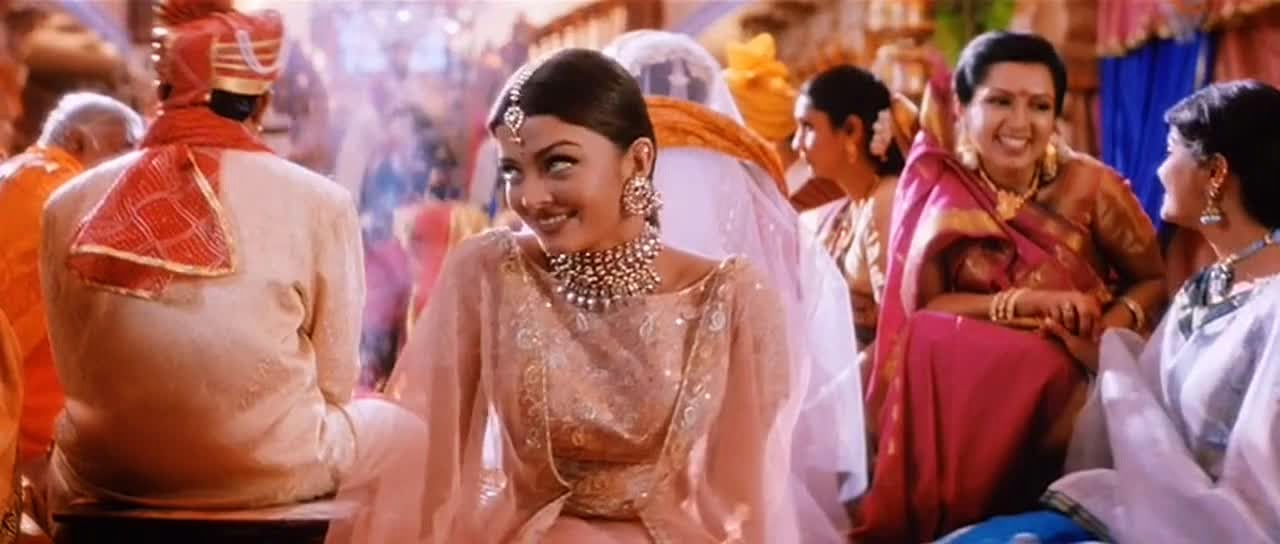
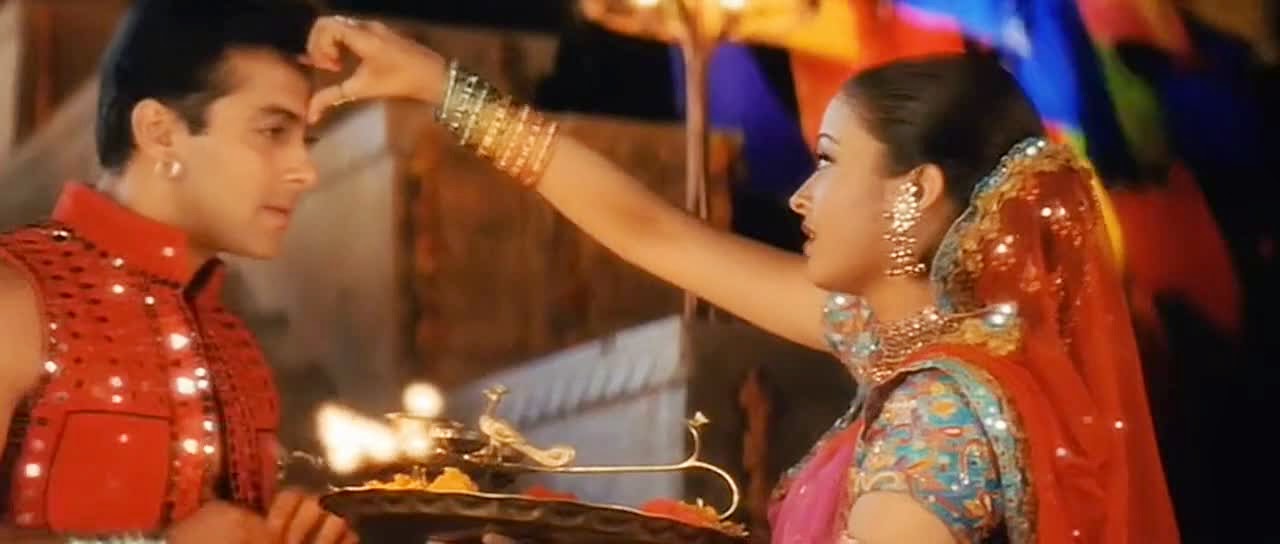
I had first seen Jhoom Barabar Jhoom about seven years back at its release. I remember the brouhaha over the film as it was getting terrible reviews from all. My cousin and I watched it at Chanakya, and we, actually, did not find it as bad as it was made out to be. In fact, it was not a bad film at all; I liked the movie, and perhaps it was a little slow. I still remember the conversation with a friend after I told her that I wanted it, and she was aghast at how can anyone like that film. I think that was when I started hiding the films. I liked to spare myself the social shaming and the embarrassment that people indulge in, but I realized how foolish I was over the years. As I have written probably for the umpteenth time before, liking a film is like picking a dress that depends on a person's choice. In 2012, every critic except Baradwaj Rangan trashed Aiyyaa calling it Rani Mukerji's worst film. I think it was such a brilliant version of Alice In Wonderland that they just did not get the movie. Many other splendid films are so less understood. A few days ago, I was watching Kiss of Love, a song I absolutely love, and suddenly got this epiphany to watch Jhoom Barabar Jhoom again. And then, I watched it over three-four days, and this time, I understood some parts of the movie and liked it in many more ways. At one point in the film, Alvira (Preity Zinta) says, "Chhoti chhoti cheezon me hi to bada lutf hota hai," which perfectly summarizes the movie. It might not be a terrific film, but there are some fabulous chhoti chhoti cheezein imbued in the movie that gave me enough lutf.
One of the main things I felt in the movie was the concept of dualism prevalent throughout the film. Take the title Jhoom Barabar Jhoom, in which the word Jhoom is repeated twice. This repeated word is separated by the word Barabar which could mean equality, completeness, or balance. The word barabar brings a sense of balance to the two swaying jhooms. Or, for another instance, look at the bohemian Bulla Man (Amitabh Bachchan). He has a guitar with two necks, just like the repeated word in the film's title. In addition, the film is a story of two couples—Alvira (Preity) and Steve (Bobby), and Anaida (Lara) and Rikki (Abhishek)—who pretend to be someone else they really are. Alvira and Rikki are in love with each other, and both make the same lie that they are engaged to someone else. Alvira pretends that she is engaged to Steve, while Rikki acts that he is engaged to Anaida. In reality, neither Steve nor Anaida really exists, and both of these imaginary characters are forced to be played by Satvinder and Laila—both of whom have no love lost for Rikki and Anaida. The parallels between the two main characters and their two imaginary lovers clearly underscore the concept of dualism in the film.
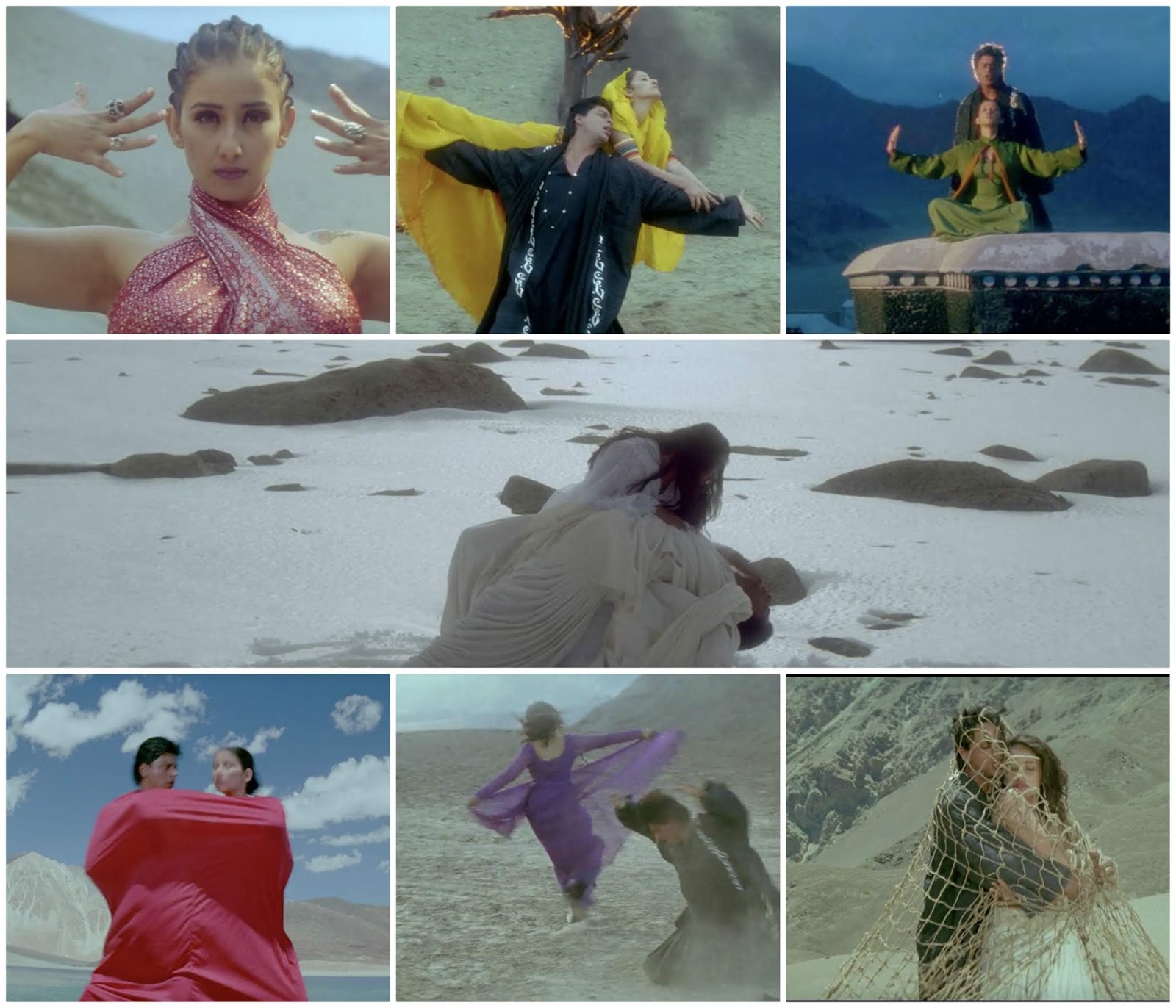
 In another instance of this concept of twofoldness, take the gorgeously choreographed song Bol Na Halke Halke. The song is one of the most beautiful sequences in the film. Rikki and Alvira are in a state of reverie, trying to imagine the scenario if they had met each other earlier. The song is a visualization of that scenario. And then, in the song, we see more double references. Rikki and Anaida talk about the similarities in their religions. Rikki says that before entering a gurduwara, we cover our heads. Alvira responds that the same is done before entering a shrine. Before bowing our head in the gurudwara, we wash our hands and faces; likewise in the shrine. And both the places offer tabarukh—divine love—as a blessing, and that meri ibadat is the same as tumhari ibadat. Later in the song, we see that Rikki and Alvira marry in the Sikh traditional style in front of the Taj Mahal, and they have two sons who are twins. It is a beautiful concept that details the essence of the sameness of the two religions, like the two necks of Bulla Man's guitar producing the music from one guitar. Ultimately, both the religions have the same body, only the path of creating the music might be different. Again, the fact that Alvira is from Pakistan and Rikki is from India, two nations made from one body is quite befitting this concept. Also, I found the story about South Asians who are set in England, another instance of the depiction of the concept of dualism where these people are not only known by their original South Asian identity but their acquired English identity as well (notice how Rikki uses the word blimey).


 The leitmotif of dualism is conspicuous in the film's sequences and story, but another aspect of this recurring motif quite subtly permeates the film. The film merges another pair of binary notions—fiction and reality—in itself. At one point, Rikki and Anaida are talking, and he says, "Kahan tum Miss World, aur kahan Rikki Tukral," and that he is not worthy of her. In real life, Abhishek Bachchan is married to a former Miss World, Aishwarya Rai, and we think, is that Abhishek saying or Rikki saying? Not to forget that Lara Dutta has also been a Miss Universe at some point in real life. Or, for another instance, take Alvira. When she meets Steve at his mansion for the first time, she is stunned by his wealth and says that he is even bigger than Prince Charles in stature. And, we think is it Alvira saying this or Preity saying this because then she was dating the millionaire, Ness Wadia (their recent relationship turmoil is another topic of discussion, though). Or at another instance, we see Rikki talking about the famous Indians in Madame Tussauds. When it comes to Amitabh and Aishwarya, both his real-life family members, he says it with a glint in his eye, and we wonder, is that Abhishek's or Rikki's? Or in the song Bol Na Halke Halke, the first shot that we see is that of Rikki walking on a station platform in a bright red kurta, so reminiscent of his father's role in the film Coolie. Then, Alvira visits Delhi, and her look mirrors one of her earlier films, namely Veer Zaara (Alvira and Veer Zaara—Veer connection?). Recall that in that film, too, she had come to visit India, and she was from Pakistan in that film. In that song, there is another sequence in which she gets old and looks like the old Naina (played by Preity only) from the last scene of Kal Ho Na Ho. At another point in the song, Rikki and Alvira are talking near the Taj Mahal, and the song Jo Vaada Kiya Woh Nibhaana Padega from the movie Taj Mahal is playing. And again, we wonder at the juxtaposition of what we see on the screen with the musical reference of that thing itself. At another point in the film, when Satvinder (Bobby Deol) comes for the first time, the song from one of the films of Bobby's real-life father, Dharmendra, plays, which was Main Jat Yamla Pagla Deewana (it is rather uncanny that the song itself became Bobby's own film Yamla Pagal Deewana in 2011). At another point, we see the iconic motorcycle from Sholay given a tribute in Jhoom Barabar Jhoom, and it is quite fitting that now, the sons of both the actors who sang that immortal song in the motorbike in Sholay, replicate the same scene in this film. And, if these were not enough, Shaad Ali refers to a dance step from Kajra Re of his own film Bunty Aur Babli in the song Ticket To Hollywood. These instances subtly juxtapose fiction and reality, blurring the boundaries between the two realms, giving us something called fictional realism, if I may coin an oxymoron.


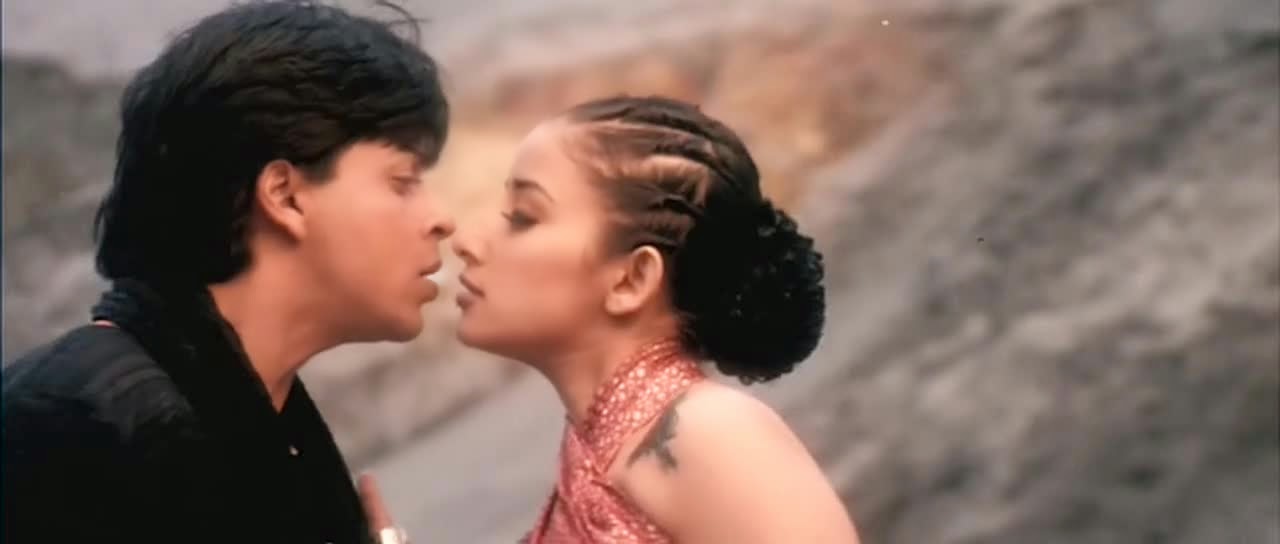
 Jhoom Barabar Jhoom is also a musical film. The musical film is a film genre in which the songs sung by the characters are interwoven into the narrative. All our Hindi films are called musicals, but a real musical film is one in which the song takes the plot forward, unlike our typical films where songs are forced into the plot. All the songs of Jhoom Barabar Jhoom are interwoven in the script, and some, like Ticket To Hollywood would not mean anything if we don't know the plot. Or the fabulously choreographed Kiss of Love comes when we are in a serious courtroom in line with the film's story, and all of a sudden, it starts playing. I love the way Bobby dances on the steps with the cap and the gown in the song. The film's songs and the choreography are worth the price of a ticket itself. What is also interesting is that these songs don't play out entirely but in parts. Like Bol Na Halke Halke. The song would play for a few minutes and then stop, the characters would talk, and then it would again start playing. The same happens in the resplendent Jhoom Barabar Jhoom song itself. That is a true musical film, and Jhoom Barabar Jhoom does that nicely. Jaaneman is another example of a real musical.
 Early in the film, when Rikki and Alvira are talking about their love stories, Rikki says his fiance's name is Anaida, and he saw her at the Ritz in France, where was she taking care of Lady Diana and Dody. At first, I thought that the names Diana and Anaida were quite similar, with some connection. Later, when Alvira talks about Steve, she compares him to Prince Charles. I definitely felt some connection between Prince Charles and Lady Diana. It was only in the end that we got to know the link. I had seen the movie for over two to three days, and only on the third day did I realize it was so obvious when I finished watching it. The film's Facebook page also makes this point. Anaida and Steve, better known as Laila and Satvinder, embodied Diana and Prince Charles, and it is they who run away in the end. I am not sure, but it is interesting how Jhoom Barabar Jhoom could be similar to Lady Diana and Prince Charles's real-life love story, who incidentally was involved with different people in real life. Diana was involved with Dody, and Charles was always in love with Camilla Parker Bowles, making Lady Diana make the famous statement, "There were three of us in this marriage, so it was a bit crowded." Like the four couples in the film. Unrelated Fact: Many people, even in the movie, refer to Lady Diana as Princess Diana. She was a princess but not Princess Diana because, as per the English monarchy rules, she was Lady Diana, Princess of Wales. The word princess with the first name is only used for the monarch's daughter, so calling Lady Diana to be Princess Diana is incorrect.
One of the main things I felt in the movie was the concept of dualism prevalent throughout the film. Take the title Jhoom Barabar Jhoom, in which the word Jhoom is repeated twice. This repeated word is separated by the word Barabar which could mean equality, completeness, or balance. The word barabar brings a sense of balance to the two swaying jhooms. Or, for another instance, look at the bohemian Bulla Man (Amitabh Bachchan). He has a guitar with two necks, just like the repeated word in the film's title. In addition, the film is a story of two couples—Alvira (Preity) and Steve (Bobby), and Anaida (Lara) and Rikki (Abhishek)—who pretend to be someone else they really are. Alvira and Rikki are in love with each other, and both make the same lie that they are engaged to someone else. Alvira pretends that she is engaged to Steve, while Rikki acts that he is engaged to Anaida. In reality, neither Steve nor Anaida really exists, and both of these imaginary characters are forced to be played by Satvinder and Laila—both of whom have no love lost for Rikki and Anaida. The parallels between the two main characters and their two imaginary lovers clearly underscore the concept of dualism in the film.

As always, I love finding references in films. Jhoom Barabar Jhoom was paying tribute to our mad Hindi cinema in so many ways. I counted references to Sholay, Qurbani, Don, and Aradhana. At one point, Rikki and Alvira, along with their partners Laila and Satvinder, go to the South Hall dance competition, and they try to make each other jealous by canoodling each other. I was instantly reminded of Kabhi Alvida Naa Kehna when Maya (Rani Mukerji) and Dev (Shah Rukh Khan) go to watch the ballet performance along with Rishi (Abhishek Bachchan) and Rhea (Preity Zinta) and make each other jealous, especially Dev who could not withstand Rishi touching Maya. What was fascinating was this time, Rishi and Rhea of that film are played by the same characters in Jhoom Barabar Jhoom. In another scene, the film pays tribute to one of the most famous characters known for playing the villain's sidekick—Actor Sudhir—just like Zoya Akhtar did to Mac Mohan in Luck By Chance. Actor Sudhir is dressed in a hybrid of Elvis Presley and Rishi Kapoor's style. Qalandar makes such a fabulous point about Sudhir. He says, "The culmination of this everyday oddness is the dance competition, presided over by veteran character actor and villain sidekick Sudhir (known to and beloved by at least two generations of Hindi film-viewers as just that, and wholly independent of whatever any character he played was called). Sudhir spent his career in the shadows of more famous actors, and it is fitting that he and not Amitabh Bachchan, who opens and closes the film should take center stage here, in perhaps the only film featuring both of them where he has a speaking part and the Big B, none, fitting that Sudhir's dance competition determine which of these lives lived in the shadows of the Princess Dianas of the world will be acknowledged on a Southall-wide basis." Not only this, but the film also, in a way, takes us to a reverse dream sequence as if making a point about our fascination for foreign settings. The entire movie is set in London, and we are in India when the song Bol Na Halke Halke comes. If it had been any other film, we would see the exact opposite, a film set in India with the dream sequence shot abroad. And, what is with Yashraj's heroines not liking Indian men? Alvira prays to God to not marry her to a kale kaloota as she liked white men. Remember Meera and Sir Jesus in Jab Tak Hai Jaan?


Teri Hamesha Phatati Kyun Hai

O billoni, billoni, billoni, hath maar de taaliyaan
Interesting credits:

Story Development by Anurag Kashyap and Tigmanshu Dhulia

The character of Huffy Bhai is a tribute to Khan Sahab
Jhoom Barabar Jhoom is not flawless; it is slow and sometimes tests our patience, but it is a mad, mad film. It is all in the details, says, and delivers on that front. I am not really sure even if I understood the movie's depth in its entirety. If nothing else, the song Bol Na Halke Halke, with its gorgeous camerawork, is worth the ticket price. I am eagerly waiting for Shaad Ali's next — Kill Dil.
Dialogue of the day:
"Chhoti chhoti cheezon me hi to bada lutf hota hai."
— Alvira, Jhoom Barabar Jhoom