Saturday, March 11, 2023

Love Hostel — No Country for Lovers

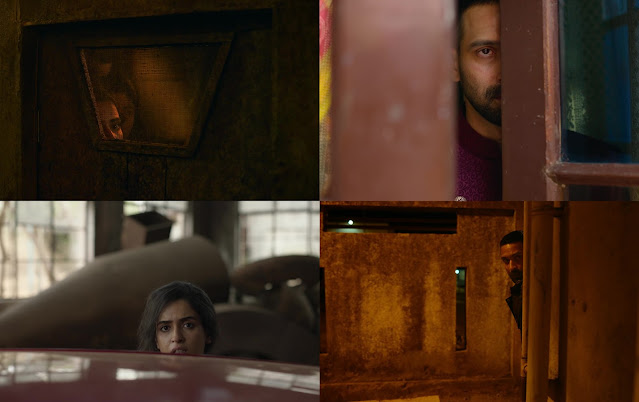
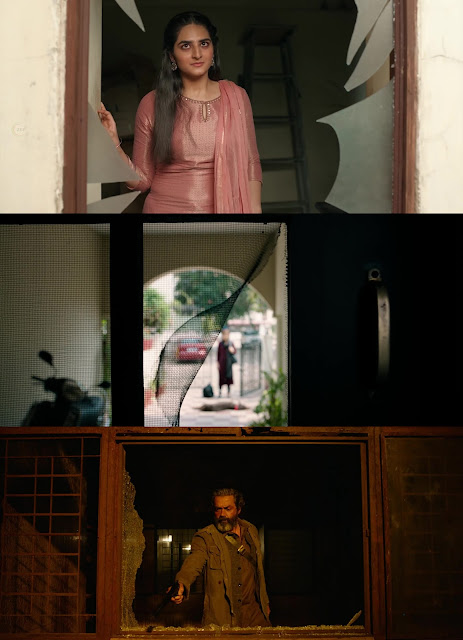
Shanker Raman's Love Hostel opens with a just-married young couple recording a video pleading for acceptance from their family members. It is reminiscent of Dibakar Banerjee's Love Sex Aur Dhokha, a seminal film that turned Dilwale Dulhania Le Jayenge into a dystopian nightmare. A violent assassin Dagar (Bobby Deol), dealing with his issues, is soon sent to finish off the couple. Love Hostel tells the story of these lovers in a country where everything is political. Another couple, Jyoti Dilawar (Sanya Malhotra) and Ashu Shokeen (Vikrant Massey), belonging to different religions, elope to start a life together. The girl belongs to a powerful political family, which, as can be guessed, is against this match as she chose Eid over Diwali. The lovers then ask the state for protection. But Dagar is again sent to eliminate them, and the cycle repeats. Raman, who earlier made Gurgaon, again tells a story of conservative families resorting to violence to uphold their regressive outlook of the world.
The film takes its title Love Hostel from the safehouses the government has built to shelter lovers from their families. Jyoti and Ashu are sent to one such hostel. Little did they know that the hostel was made by Jyoti's grandmother Kamala Dilawar (Swaroopa Ghosh), not as a goodwill gesture but as a tool for reaping political benefits. On reaching the hostel, Jyoti calls it Taj Mahal. Ashu, though, rightly feels it is a bhoot bangla. It is officially called a hostel, but it is essentially a pinjra—a cage—where lovers remain trapped for years in the rigmarole of court hearings. Residents' cell phones are confiscated at check-in, removing all contact with the modern world. The graffiti on the hostel's walls, as seen on old historical monuments, is a cry for help from lovers who only ask to let them love on their terms.
In a land where the rules of khaps have been enforced for over six hundred years, modern jurisprudence rules have little bearing. It is the writ of Kamala Dilawar, the influential politician and family matriarch, that rules over the Dilawar family. She controls everything leaving her sons to feel emasculated. Her role reminded me of Amma Ji (Meghna Malik) from the show Na Aana Is Des Laado. It takes a bit of time to get used to seeing Swaroopa Ghosh play Kamala as it kept reminding me of her performance as the genteel Pishi in Vicky Donor. Ashu is also dealing with his familial problems. His father has been sent to jail on charges of being a terrorist. His mother has Alzheimer's disease. His family has a meat shop. When Ashu talks about 'doing a delivery,' I initially thought it was related to drugs. But he was tasked with delivering meat, most likely beef, in a state that has banned the sale of beef. Unlike many other films, where politics seems to be forced and inorganic, the politics of Love Hostel is sharp and merges with its story without any artifice. The political element blends in and is depicted with authenticity. Love jehad, communalism, and identity politics are all present in the film.

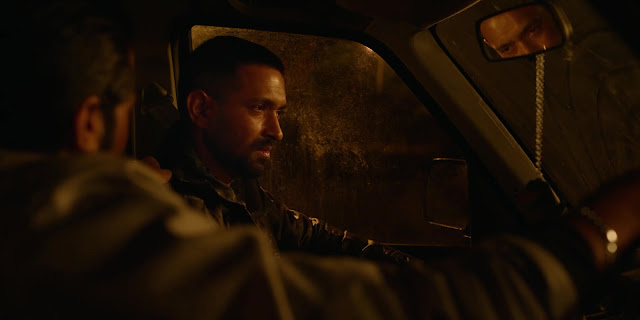
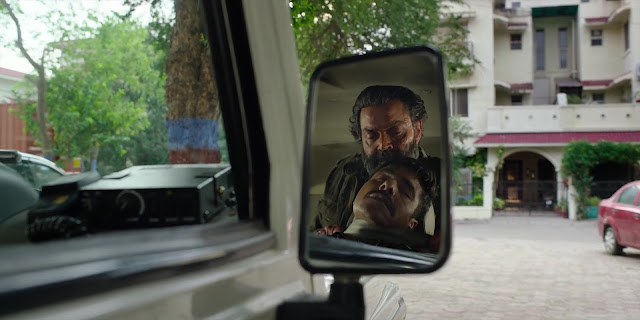
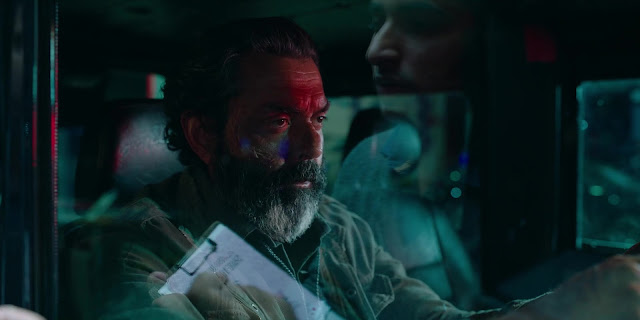
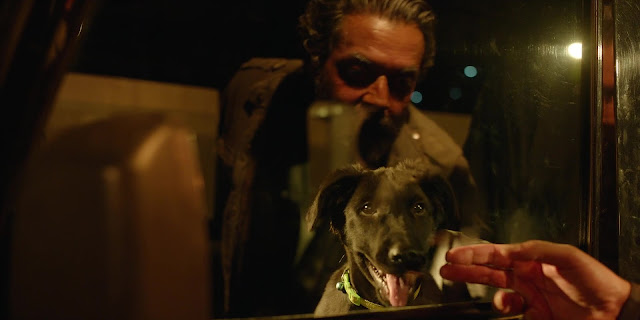
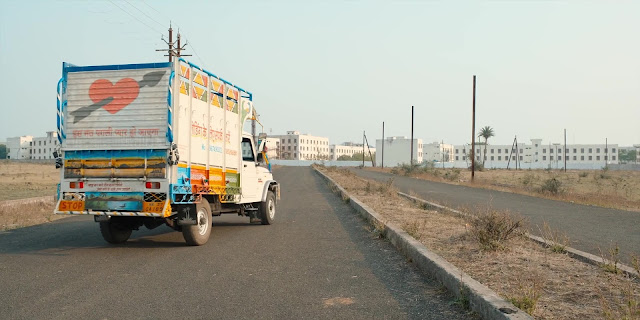
The medium for the powerful families to eliminate rebellious lovers is a man called Dagar. He is a menacing figure who has burn-inflicted scars over him. He is a beast who hunts and kills not just the bhagode couples who indulged in inter-religious marriages but also all other people who assisted these couples. When Dagar is injured, he does not go into a hospital for humans; instead, he goes to a veterinary hospital. He also has this thing like Bob Biswas, where he takes selfies of people before killing them. He gradually develops a liking for a friendly canine and takes it with him on his travails, like Hathoda Tyagi (Abhishek Banerjee) from Paatal Lok developed a fondness for dogs. Toward the end, the dog runs out of the car. Dagar crosses the road to pet him. A truck zooms by, killing Dagar instantly. Early in the film, a girl, whom he killed, curses him that someday he will fall in love and then he will realize how it feels. "Tera bhi dil aave kisi pe," she tells him. Her prophecy came true. It is love that kills Dagar.
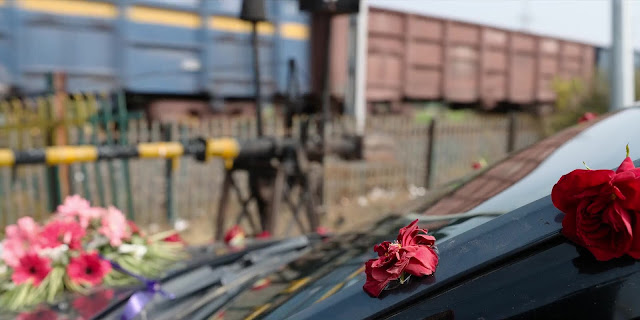
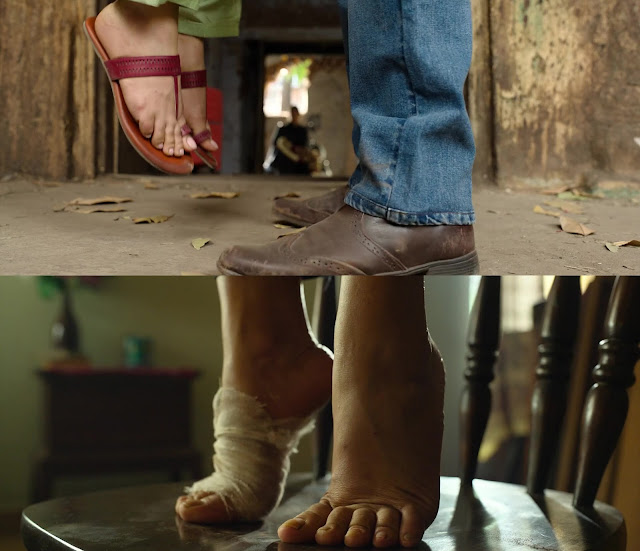
In terms of story, Love Hostel does have not anything novel. However, I liked the tiny details in the film. For instance, the truck that kills Dagar has Has Mat Pagli Pyaar Ho Jayega written on it. The song that plays on the radio during the said scene is Ya Allah Ya Allah Dil Le Gayi from Ujala. "Koi rangeela sapnon me aake, ek najar se apna bana ke. Pyar ka jadu hampe chala ke. Ya allah, ya allah, dil le gaya." Both these artifacts remind us of the girl's curse of Dagar falling in love. Early in the film, Jyoti and Ashu elope and meet in a secluded place. In the first scene, the camera pans to Jyoti's feet, which are shown in the air when she is held up in the arms by Ashu. Toward the end, the same shot is repeated but in a different and chilling context. The camera pans to her feet, where she is again being held up in the air when she is tied to the rope while Dagar watches her. Raman has also been a cinematographer in his career. It is discernible that the director has a penchant for cinematography. The film is exquisitely shot by cinematographer Vivek Shah. Dead bodies looks absolutely symmetrical without any dirt or disorder. The gunshot wound is perfectly circular. Blood adds to the perverse beauty of the dead bodies. In another scene, a shot of half-dried flowers over a car adds a layer of sadness to the story.
Truck

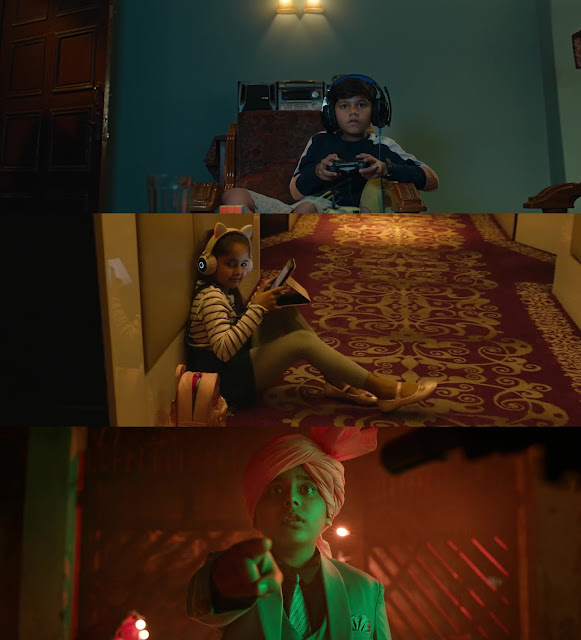
In Love Hostel, the children are used as a motif where they are often present in violent situations but unafraid of the bloodbath in front of them. When Dagar goes to kill the lawyer who helped Jyoti get married, an irritated kid playing video games and wearing headphones opens the door. The kid's entire family is killed, and he is simply busy playing. Later, during the shootout at the hotel where Ashu delivers meat, a young girl, also wearing headphones, sits on the aisles. After the gun fights, she tells Ashu that he has blood on him. Later, in a similar scene, a young kid tells Dagar that he has blood on him when Dagar saunters into a wedding and starts indiscriminately shooting at people. And, the terrifying character in the film is another young kid—Rakesh (Yudhvir Ahlawat), Jyoti's brother. Think of Sandhya's brother from Dum Laga Ke Haisha, who was shown for comic effect. But add violence and rage and multiply by hundred times to get Rakesh. He is the one who violently hits Jyoti with a stick when he finds out about her affair with Ashu. He is the one who reveals Ashu's Muslim identity to her family. He is the one who kills Ashu in the end. He had this rage that he was willing to kill his father for standing up to his grandmother. It is a reminder of how children are not always beacons of innocence, and it is they who ultimately grow up to become perpetrators of violence. In a telling moment, when police inspector Sushil Tripathi (Raj Arun) comes looking for Dagar at Kamala Dilawar's place, she tells him any of the kids playing around her could be Dagar, so which Dagar is he looking for?

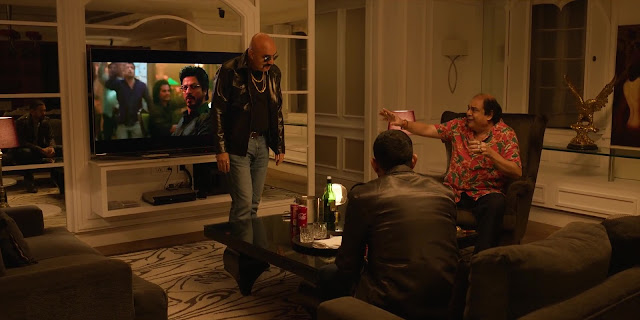
Love Hostel is produced by Red Chillies Entertainment, a company owned by Shah Rukh Khan. That may be why the film added two references from the films of Shah Rukh Khan. On their first night at the love hostel, Jyoti puts up a partition using a saree to get some privacy with Ashu. At this point, Aankhon Mein Teri from Om Shanti Om starts playing in the background. Later, Ashu smuggles meat to a hotel, but he also plays the role of a police informer. At the hotel, his truth is busted leading to a a shootout. All this while, the television in the room plays Laila Main Laila from Raees. There was a shootout going on during the song in Raees as well.

Love Hostel is also a film that depicts the manifestation of male depression in different forms. The men in the film are grieving and are advised to take help. Two characters—Sushil Tripathi and Dagar—go through similar trauma. Both these men lost their brothers. Sushil's younger brother performed self-immolation after he married another girl from a different religion. Maybe it is why he is kind to Ashu, as he sees his brother in him. Dagar's elder brother also took his own life after his daughter eloped with a man from another religion. Both Sushil and Dagar suffer from depression but refuse to accept help. Sushil has nightmares even today, prompting his wife to urge him to seek therapy and let it out. "Dil ki baat dabakar rakhna jhooth hi hai," she tells himHe is taking (sleeping) pills, but he dismisses the suggestion. On the other hand, Dagar takes to violence to deal with his trauma. He is called a bimar and is told by people that he needs to get treated. He is falsely living under the belief that he is a social reformer.

Performances in the film uplift it. Bobby Deol, as Dagar, is in a completely different avatar. Sanya Malhotra is feisty and spunky as Jyoti. Vikrant Massey brings a vulnerability to his character. Ashu is often timid in situations as he has seen more difficulties in life than Jyoti. He is also shown crying at one point. I was also thinking about another scene where he feels jealous of Jyoti dancing with another boy, even though he is gay. It makes Ashu realize that he cannot see Jyoti with another man. Raj Arun as Sushil Tripathi is excellent. Aditi Vasudev is also great as Nidhi Dahiya, who helps the two lovers. I still remember Aditi playing Mallika in Talaash. One thing I struggled with in the film was the dialogue of some characters. I could not understand some words. Some were said too quietly, which made me miss a few things. The film also does not explain everything, so I had to read up a bit to understand more.
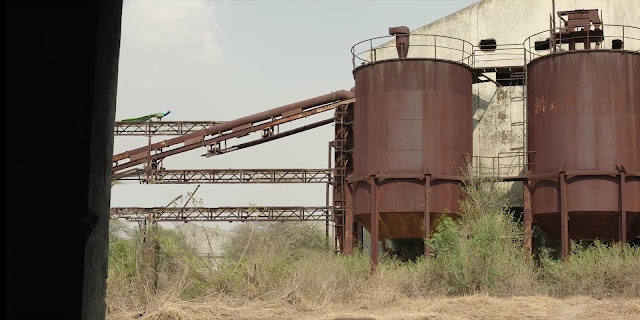
Within the violence and blood, the film adds some beautiful dialogue. Early in the film, after getting married, Jyoti tells Ashu, "Ab paa liya tujhe, baaki sab bemaani." Jyoti has got everything she wished for, so she does not wish anything else. Toward the end, a crying Ashu tells her, "Teri mehek me rehna hai." He wants to live in her fragrance. And, the most memorable scene is when Jyoti and Ashu are hiding in an old factory, and a red car enters. They get suspicious that there are people in the car who are sent to kill them. Jyoti carries her gun to the car to find out more. But she sees that there are no enemies. The car has two lovers, both men, who are making out. She seems slightly disgusted, but then it hits her; the two men are lovers, like herself and Ashu. They are also running away from society. Lovers belonging to the same gender are not accepted by society, like lovers belonging to different religions face opposition. At this precise moment when she realizes this, she sees and hears a peacock chirping nearby. It is a tender moment reminding us of the beauty while dealing with the barbarity of a cruel world.
Trivia:
1. Solah Khatam Satra Shuroo from Aakhri Adalat is shown playing in one scene in the film.

Dialogue of the Day:
"Dil ki baat dabakar rakhna jhooth hi hai."
—Sujata, Love Hostel

Saturday, February 25, 2023

Pathaan and the Meta-Commentary in Shah Rukh Khan's Filmography

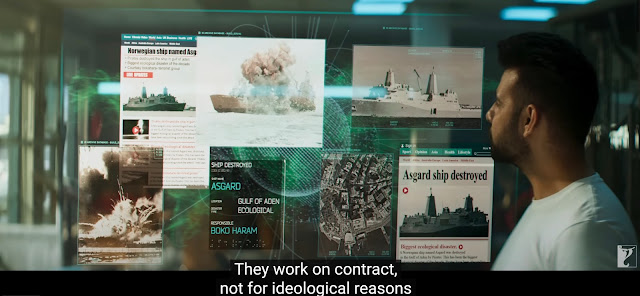
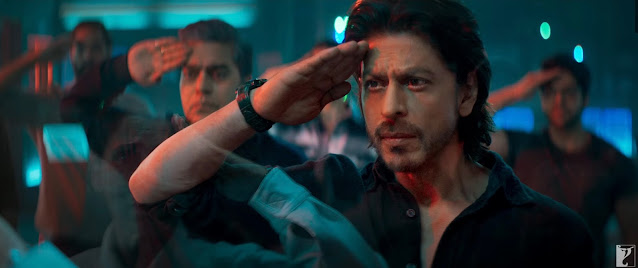
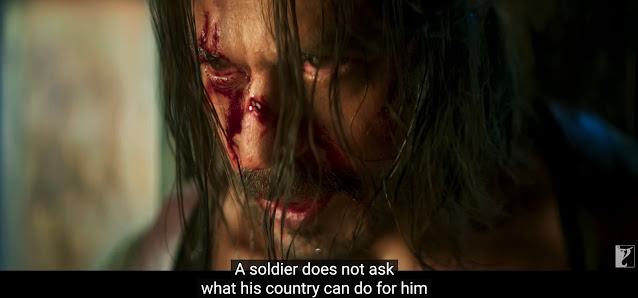
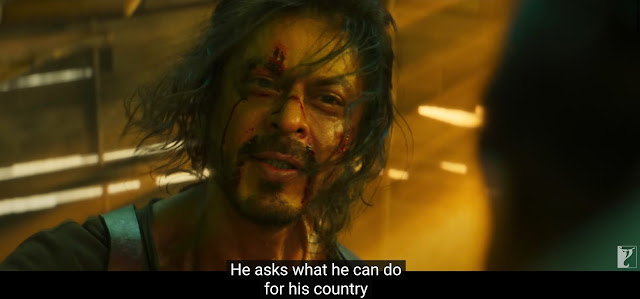
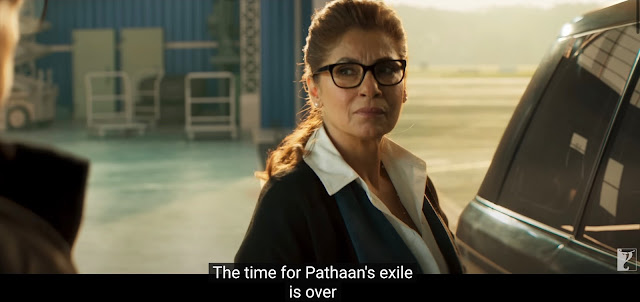
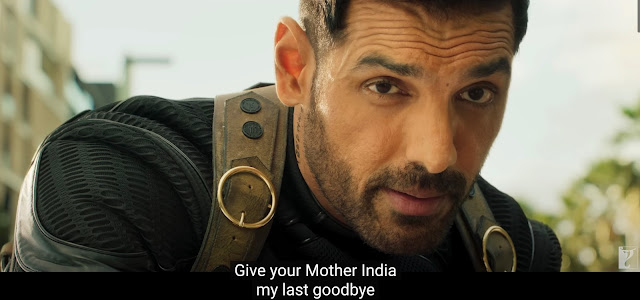
In an early moment in Siddharth Anand's Pathaan, two scientists talk about love. One of them asks the other why he still wants to impress his wife even after being married for thirty years. The other replies, "Science is easy, Farooqui; love is hard." Moments later, a masked man with a voice similar to that of Bane from The Dark Knight Rises kidnaps these scientists. The man is Jim (John Abraham), a former intelligence agent of India who now offers terrorism as a service (TAAS?) to organizations worldwide. He then enters into a car chase with the eponymous Pathaan (Shah Rukh Khan), also a former intelligence agent who now works as a counterterrorism specialist. These two men again talk about love. Jim calls himself an aashiq of India. However, the Indian government refused to negotiate with terrorists when he and his wife were kidnapped. Due to this reason, his relationship with India turned sour. He is heartbroken. Like a jilted lover, the Patriot tattoo on his arm is a remnant of the time he was in love. He sings and whistles Ae Mere Watan Ke Logon sarcastically. On the other hand, there is Pathaan. His love for India is like that between a mother and a son. Like the way, his boss Nandini (Dimple Kapadia) says, "Mere bete jaisa hai." Pathaan's love for his mother is not transactional like Jim's. "Ek soldier yeh nahi puchhta desh ne uske liye kya kiya, puchta hai woh desh ke liye kya kar sakta hai." Pathaan tells the story of these two men—the protagonist and the antagonist—who represent these two forms of love.
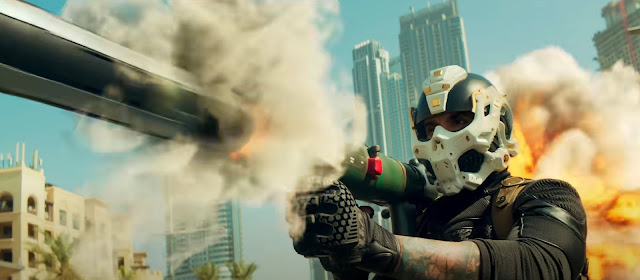
If Jim was heartbroken, Pathaan's body was broken. His body contains metal parts, titanium discs, and biodegradable screws. Pathaan uses the Japanese art of kintsugi to appreciate this brokenness. Kintsugi is the art of putting broken pottery pieces back together with gold, based on the idea that embracing flaws and imperfections can create a more beautiful piece of art. The process of repairing things creates something more unique and resilient. Pathaan uses kintsugi to build a force of similar people whose bodies and souls are broken—kuch ke shareer zakhmi hain, kuch ki rooh ghayal hai—to become more broken in the service of their country.
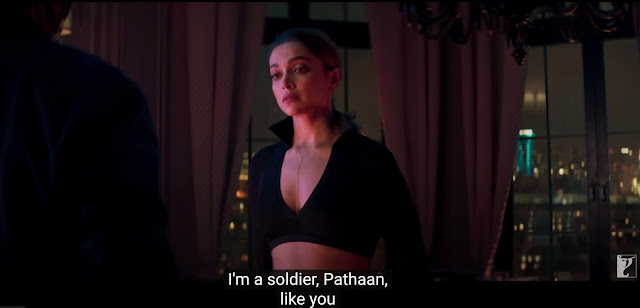
After the repeal of Article 370 by the Indian government, a rogue general from the Pakistani Army hires Jim to carry out a massive biological attack on Indian cities. Pathaan's mission is to stop this attack. He runs into Rubina (Deepika Padukone), a former intelligence agent of Pakistan, who, after some usual games of double-crossing, becomes his partner in the mission to stop the attack.
All the principal characters in Pathaan have been given a backstory. Jim was an intelligence officer earlier who worked with Kabir (Hrithik Roshan from War). He has no last name. Jim and his wife were kidnapped by Somali pirates. The Indian government refused to negotiate for their release. Therefore, the pirates shoot Jim's pregnant wife before his eyes. Rubina was a doctor before joining the intelligence agency of Pakistan. When she was young, she lived with her journalist father in the Middle East, who was arrested for speaking the truth against power. She saw her father being tortured before her eyes, which gives her nightmares even today. This moment of people in pain before someone's eyes is recreated when Pathaan sees one of his officers and then his Ma'am die in front of him. "It's been an honor," they both said to him.
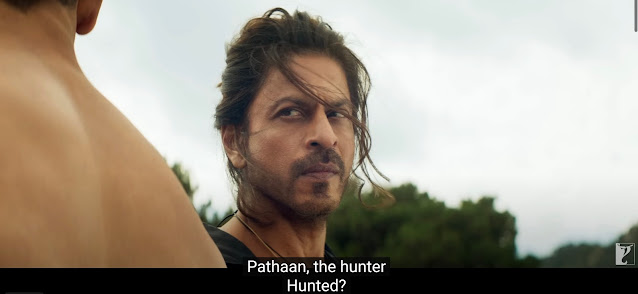
It is Pathaan's background story, however, that is far more intriguing, even if it has scant details. Like Jim, Pathaan has no last name. Not much is known about his parentage except that he was found in a cinema hall where his parents left him. The image of Anthony (Amitabh Bachchan) being found on the doorsteps of a church in Amar Akbar Anthony conjures up my mind. The cinema hall is a religion of its own in India. Pathaan then grew up in the care of his mother India. He performs his duty to become a good son and a soldier of the Indian Army. His journey from Laawaris to Khuda Gawah (both Amitabh Bachchan's films) is revealed when he saved a village in Afghanistan from a missile attack while being posted on a mission. An Afghani lady christens him Pathaan, which is interesting as Shah Rukh Khan has claimed to be a Pathaan in real life. More on the film's many other meta-moments shortly.
Jim plans to launch the biological attack of a mutated smallpox virus using missiles (like the missiles from Mr. India, which also had a kind-hearted orphan as the protagonist). The mutated virus is named Raktabij, after the asura who had acquired a boon from Lord Shiva that whenever a drop of his blood fell on the ground, various Raktabij would emerge from the spot, equivalent to his strength, form, and weapons. Even though Jim steals the mutated virus Raktabij, at one point, he calls himself a Raktabij. He is also called a Shaitan by General Qadir (Manish Wadhwa). In another mythological reference, Ma'am refers to Pathaan's time away as his vanvaas.
The discernible thing about Pathaan was that he was not someone who comes out with a win every time. Throughout the film, he gets beaten up by other villains. He has to be rescued by others. He also takes painkillers as he is aging. And, he also was comfortable with this vulnerability. (This thing was also seen in Anand's earlier film War, where Kabir sported grey hair.) The performances by all actors in Pathaan are in line with the mood and the tone of the film. Shah Rukh Khan is fantastic in an action role. The long hair suits him, but the ponytail does not. He also has done this voice modulation where he speaks more calmly in some scenes. Deepika Padukone kicks ass, literally and metaphorically. Besharam Rang is gorgeous. John Abraham is cool as a sophisticated villain (his background music was irritating, though). Dimple Kapadia is absolutely wonderful. 
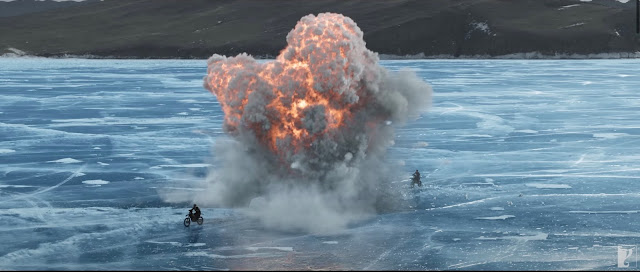
The action genre is not my favorite, but I enjoyed the film. I do not know if I will remember its action scenes a few months later. The ice skating was a good one, but the whole sequence in Russia was a bit silly. The other thing was the film did not complete some moments. For instance, how was Dr. Farooqui saved? Then, we see that Pathaan and Rubina escape by jumping into the water; so how did they reach the hotel. After they landed on the Russian building, how did they gain entry into the building? How was Pathaan captured there? It is not about logic, but there is this concept in dance to finish a moment; Pathaan did not complete these moments. This may be why War was a better film for me. It had a lot more interesting things going on. I still remember the scene where Naina (Vaani Kapoor) tells Kabir Not everyone has vowed to save India by being a soldier. For ordinary people, trying to live a decent life is a battle in itself.
The dialogue of Pathaan was one of its best things. In an early moment, General Qadir, being asked how he is doing, replies, "Khair nahi, qahar chahiye." Jim calls India, "Kafan ka never-ending supply, bas laashon ke naam badalte rehte hain." Rubina asks Pathaan to trust him again, and she says, "Jitne galat kadam lene the, le liye, ab kadmon ke nishaan mitaane hai." At another point, Raafe (Rajat Kaul) says, "Ishq aur mushq chhupaaye nahi chupte." Pathaan also says, "Khaunf logon ko andha kar deta hai." At another point, Rubina remarks, "Kisne kaha ishq sirf pehli nazar me hi hota hai."
Pathaan has been written by the trio of Abbas Tyrewala, Siddharth Anand, and Shridhar Raghavan. Tyrewala had also written Farah Khan's Main Hoon Na. Jim in Pathaan reminded me of Raghavan (Suniel Shetty) in Main Hoon Na, where he, too, as an ex-Army man, becomes a terrorist after he is court marshaled for his extra-judicial encounter-killings of Pakistani people. Pathaan also believes in the idea that it is the non-state actors, such as Jim, who are responsible for terrorism, and they have a connection with any country. "Desh sarhad vagareh sab kamzor logon ko apni hadd yaad dilane ke kiye bane hain. Jahan main khada hun who mera desh," says Jim.
More than the story of Pathaan, it is the meta-commentary in the film was far more interesting. There are different levels of meta-commentary in it. The first level includes meta moments from Siddharth Anand's earlier film War. Early in the film, Pathaan fends off a villain character by mentioning Ghungroo Toot Gaye, which was also the title of a gorgeously choreographed song from War. Then, there are mentions of Kabir from War. And there is Ashutosh Rana playing Colonel Luthra, the same part he did in War. The second level of meta-commentary is the meta-universe promoted as YRF Spy Universe, where the characters from some of the earlier films of Yashraj Films find a mention and even play a small part. Tiger (Salman Khan) from Ek Tha Tiger rescues Pathaan at one stage. Jim also mentions the love story of Tiger and Zoya from the film.
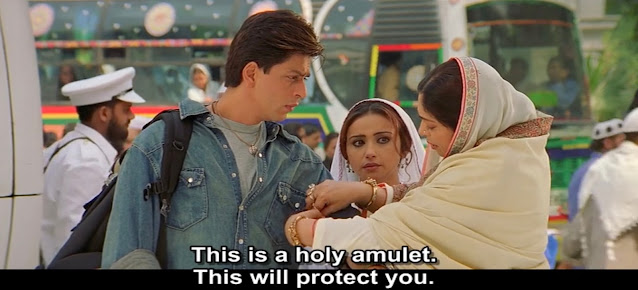
The third level of meta-commentary is about Shah Rukh Khan, which includes a mélange of references and snippets from his reel and real life. Some of these are explicitly mentioned, some are implied, and the rest make one wonder if it was intentional. In the beginning moments of the film, Pathaan is walking on a treadmill, and there is a taveez that can be seen tied to his arm. It was a gift to Pathaan from a lady in Afghanistan after he saved their village. It took me to a similar moment in Veer Zaara, where Zaara's mother, Mariyam Hayaat Khan (Kirron Kher), gives a taveez to Veer (Shah Rukh Khan) after he lets go of Zaara (Preity Zinta) and travels back to India. Then, Pathaan talks about being broken and having multiple metal parts inserted inside him. This is also well documented as Shah Rukh has undergone multiple surgeries on his knee and spinal cord. He has also tweeted about feeling pain all the time.
Later, Colonel Luthra sarcastically remarks that Pathaan listens to his heart first. "Pehle hamesha apne dil ki sunte hai," he says. In Kabhi Khushi Kabhie Gham, Shah Rukh, as Rahul, spoke about listening to his heart. "Zindagi mein agar kuch banna ho, kuch haasil karna ho, kuch jeetna ho, toh hamesha dil ki suno." 
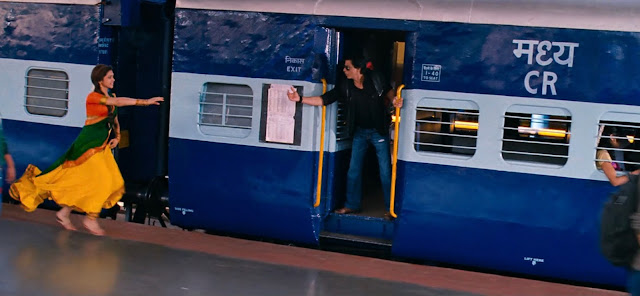
In Russia, Pathaan and Rubina plan to steal the Raktabij from the Russians, like the diamonds from the safe in Happy New Year. The lock to the vault lies with a woman who is intentionally named Karen. Her name allows Pathaan to call her K-K-K-Kiran, like Shah Rukh's character Rahul did in Darr. There is a moment when Pathaan rescues Rubai after a malfunction during the heist in Russia. They jump onto a high-rise building and slide down. The moment reminded me of the one in Main Hoon Na where Major Ram (Shah Rukh Khan) saves Lucky (Zayed Khan) from falling. Then, Pathaan is double-crossed by Rubina when she steals the orbs from him. He then falls back inside the vault, recreating the moment of the fall of Gaurav (Shah Rukh Khan) from FanMain Hoon Na is explicitly referenced when Pathaan is rescued by Tiger in the train sequence. Pathaan comments that he has taken the pin out of the bomb; to this, Tiger comments, "Tere pin maarne ki aadat kab jaayegi,where he was talking about the last scene from Main Hoon Na when Ram kills Raghavan by the same methodIn another moment, Tiger and Pathaan then run to save their life after the train falls into a gorge, and the bridge collapses. Tiger screams, "Bhaag Pathaan Bhaag." In Karan Arjun, Karan (Salman Khan) mentioned the same dialogue to Arjun (Shah Rukh Khan)—"Bhaag Arjun Bhaag"—when they were beaten by Thakur's acolytes. And, then, in a post-credits scene (like it happens in Marvel Cinematic Universe), the two men talk about their old age and wonder if they should give it all up to the next generation (of actors). They feel none of the actors are ready to take up their mantel. They don't take any names (I wish they did), like they never revealed the film playing in the cinema where Pathaan was found (I wish they did). It is again a meta-moment where two aging superstars think about their work and are still not ready to give up.
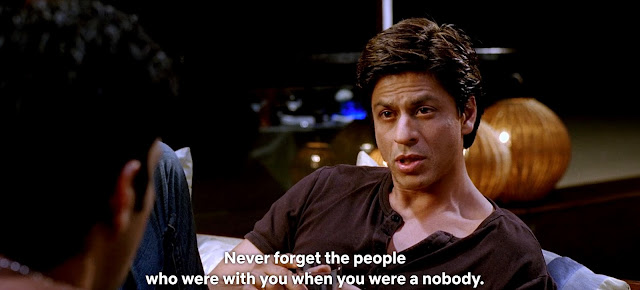
This sort of meta-commentary is not new to Shah Rukh Khan's career. His films, especially in the past decade or so, have formed what can be called the SRK Cinematic Metaverse. An entire thesis can be written on the same. This started primarily with Om Shanti Om (2007), where Shah Rukh spoofed his Rahul lover boy roles. In Rab Ne Bana Di Jodi (2008), he played Raj trying to parody his own lover-boy persona to win the love of his wife. In Luck By Chance (2009), his meta-ness became one of the most compelling things about the film. At one stage in the film, Karan Johar discusses his theory of how a new hero is born in the industry. He quotes how Shah Rukh Khan got a break in the industry when all actors refused to make a film. Shah Rukh also appears with his entourage towards the end, giving us a terrific scene. He advises a new superstar to never forget the people there with him when he was a nobody. "Unhe mat bhoolo, jo tumhe jab jaante the, jab tum kuch nahi the. Kyunki bas yahi hai jo hamesha tumhe sach bolenge." This is the same adage that Shah Rukh has followed in his life. In Billu (2009), he again played a version of his superstar actor persona where he maintained a friendship with an old friend.
In My Name Is Khan (2010), he played a Muslim who traveled across the US to meet its president to tell him he was not a terrorist. It almost mirrored the underlying distrust in his Muslim identity when he was detained at a US airport during immigration, where he was questioned for hours, possibly due to his last name. And, like in the case of Pathaan, he faced boycott calls over the film's release. The Shiv Sena threatened to disrupt the screenings of his film if he did not apologize for backing the participation of Pakistani cricketers in the Indian Premier League. In Ra.One (2010), Shah Rukh added elements of his relationship with his son in the film. In an interview, he said, "The film talks about a father and son’s relationship. It has a bit of my relationship with my son, who thinks I’m not cool. I believe it will teach sons to love their fathers. They are as good as mothers." His next few films—Chennai Express (2013), Happy New Year (2014), and Dilwale (2015)—again contained ample references to all his earlier films. At one point in Happy New Year, he parodies his iconic sattar minute speech from Chak De! India.
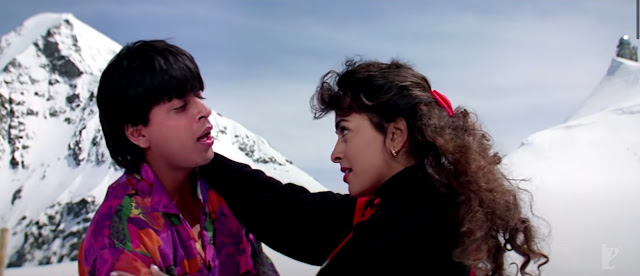
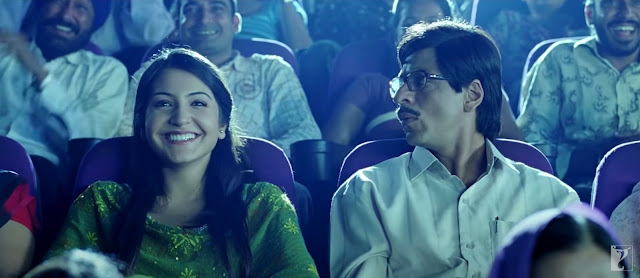
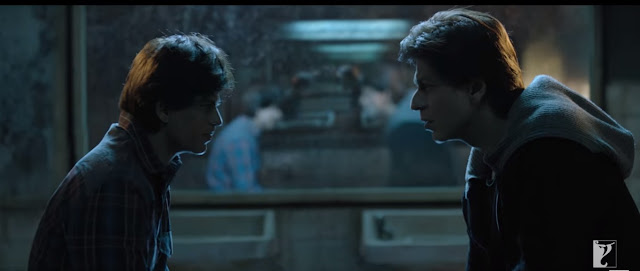
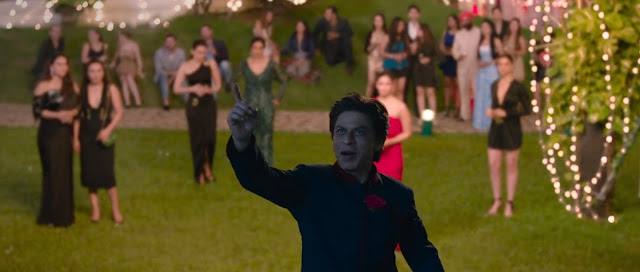
In Fan (2016), Shah Rukh gave one of the most fascinating meta-films ever made in Hindi cinema. He played the role of an aging superstar troubled by a young fan who looked exactly like him. The film included elements from Shah Rukh's career. In Jab Harry Met Sejal (2017), there is again a bit of Dilwale Dulhania Le Jayenge. A man and a woman meet in Europe, fall in love, and the man travels to India to stop the woman's wedding. At some other stage, Harry (Shah Rukh Khan) tells Sejal (Anushka Sharma) that she will have to go away when the time comes. Mudkar nahi dekhna hai peeche, like in the palat scene from Dilwale Dulhania Le Jayenge. The promotional credit song Phurrr is also reminiscent of the Phurr scene from Dilwale Dulhania Le Jayenge. In Zero (2018), a scene at the party again provides a meta-commentary on the career of Shah Rukh Khan. Bauua Singh (Shah Rukh Khan) tries to show the magic of making the stars move with his hands. Many actresses who have worked with him in his films appear with him in this scene. There is Karisma Kapoor, Juhi Chawla, Kajol, Rani Mukerji, Sridevi, Alia Bhatt, and Deepika Padukone. He talks about shooting stars and showing his magic to the 'ladies.' Pathaan (2023) again adds meta-commentary from his life, but this time, it comes together more coherently, unlike in some of the films mentioned above.
Shah Rukh Khan's return to films after four years has spurred a return to cinema for scores of his fans. They are experiencing joy by dancing to the beats of the Jhoome Jo Pathaan. They are reading different subtextual elements in the film. Love means different things to different people, and all these are ways of showering love on a man who has entertained them for thirty years. Like the scientist, who still tries to impress his wife even after getting married for thirty years, also said, "Science is easy; love is hard."

Trivia:
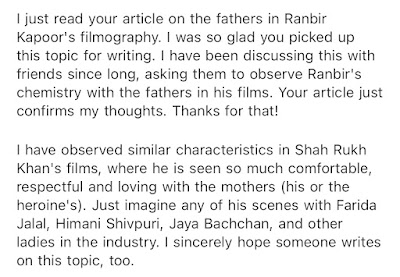
1. A few days ago, I wrote a post on the relationship between the characters of Ranbir Kapoor and their fathers. A longtime reader and friend, Mandar replied that he sees a similar relationship between the characters of Shah Rukh Khan and their mothers in films. It can be seen here again in Pathaan. The relationship between Pathaan and Ma'am is like that of a mother and son.

Other Reading:
1. On FanLink
2. On Jab Harry Met SejalLink
3. On Dear ZindagiLink
4. On RaeesLink
5. On Shah Rukh Khan and the world of stars and the moon—Link
6. On SwadesLink
7. On Satrangi ReLink
8. On Kabhi Alvida Naa KehnaLink

Dialogue of the Day:
"Khaunf logon ko andha kar deta hai."
—Pathaan, Pathaan

Saturday, January 28, 2023

The Wonder Women of Ponniyin Selvan: I

In Ponniyin Selvan: I, Mani Ratnam brings to life the epic 1955 novel of Kalki Krishnamurthy. The story revolves around the succession battle in the Chola kingdom and the ensuing threat from the Pandyan rebels who want revenge against the Cholas. Vandiyathevan (Karthi), a young soldier, sets out across the Chola land to deliver a message from the Crown Prince, Aditya Karikalan (Vikram), to his father, Emperor Sundara Chola (Prakash Raj), and his sister, Princess Kundavai Devi (Trisha), about a conspiracy. The other son of Sundara Chola, Arulmozhi Varman (Jayam Ravi), also known as Ponniyin Selvan, is fighting a battle in Lanka. There is Nandini (Aishwarya Rai), Aditya's ex-lover and the wife of Periya Pazhuvettaraiyar (R. Sarathkumar), the chancellor of the Chola Empire who is conspiring against Sundara Chola to install Prince Madhurantakan (Rahman) as the king. 
Ponniyin Selvan: I has its fair share of politics, war, violence, palace intrigue, and mystery, but what stands out in the film is its wonderful women characters. Women in the film are protectors, nurturers, rescuers, manipulators, conspirators, and strategists. They have a role and, more importantly, a voice. They are beautiful, and they are intelligent. And the most interesting aspect of these wonder women is that they enter and thrive in spaces that are dominated by men. They rule those spaces and do a better job than the men themselves. It is worth looking at these women in more detail.
Nandini
Nandini is the wife of Periya Pazhuvettaraiyar, the chancellor of the Chola Empire. She was earlier in love with Aditya, but things did not work out between them, as his family did not want an orphan like her to become the queen of the Chola kingdom. She then disappears from his life and eventually marries Pazhuvettaraiyar, a man much older than her. 
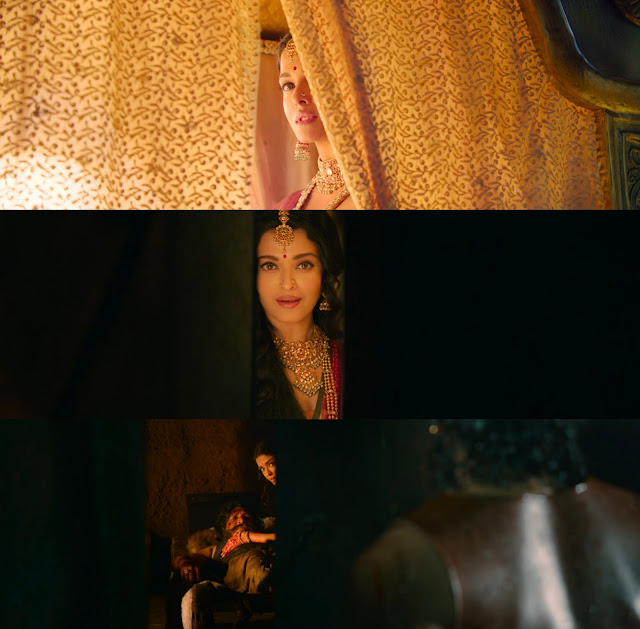
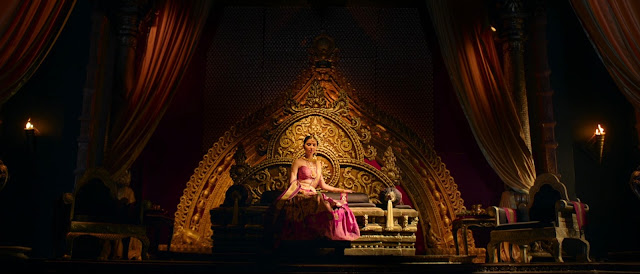
The first time we see Nandini is in her palanquin when Vandiyathevan tries to meet her thinking there is Madhurantakan in it. Her luminous face partially bows out from behind the curtains. This luminosity and this mystery become the hallmark of Nandini throughout the film. When Vandiyathevan visits Nandini in the palace, light falls on her face making her shine like a diamond. Nandini then guides him through a secret passage and asks him not to be tempted by the treasure inside. "I stand before a shining diamond," he replies, mesmerized by her beauty. Nandini was indeed the shining diamond. Likewise, in the same scene, the closing of the door gradually hides her face, reminiscent of the earlier scene in the palanquin. Later, a similar scene appears again when Aditya talks about his past, where he met her taking care of his enemy Veerapandiyan. Her face gradually appears from behind the door, adding to her mystery.
I stand before a shining diamond.
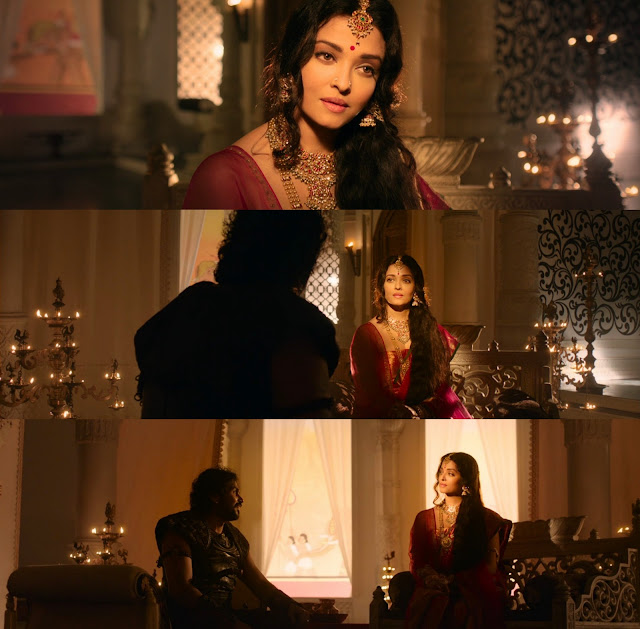
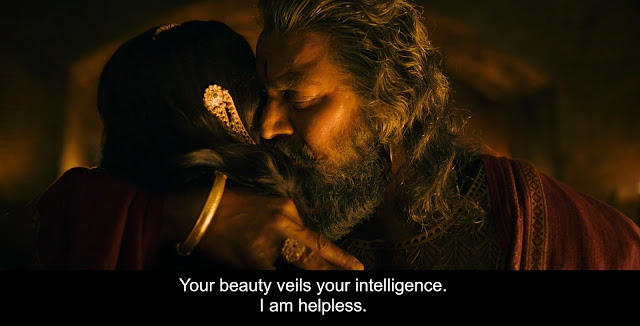
Nandini is the most fascinating character in the film. Her husband might be one the most powerful men in the kingdom, but she controls him through her beauty and intelligence. She is the mind behind her husband's strategic maneuvers. She advises him on political matters leading to consternation among the other chieftains that he is following his wife's orders. She has strong political instincts and strategizes for the future. She is the only woman in the film who dreams of herself on the throne. She has a manipulative streak in her. When her husband is angry with things not going as planned, she uses her charm to disarm his anger and manipulates him into agreeing to a risky idea for breaking the unity of the Chola princes. All she has to do is to turn around and ask him to take off her jewelry. In another similar moment, she tries to entice Vandiyathevan to think about getting back his kingdom as if trying to bring him to her side.
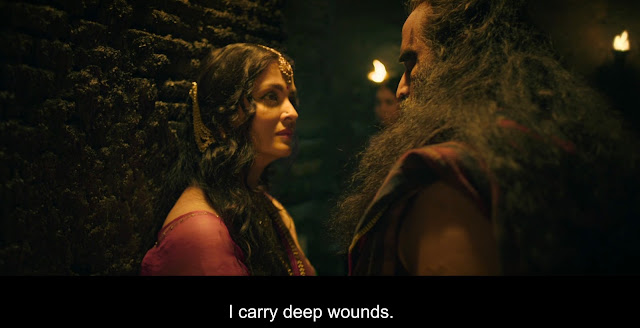
Nandini is in complete control of her emotions and does not let anything come to her. When she is threatened by Ravidasan (Kishore), a Pandya rebel, with a knife, she does not feel scared. He accuses her of forgetting the promise to destroy the Cholas and becoming enchanted with her luxurious life. She shuts him down by saying she carries deep wounds and does not forget anything. The men in the film are praised for their external scars. Her husband, Pazhuvettaraiyar, is described as someone with sixty-four battle scars. There are scars on Aditya as well. Nandini is the one who is battling her inner scars to get her wishes to come true. The only time she shows vulnerability is when she is in her past, requesting Aditya not to kill Veerapandiyan (Nassar).
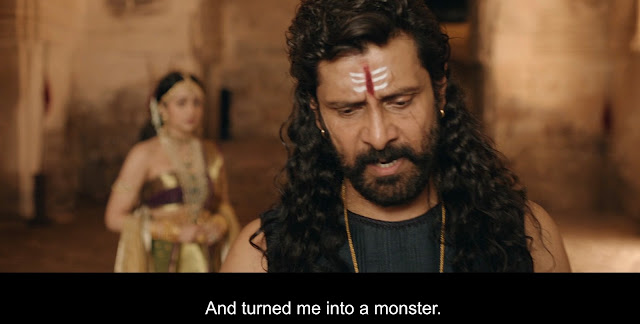
Nandini exerts control not only over her husband but also over her past lover Aditya. He does not want to return to Thanjavur because he will see her there. She still controls his life even in her absence. He says he has become a walking corpse as he has died multiple times because of her. All the wars that he is fighting are a reflection of his struggle to forget her. She has turned him into this monster, and he became indifferent to her tears. Since then, day and night, she has continued to haunt him. In the film's beginning moments, Aditya spares the life of a king he defeated in war, saying he did not want to kill an unarmed man again. It is later revealed that he had killed an incapacitated Veerapandiyan when he saw her with Nandini. The man was unwell, and in a fit of rage, Aditya simply killed him mercilessly, even when Nandini begged him to not harm him.
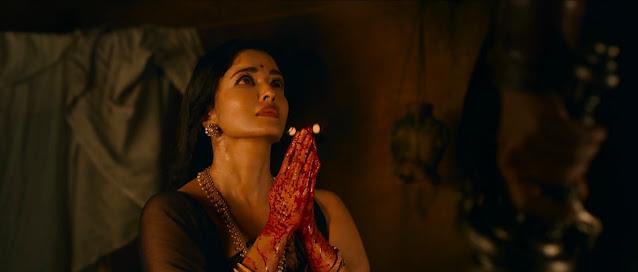
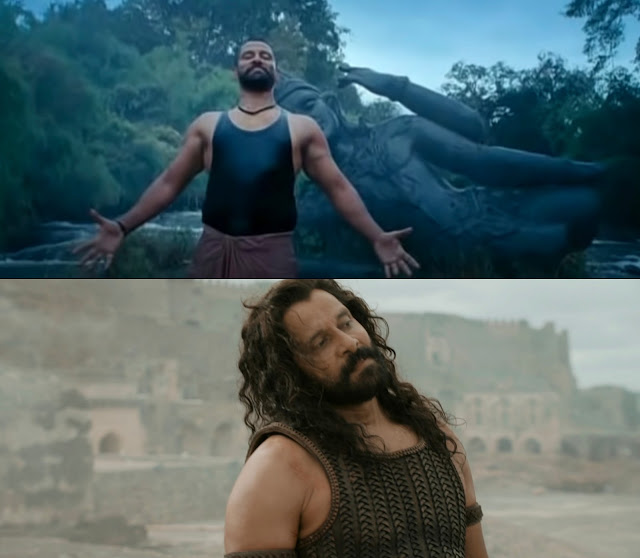
The inability of Aditya to be with Nandini is reminiscent of the forbidden love of Veera (Vikram) for Ragini (Aishwarya Rai) in Mani Ratnam's Raavanan, again played by the same actors. Both these men have feelings for the wife of another man. They know they are breaking societal mores even by entertaining the very thought. In one particular moment in Raavanan, Ragini prays to the broken statue of Lord Vishnu, asking not to make her weak by showing the goodness of the villagers. The statue is a stand-in for her husband Dev (Prithviraj)—her Ram. Veera asks Ragini about her husband. She tells him that Dev is like bhagwaan. Veera feels jealous of her husband because he gets to be with Ragini and has also fallen in love with her. Jealousy makes him feel like Dev's equal. He acknowledges his human and emotional side. The background music when Aditya talks about Nandini in Ponniyin Selvan: I is also reminiscent of the one in the statute scene from Raavanan.
Kundavai Devi
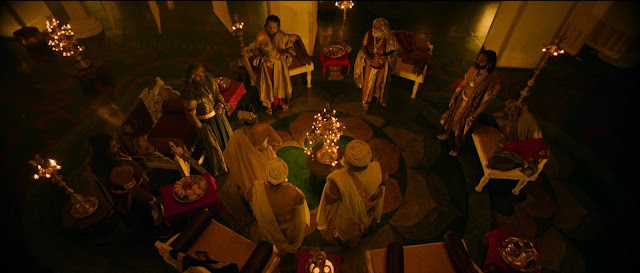
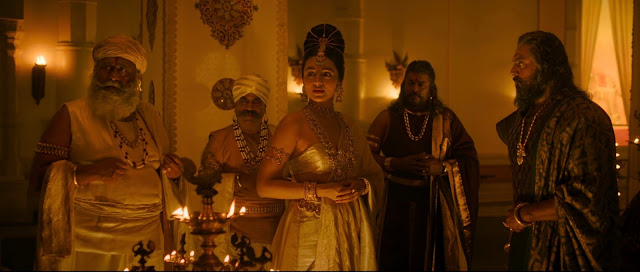
Kundavai Devi is the daughter of Sundara Chola. She is the second child of the king and has two brothers, one elder and the other younger. The two brothers are busy fighting wars for the kingdom, and she becomes the kingdom's protector. Like Nandini, Kundavai is a fascinating character. Her understanding of politics is better than both of her brothers. Her brothers trust her. Her father trusts her. In a telling scene, she becomes the crutch of her ailing father. She is also shrewd and manipulative, but these characteristics come from a place of care for her family. In a superb scene, she barges into the secret meeting of the local chieftains who are plotting the downfall of Sundara Chola. She arrives without prior notice causing nervousness among the chieftains. All these men get scared by this woman. When she arrives, she positions herself in the center, becoming the cynosure of all eyes. She then tries to put a wedge between these men by bringing up the subject of raising taxes to fund the wedding of her two brothers. She knew these chieftains would want their daughters to marry the two princes. With this trick, she simply took the wind out of the plans of the Pazhuvettarayar brothers, who are tongue-tied. In this scene, she is the only woman, surrounded by men, and comes out as the most powerful.
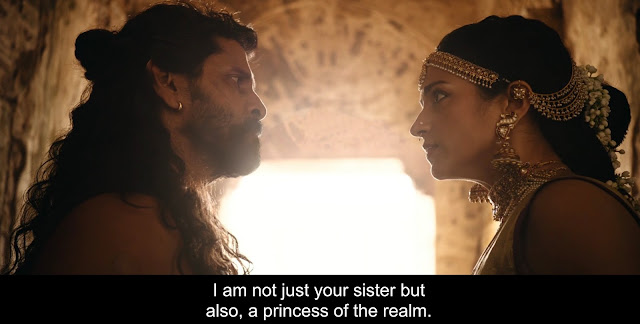
Kundavai reads people very well. She can sense when people are hiding something. It is also the reason she is sent by her father to bring some sense to Aditya and convince him to return to Thanjavur. It is then revealed by Aditya that Kundavai was the one who convinced their mother to take Nandini out of his life. Kundavai believes that an orphan like Nandini cannot be the Chola queen; therefore, she opposes her brother's relationship. Here again, she displays a penchant for realpolitik. It might be unfair to Nandini and Aditya, but she plays the role of a princess instead of a sister. She understands that people won't accept Nandini. She knows the pulse of the people. Notice the question she asks the prime minister when she arrives at Thanjavur is again about the people. She asks, "What concerns the people these days?"
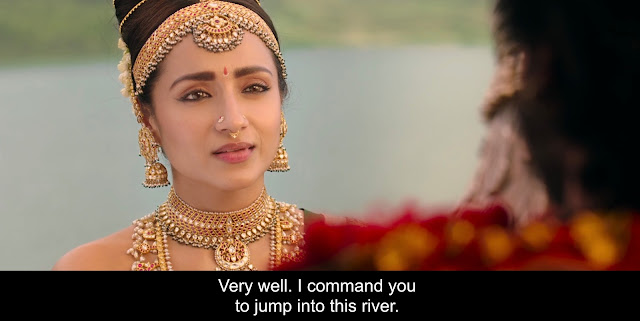
The meeting between Kundavai and Vandiyathevan is absolutely charming. He tells her that his life belongs to her. If Aditya had shades of Veera from Raavanan, Vandiyathevan was like Karthik (Madhavan) from Mani Ratnam's Alaipayuthey. Kundavai then asks Vandiyathevan to jump into the river, just as Shakthi (Shalini) asked Karthik to jump from the moving train in Alaipayuthey.
Poonguzhali
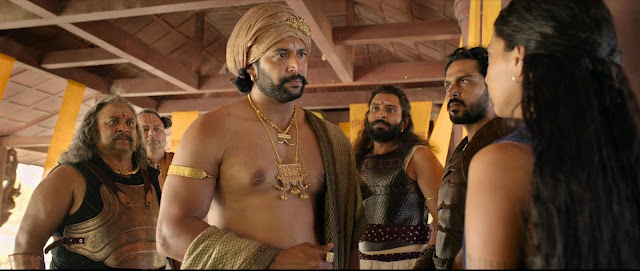
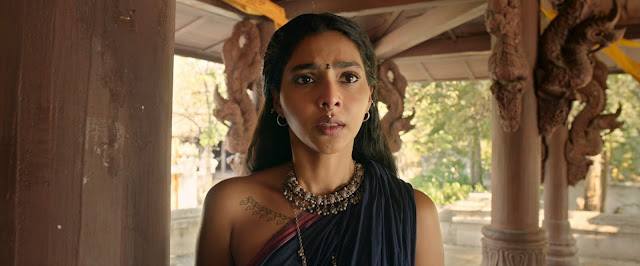
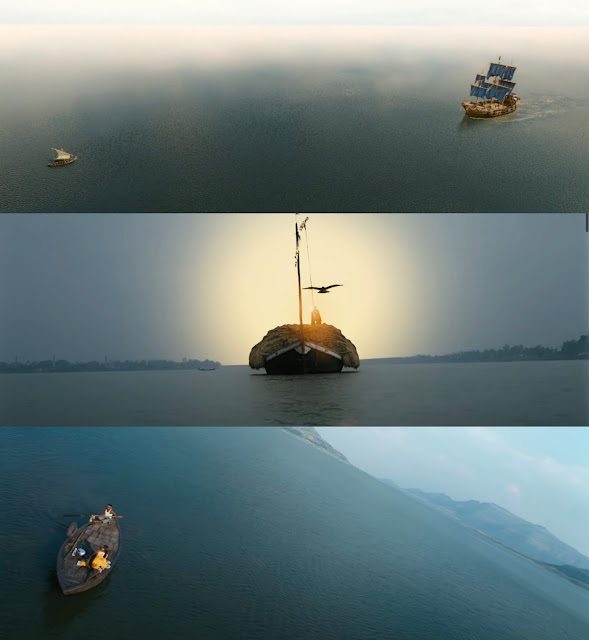
Poonguzhali (Aishwarya Lekshmi) is the boat woman who guides Vandiyathevan to Lanka. She gets a fantastic dramatic entry scene where she comes out of the sea while Vandiyathevan looks mesmerized by her. It is again worth noting her unconventional profession as a boater, something which has been dominated by men. All the other boaters in the film are men. She is also the one who hunts for fish while Vandiyathevan, the warrior, remains in the boat, feeling afraid as his horoscope said that he will have a grave in water. She then takes out a sharp weapon when he tries to flirt with her. Later, when the Pandyan rebels come to Lanka, she can sense something is wrong. Like Kundavai, she also goes to a meeting of the men of the Chola Kingdom, who were discussing war strategy among themselves. She reveals to them the plan of the Chola soldiers to arrest Arulmozhi. She speaks before the men without hesitation and agrees to help Arulmozhi even if the other commanders were asking her not to do it. In the final moments, she again plays a critical role in the confrontation between Arulmozhi and the Pandyan rebels.
Oomai Rani
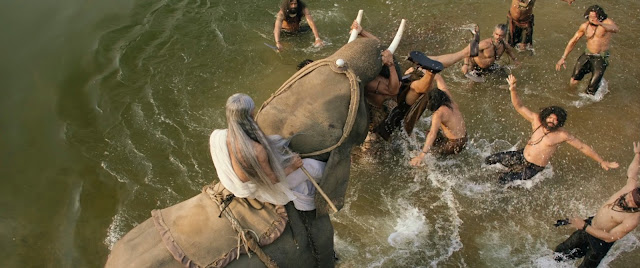
Oomai Rani (Aishwarya Rai) is the mysterious woman who rescues Arulmozhi and Vandiyathevan when ambushed by the Pandyan rebels. She uses the might of the elephant to force the rebels to retreat. It is again worth noting that she is the only woman in the scene who comes to rescue the men signifying a sense of power in her. Arulmozhi realizes that he has seen this mysterious woman before in his life. She was the one who saved him when he fell into the river Ponni when he was a kid. Legend was that it was mother Ponni who saved him, but in reality, it was Oomai Rani. In the film's final moments, Oomai Rani reprises her role as a rescuer when she jumps into the sea to again save Arulmozhi and Vandiyathevan.
The other women in the film might have a small role, but they also make their presence felt. There is Vaanathi (Sobhita Dhuilpala), the princess of Kodumbalur. She has feelings for Arulmozhi and expects to marry him. In the gorgeous Ratchasa Maamaney, she plays the role of Lord Krishna and battles Vandiyathevan, who plays Kansa Mama. The song is a rare one as it does not show Radha-Krishna as seen in other similar songs but focuses on the Krishna-Kansa battle. Then, there is also Sembiyaan Mahadevi (Jayachitra), the mother of Madhurantakan, who opposes his plan to ascend the throne. She refuses to give her consent to him to become the king. And, of course, the film is titled after the son of mother Ponni—Ponniyin Selvan. It is about the son but also about the mother. The film's opening song Ponni Nadhi pays a beautiful tribute to River Cauvery. In the stunning meeting between Nandini and Kundavai, the song in the background says, "Can thunder and lightning coexist together?" It is a perfect description of not only these two amazing women but all the other women who light up the film with their charm, beauty, and intelligence.
Trivia:

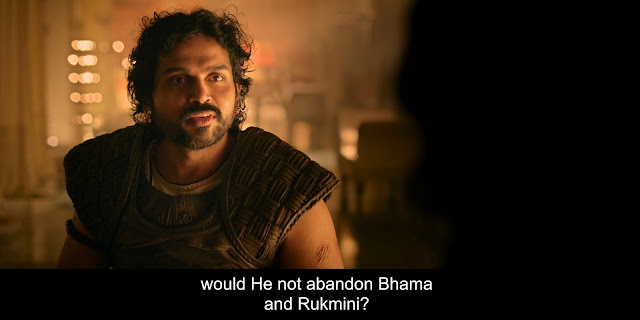
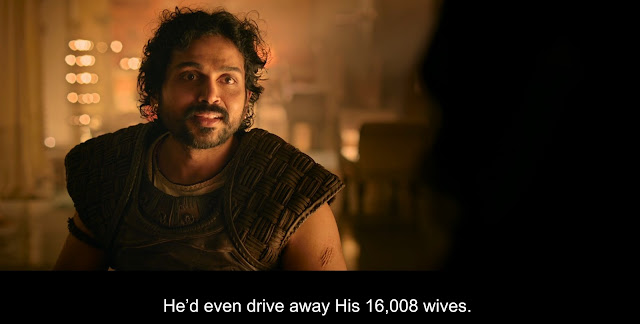
1. The film mentions Lord Krishna and his 108 wives along including Bhama and Rukmini.


2. Parallels between Raavanan and Ponniyin Selvan: I.

Other Reading:
1. On Raavan and Khal NayakLink

2. On SaathiyaLink


Dialogue of the Day:
"The lust for power surpasses the lust for beauty."
—Kundavai, Ponniyin Selvan: I