Saturday, July 30, 2022

Trivia Post 29

I am adding some trivia notes for the last few months.

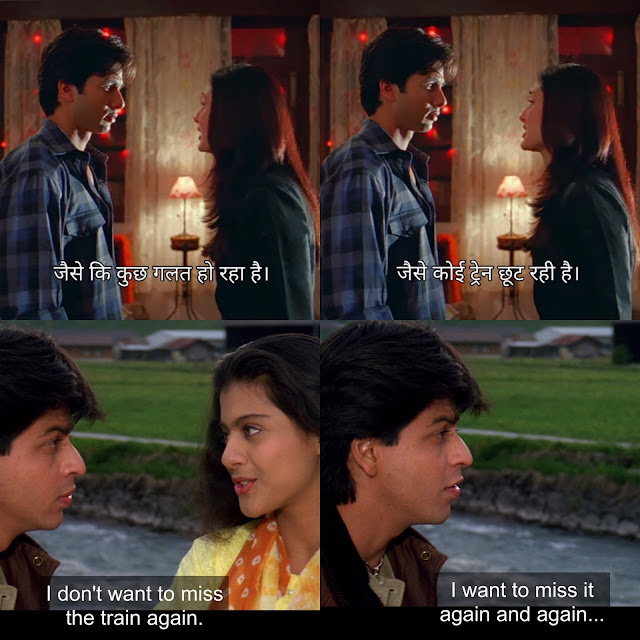
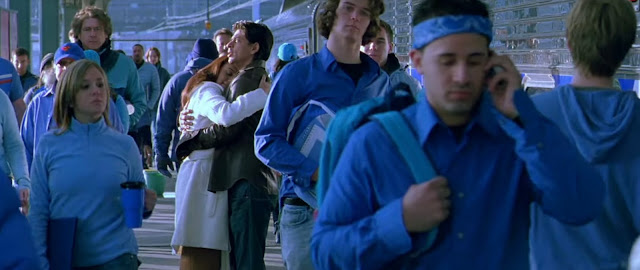
1. Missing trains in Imtiaz Ali's Jab We Met and Aditya Chopra's Dilwale Dulhania Le Jayenge.
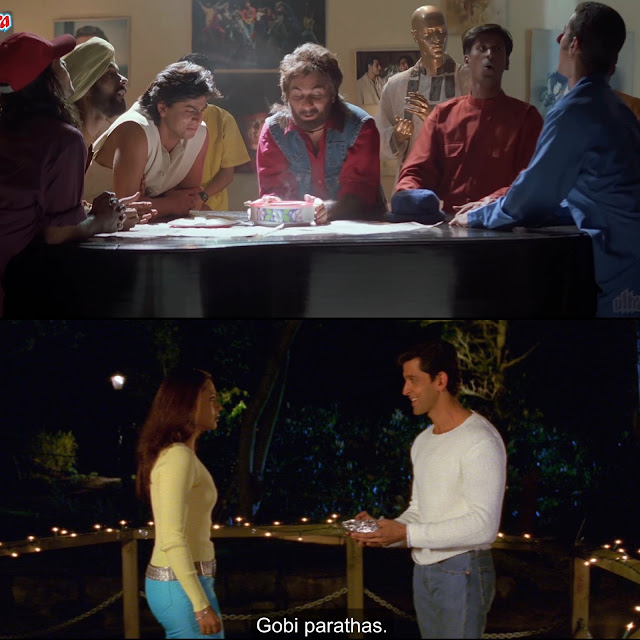
2. Parathas in Subhash Ghai's Pardes and Kunal Kohli's Mujhse Dosti Karoge.
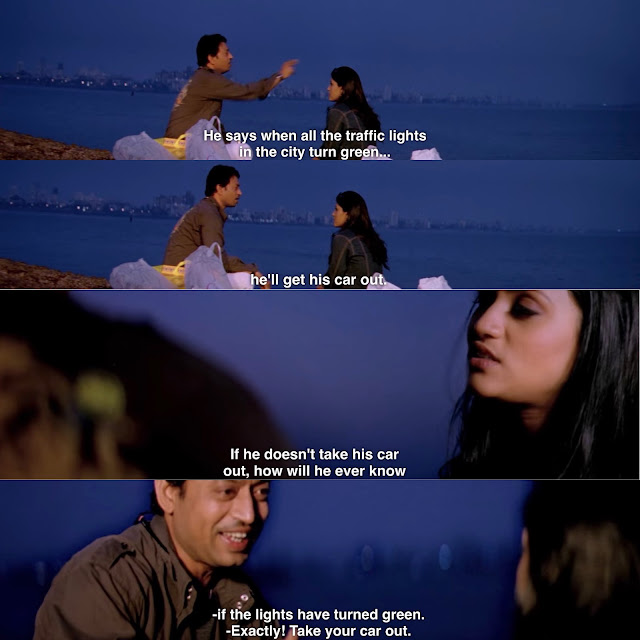
3. The message of taking a chance in life Anurag Basu's in Life in a... Metro.
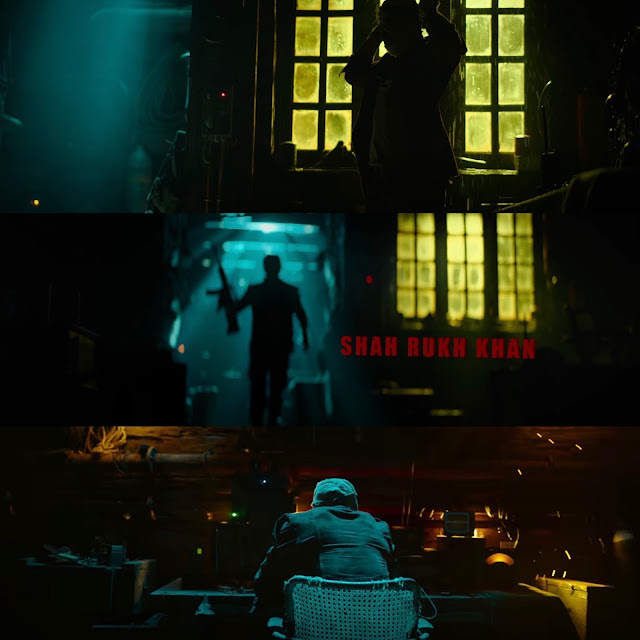
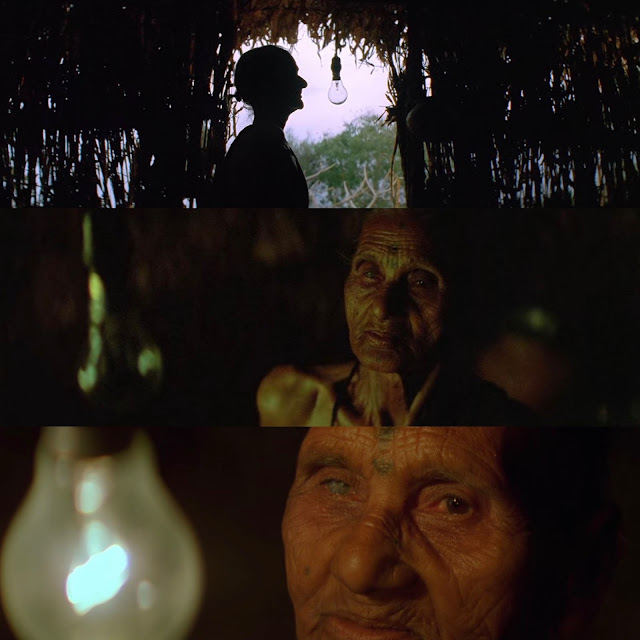
4. The contrasting light in Atlee's Jawan.
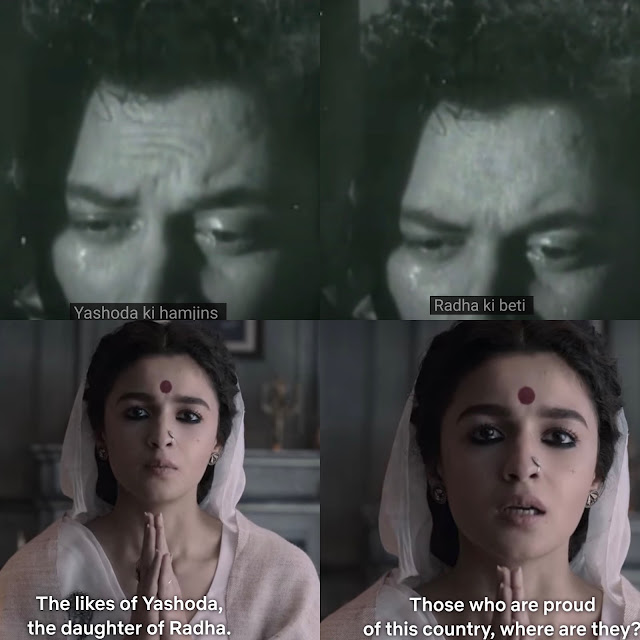
5. "Madad chaahti hai ye Hawwa ki beti,
Yashoda ki hamjins, Radha ki beti,
Payambar ki ummat, Zulaykha ki beti,
Jinhe naaz hai hind par wo kahaan hain
."
Sanjay Leela Bhansali's Gangubai Kathiawadi pays tribute to Guru Dutt's Pyaasa.
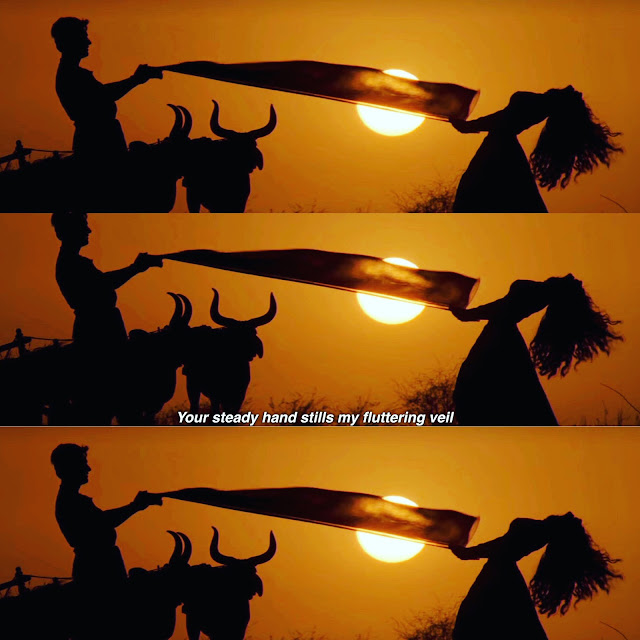
6. "Tune thama aaj yeh aanchal hai" in Ashutosh Gowariker's Lagaan.
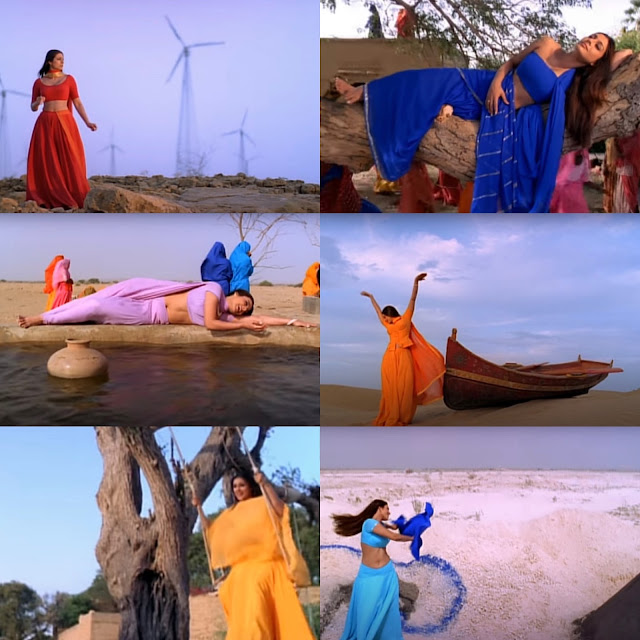
7. The colors of Tabu in Yeh Rishta in M.F. Husain's Meenaxi: A Tale of Three Cities.
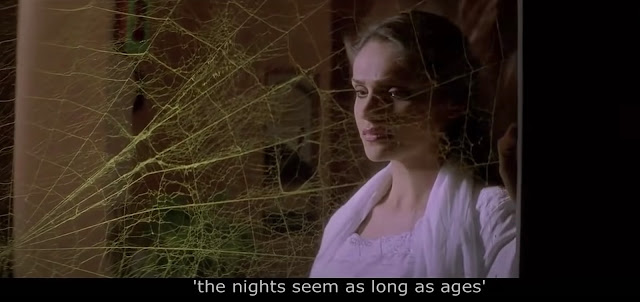
8. A lovely still from Anubhav Sinha's Tum Bin.
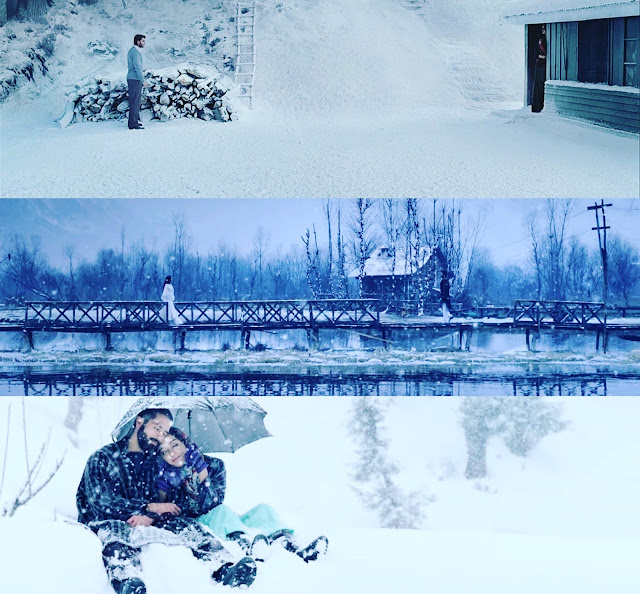
9. Lovers in the snow in Vikramaditya Motwane's Lootera, Abhishek Kapoor's Fitoor, and Vishal Bhardwaj's Haider.
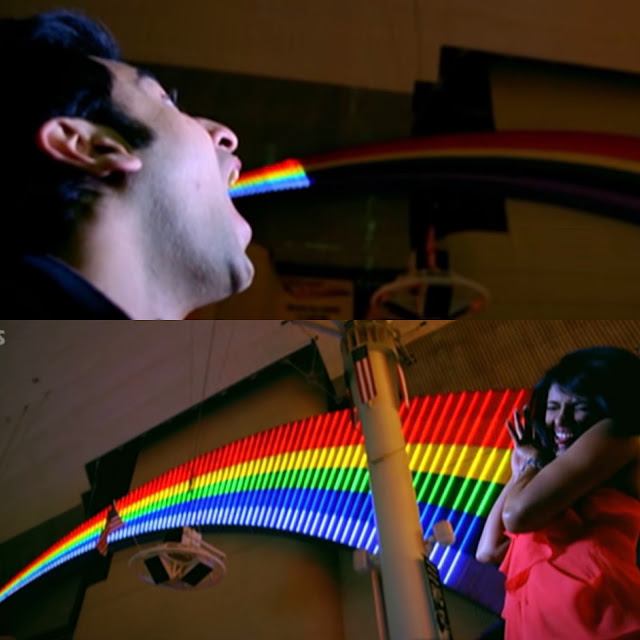
10. The colors in Siddharth Anand's Anjaana Anjaani.
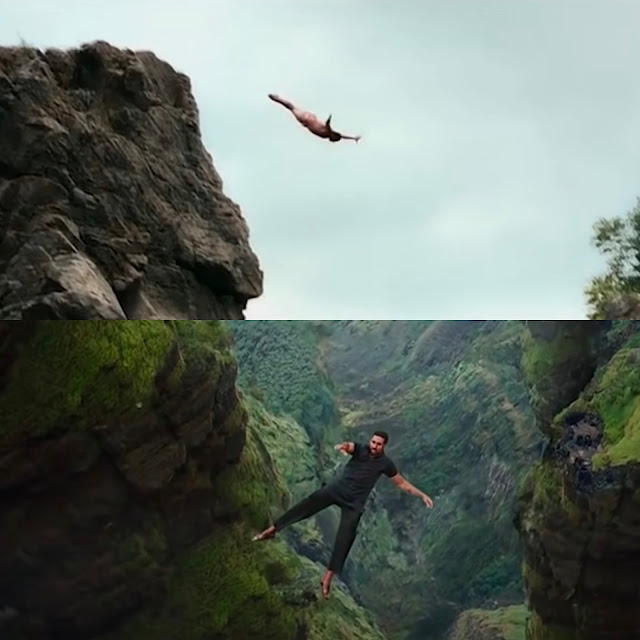
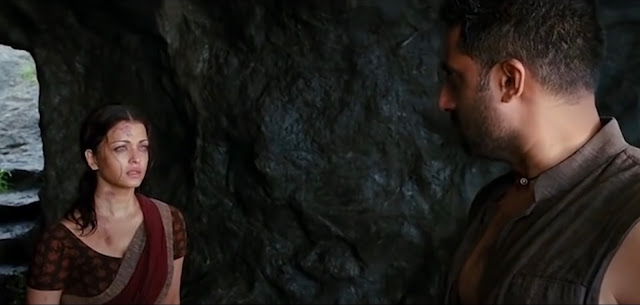
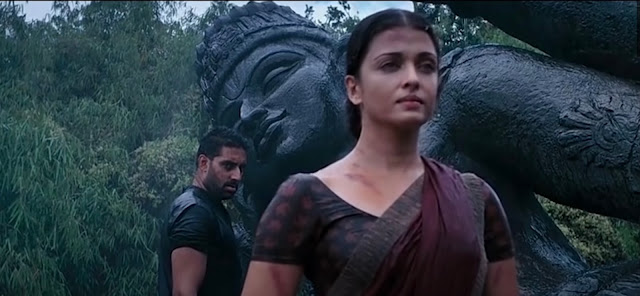
11. The first and the last scenes in Mani Ratnam's Raavan.
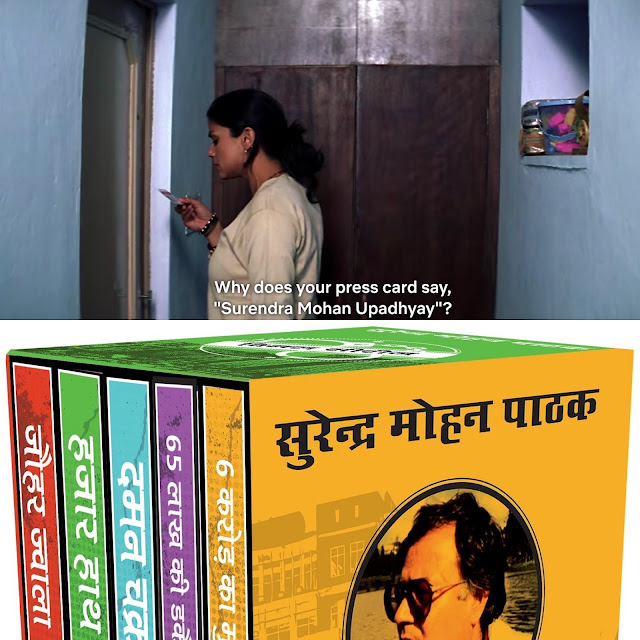
12. Hindi pulp fiction writer Surender Mohan Pathak is mentioned in Navdeep Singh's Manorama Six Feet Under.
 
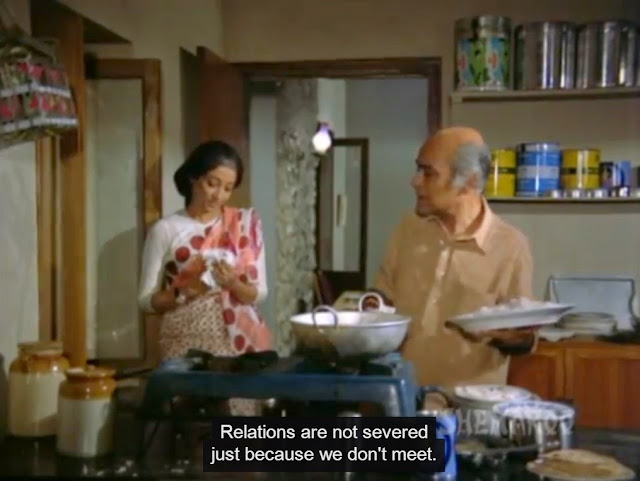
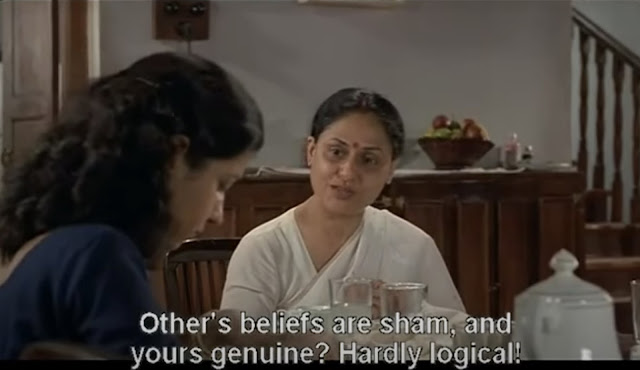
13. A beautiful line from Gulzar's Aandhi.
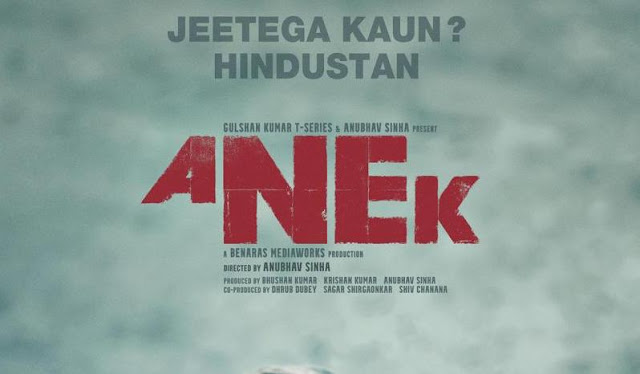
14. The title design of Anubhav Sinha's Anek is nice. NE (North East) is a part of the word ANEK just as it is a part of the different states of India. Also, the word Anek reminds me of the unity poem—Ek Anek Aur Ekta—(Ek Chidiya, Anek Chidiyan) that was telecast on Doordarshan. 
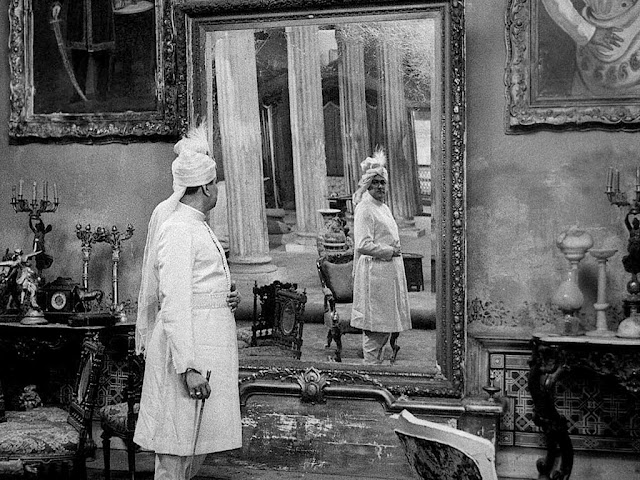
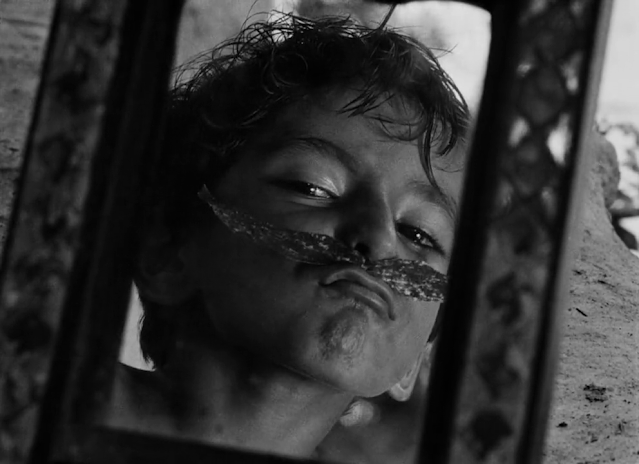
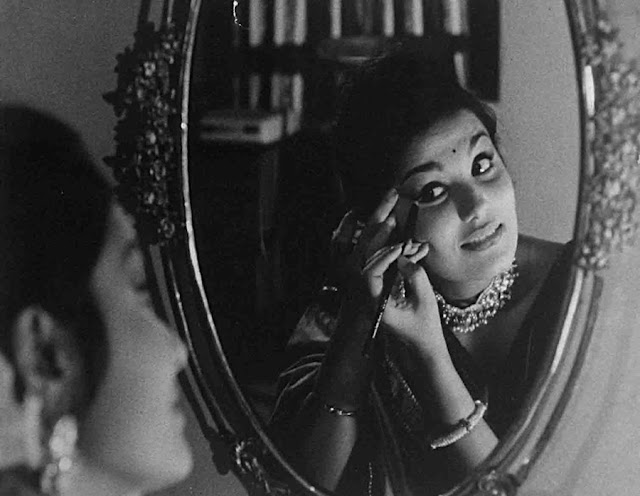
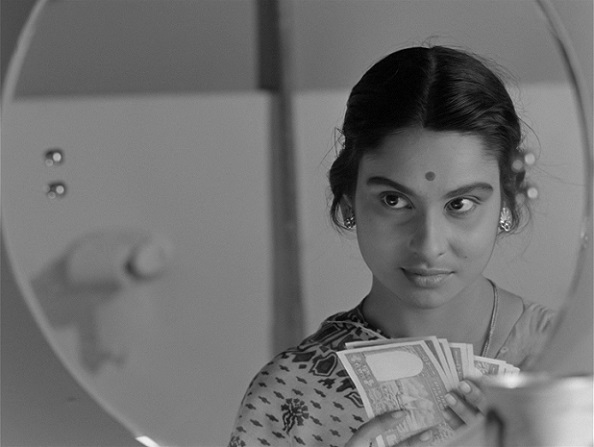
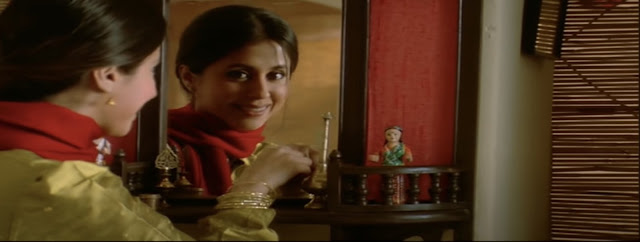
15. Some mirror shots from Satyajit Ray's films.
Jalsaghar
Pather Panchali
Seemabadha
Mahanagar
16. R. Madhavan's debut as an actor was a cameo in Sudhir Mishra's Is Raat Ki Subah Nahin.
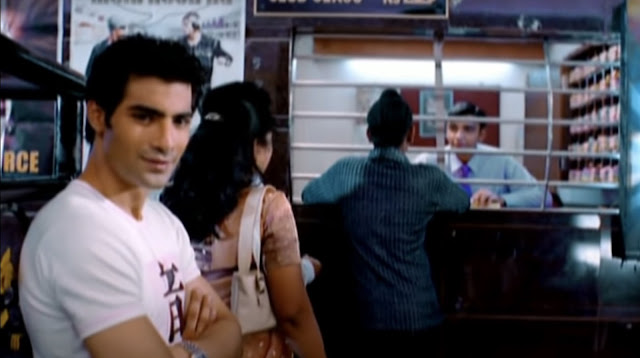
17. In the charming Tera Mera Pyar, the lead guy (Bhanujit Sudan) comes to watch the film all by himself.
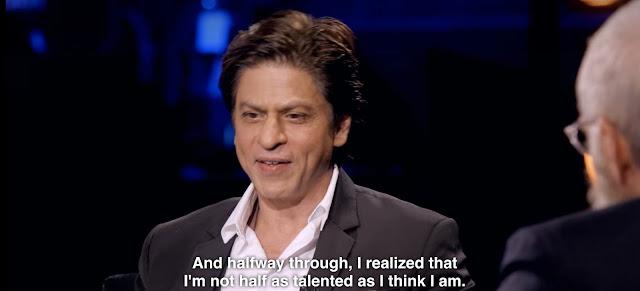
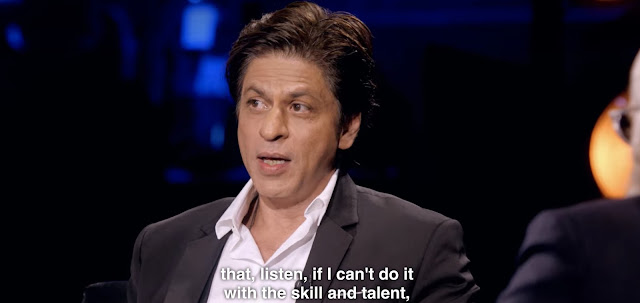
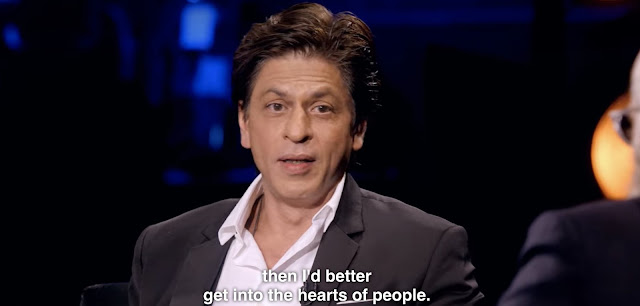
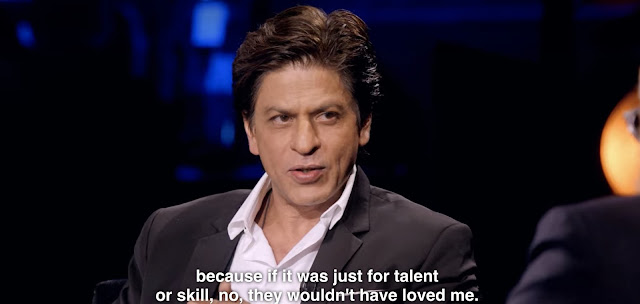
18. Shah Rukh Khan in his interview with David Letterman on Netflix.
19. Arun Lal in Mile Sur Mera Tumhara.
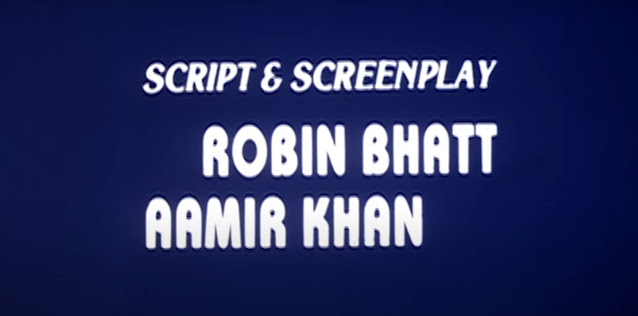
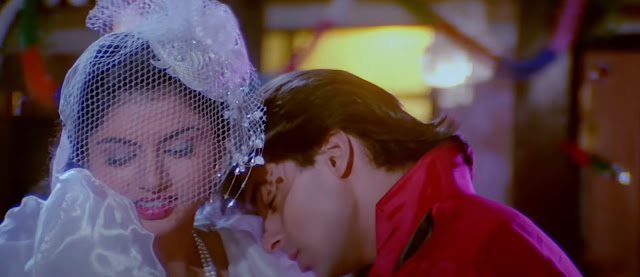
20. Aamir Khan is credited for the screenplay of Mahesh Bhatt's Hum Hai Rahi Pyar Ke. Robin Bhatt is the half-brother of Mahesh Bhatt.
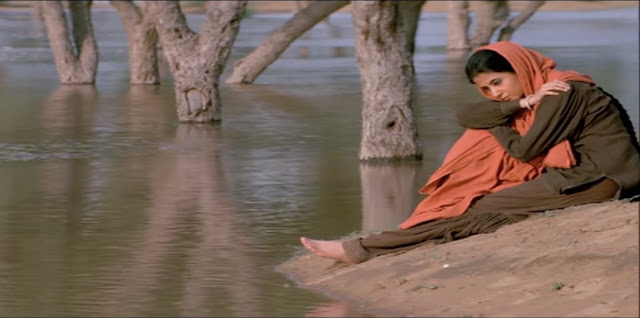
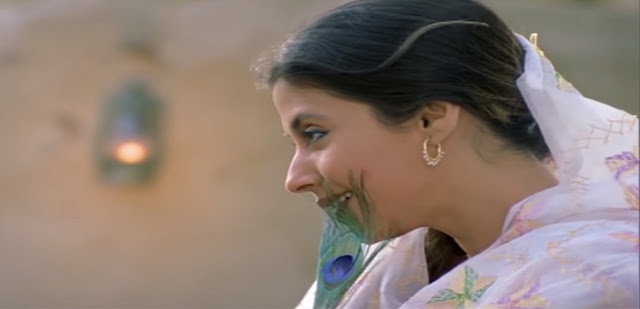
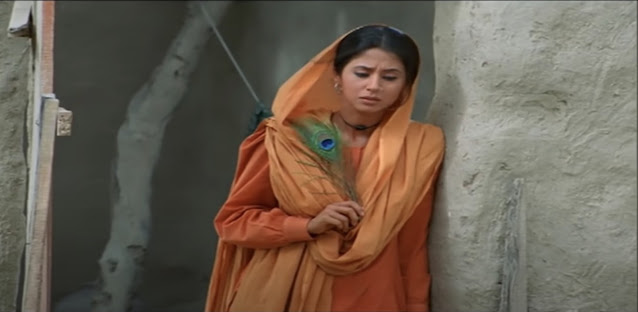
21.
 Urmila Matondkar in Chandraprakash Dwivedi's 
Pinjar.
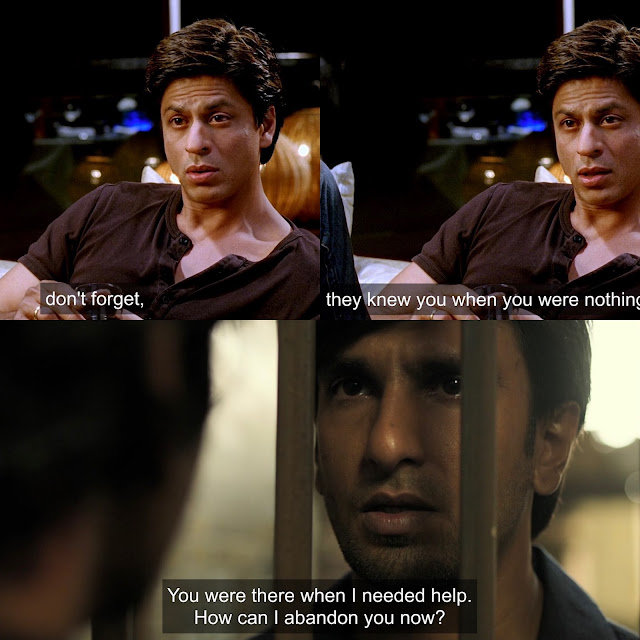
22. Never forget your old friends in Zoya Akhtar's Luck By Chance and Gully Boy.
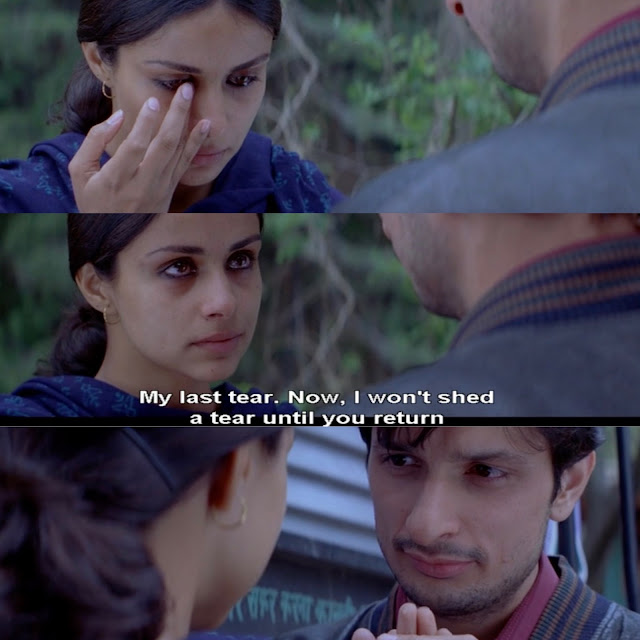
23. There is a beautiful scene in Nagesh Kukunoor's Dor where Zeenat (Gul Panag) gives a teardrop to her husband Amir (Rushad Rana) and says, "Aakhri aansu. Jab tak laut ke nahi aayoge, main nahi royungi." She never cried till he returned.
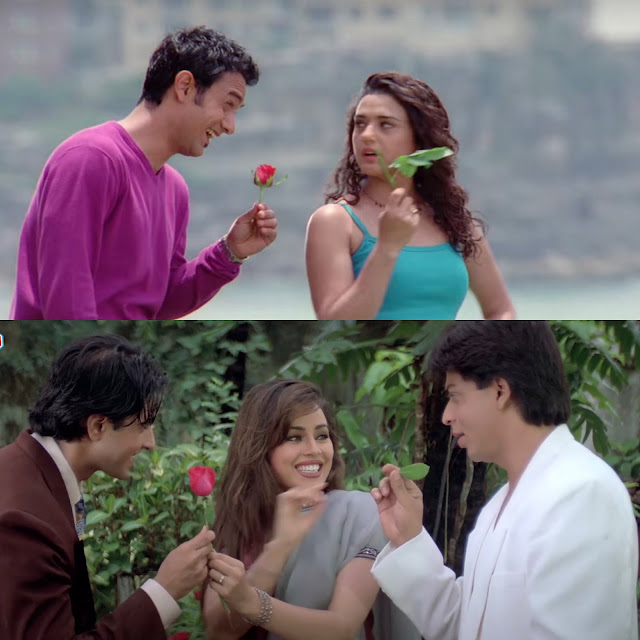
24. Random similar moments in Farhan Akhtar's Dil Chahta Hai and Subhash Ghai's Pardes.
25. The lovely 'Bijli' scene from Ashutosh Gowariker's Swades.
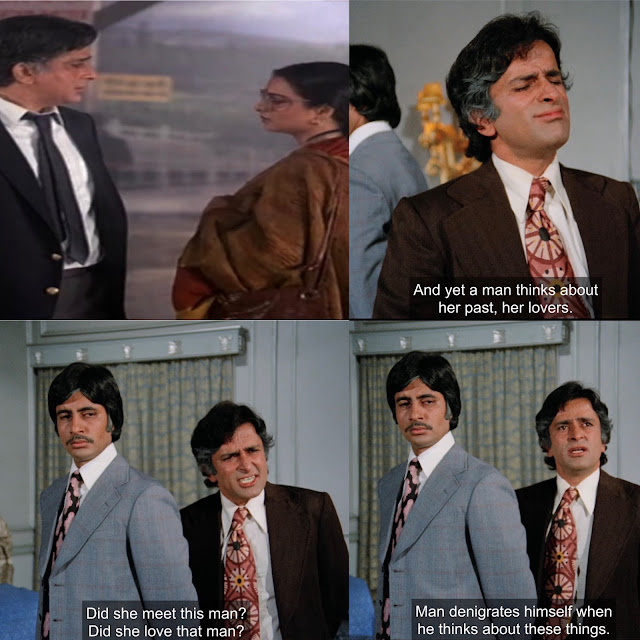
26. Shashi Kapoor in similar roles in Gulzar's Ijaazat and Yash Chopra's Kabhi Kabhie.
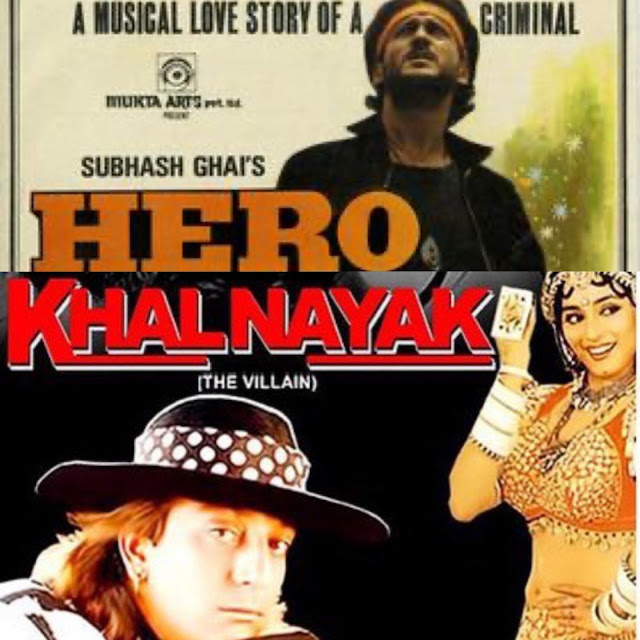
 27. Subhash Ghai has made films with the titles — Hero and Villain.
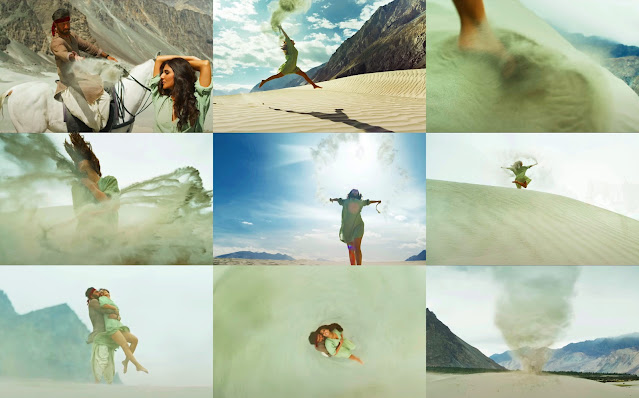
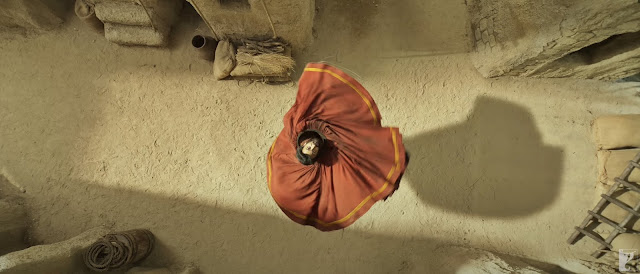
28. The beautiful sand choreography by Brinda in Fitoor from Shamshera. He throws the sand, and they both get engulfed in it. The song is shot in the desert, under the sea, and near the mountains.
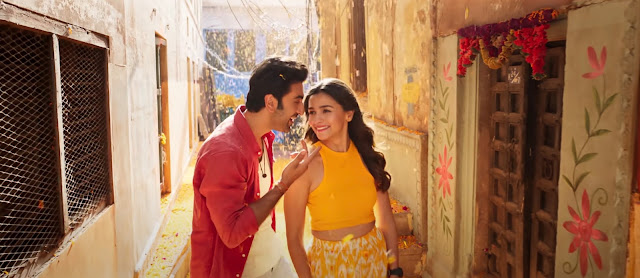
29. A lovely still from Ji Huzoor from Shamshera.
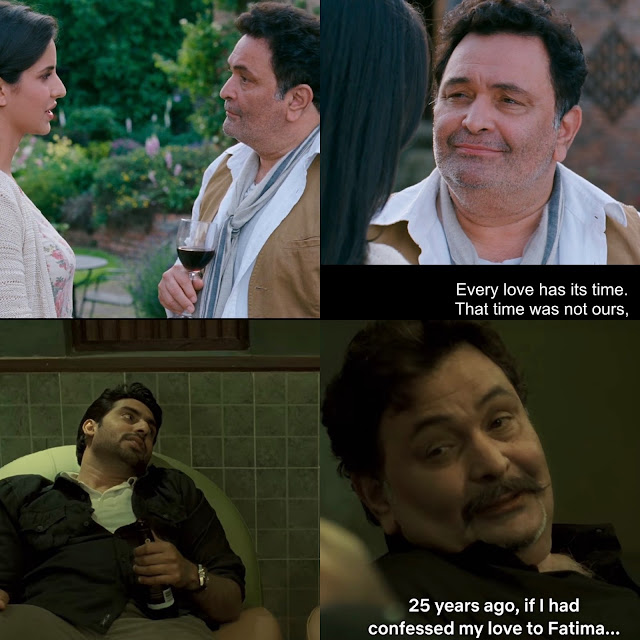
30. Rishi Kapoor's characters meet the children of the women he loved in Yash Chopra's Jab Tak Hai Jaan and Rakeysh Omprakash Mehra's Delhi-6.
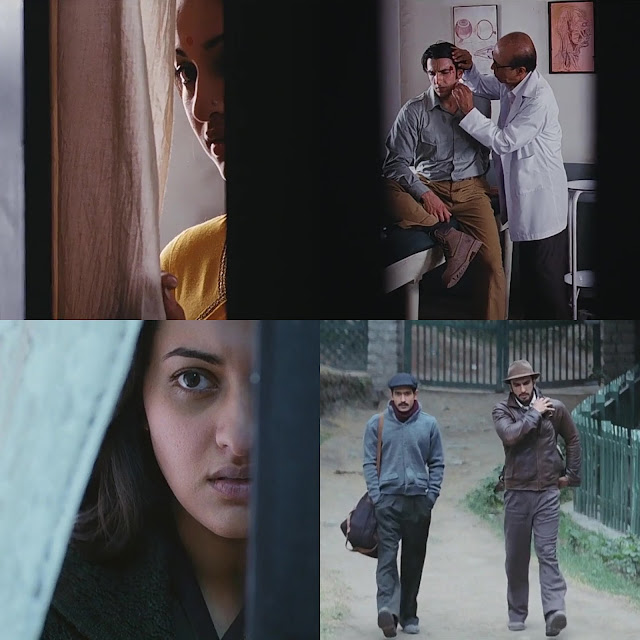
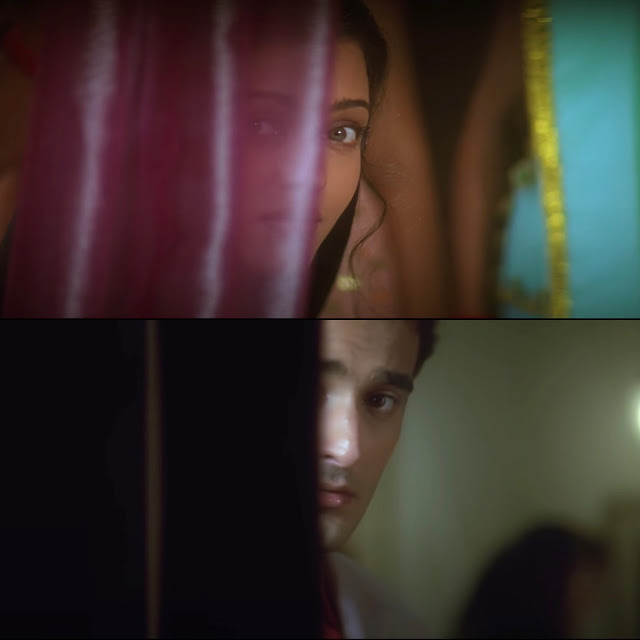
31. Pakhi (Sonakshi Sinha) watched Varun (Ranveer Singh) from behind the curtains in the first and second half of Vikramaditya Motwane's Lootera.
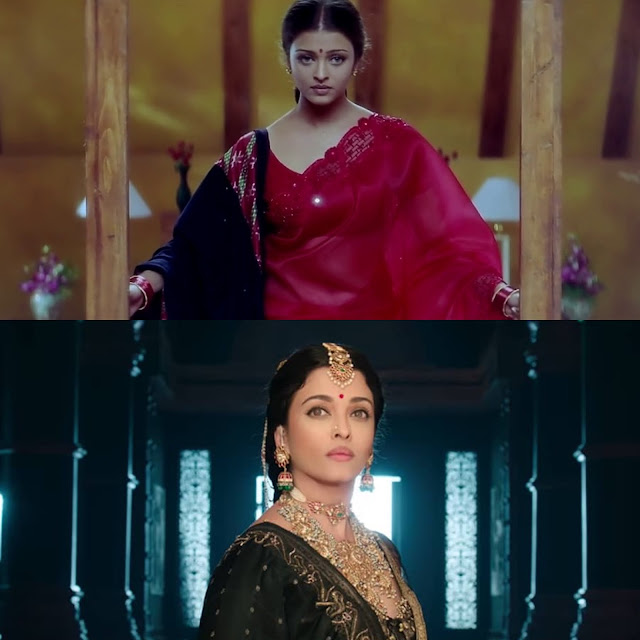
32. Aishwarya Rai plays Nandini in Sanjay Leela Bhansali's Hum Dil De Chuke Sanam and Mani Ratnam's Ponniyin Selvan: 1.
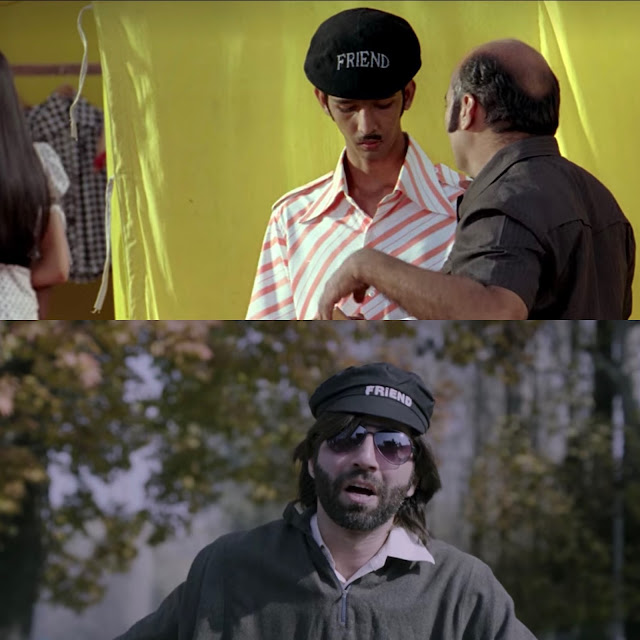
33. The 'Friend' cap from Sooraj Barjatya's Maine Pyar Kiya in Farah Khan's Om Shanti Om and Vishal Bhardwaj's Haider.
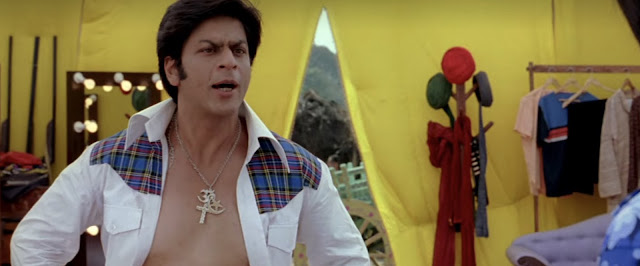
34. Amar Akbar Anthony in Om's (Shah Rukh Khan) locket in Farah Khan's Om Shanti Om.
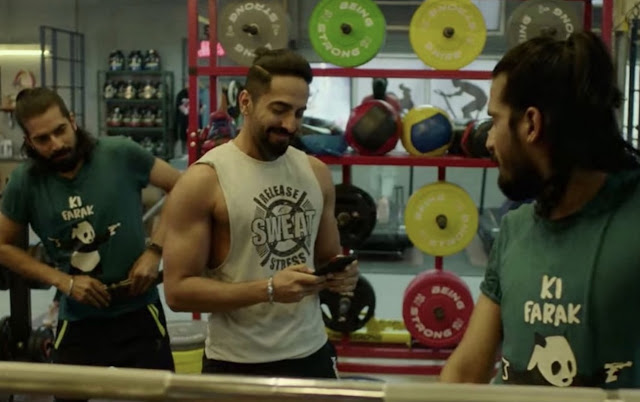
35. In Abhishek Kapoor's Chandigarh Kare Aashiqui, the shirt says Ki Farak followed by an emoji of a panda. They used a panda for painda.
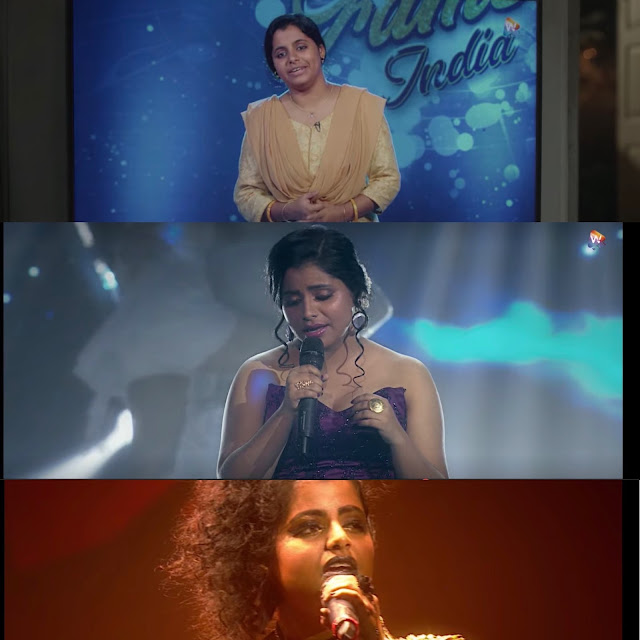
36. In Chaitanya Tamhane's The Disciple, the reality-TV-show contestant becomes famous by singing more popular songs. She completely transforms, almost becoming unrecognizable. Sharad (Aditya Modak), however, refuses to compromise with his art but doesn’t achieve her level of fame.
37. Baggages (emotional) and women in Vikas Bahl's Queen and Farhan Akhtar's Dil Chahta Hai.
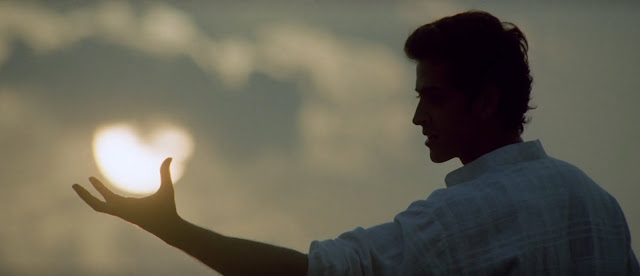
38. In Aaja Mahiya from Khalid Mohammed's Fiza, the first few lines are—"Aa dhoop maloon main, tere haathon me." In the initial moments of the song, Amaan (Hrithik Roshan) plays with the sun and gives life to these lines
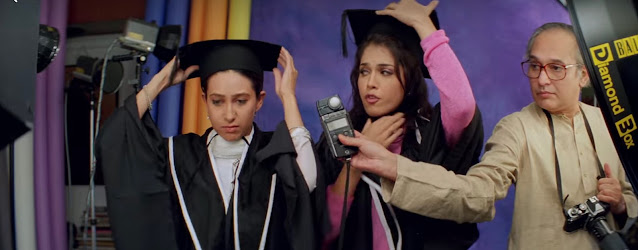
39. Famous fashion photographer Gautam Rajadhyaksha in Khalid Mohammed's Fiza.
40. Jaya Bachchan played the mother of misguided sons in Khalid Mohammed's Fiza and Govind Nihalani's Hazaar Chaurasi Ki Maa. The son is missing in the former while dead in the latter.
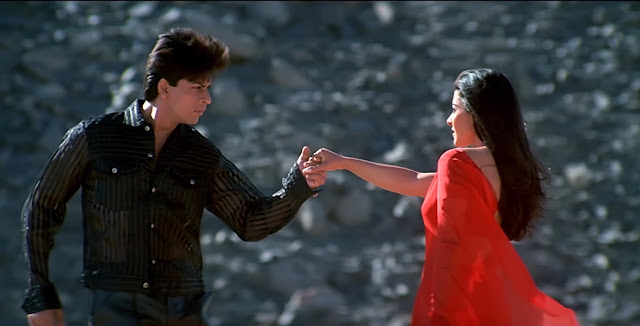
41. The lovers' gaze in Subhash Ghai's Taal.
For more trivia, follow me on Instagram at @ReadingFilms.

Other Reading:
1) Trivia Post 28—Link
2) Trivia Post 27—Link
3) Trivia Post 26—Link
4) Trivia Post 25—Link
5) Trivia Post 24—Link

Dialogue of the Day:
"Har ishq ka ek waqt hota hai, woh hamara waqt nahi tha, par iska yeh matlab nahi ki woh ishq nahi tha."
—Imran, Jab Tak Hai Jaan

Sunday, July 24, 2022

The Colors of Love in Cinema

A few days ago, the song Kesariya from the upcoming Ayan Mukerji film Brahmastra was released, causing quite a kerfuffle all over social media. While Arijit Singh's rendition has been praised, the Hinglish phrase 'love storiyaan' has prompted many a discussion on the song. The song lyrics are about a lover talking about the beauty of his beloved. He adds, "Kesariya tera ishq hai, Piya, rang jaaun toh haath lagaun." He says that the color of his beloved's love is saffron. When he touches it, he becomes colored with it. Kesariya takes its meaning from the word kesar, the Hindustani name for saffron, a crop grown in Kashmir.
Love has always been associated with colors in Hindi cinema for ages. The music and lyrics from the films have reiterated that love evokes a feeling of being colored. Kesariya is not the only song that describes love as saffron. In Shah Rukh Khan and Kajol-starrer Dilwale, love was called ochre, which is quite close to saffron. In the track Gerua, the lover says to his beloved, "Duniya bhula ke tumse mila hun, nikli hai dil se ye dua, rang de tu mohe gerua." He has met her after forgetting the world, and the wish that has come out of his heart is that she colors him in the color of love which is ochre.
In the title song from Rang De Basanti, the color of love for the motherland is also saffron. Aur mohe tu rang de basanti yaara. This particular phrase Rang De Basanti has its roots in the song Rang De Basanti Chola, which was scripted by Ram Prasad 'Bismil' along with eighteen of his friends while fighting for freedom of India from the Britishers. Saffron is also the first color of the national flag.
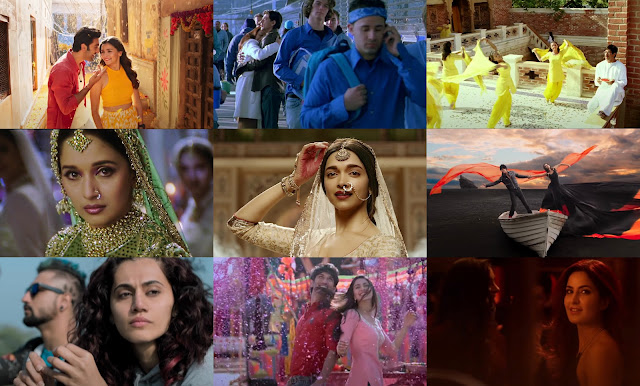
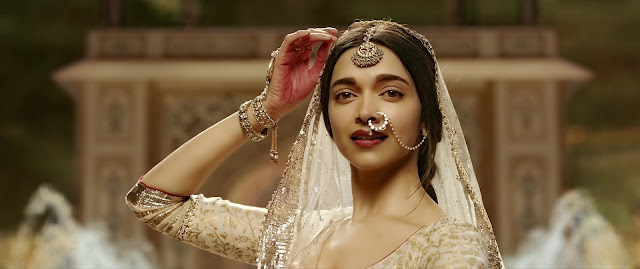
Apart from saffron, love has been described in other colors. In Bajirao Mastani, Raja Chhatrasaal (Benjamin Gilani) honors Bajirao (Ranveer Singh) for protecting his kingdom from the enemy on the occasion of Holi. His warrior daughter Mastani (Deepika Padukone) performs a dance on Mohe Rang Do Laal, paying tribute to Mohe Panghat Pe from Mughal-E-Azam. The song is from the viewpoint of Radha, who asks Krishna to paint her red—the color of love, the color of vermilion. With all her hands lined in red color, Mastani gestures to Bajirao to put vermilion in her head, as if asking him to marry her. In the other half of the song, she says she is colored in green, the same color as that Krishna. Main to rangi hari Hari ke rang. Mastani, thus, feels the color of love as both red and green. Mohe Rang Do Laa is a lovely song with beautiful lyrics. It has two interesting lines. Laal is used once for Krishna (son of Nand) and once for the color red. Mohe rang do laal, Nand ke laal laal. Likewise, hari is used once for Krishna and once for the color green. Main to rangi hari Hari ke rang. 
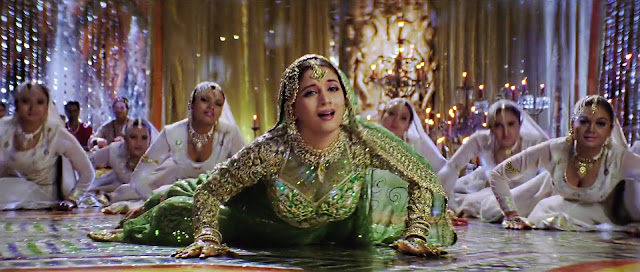
Sanjay Leela Bhansali used red and green as the color of love in his earlier films, too. In Devdas, Chandramukhi (Madhuri Dixit) experiences love in the color green. "Hum pe yeh kisne hara rang daala, khushi ne hamari humein maar dala," she sings. Who has thrown this green on me? My joy is killing me. In Goliyon Ki Raasleela Ram-Leela, love is the color red. Ram (Ranveer Singh) and Leela (Deepika Padukone) are colored in the hues of Laal Ishq. Yeh laal ishq, yeh malaal ishq.
In Shuddh Desi Romance, love is pink. In the stunningly shot Gulabi, the song lyrics say that love is gulabi. Jaane re jaane sab jaane hai, rang, rang gulabi hai preet toh. Everyone knows that pink is the color of love. The song is also shot in the pink city of Jaipur, and everything else in the song is pink.
In Kalank, love is symbolically compared with black. Kalank nahi, ishq hai kaajal piya. Love is not a blemish; instead, it is the kohl that helps accentuates one's beauty. The lead characters—Roop (Alia Bhat) and Zafar (Varun Dhawan)—also wear kohl in the film. And the walls of Bahaar Begum's (Madhuri Dixit) kotha are also made of black pillars. In Qurbaan, love is white. In the song Rasiya from the film, the singer says, "Saawali si saansein mori araj sunaave, aake more shwet preet pe rang saja de." Her dark-colored breaths request her lover to come and color her white-colored love.
Manmarziyaan treated love in shades of grey. It is not black or white, but grey, it says in the song Grey Walaa Shade. "Zamaana hai badla, mohabbat bhi badli, ghise pitey version nu, maaro update," it said. The world has changed, and so has love, and now, it is time to update the old versions. The Kanika Dhillon-written film portrayed a contemporary outlook on love and relationships in the age of Tinder.
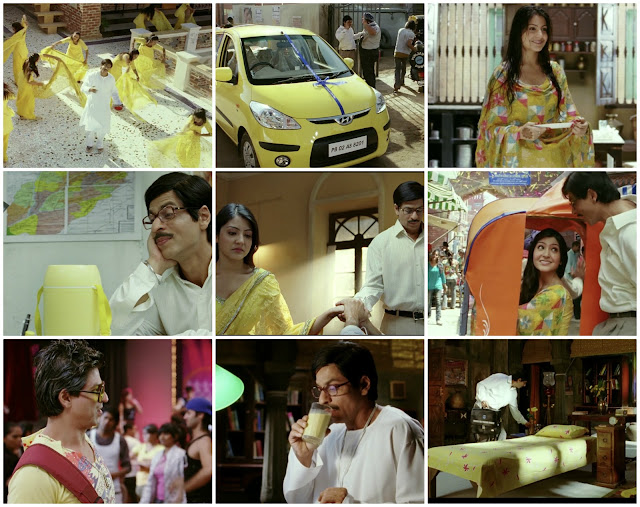
In Kabhi Alvida Naa Kehna, there is not any song that describes the color of love; however, when Dev (Shah Rukh Khan) falls in love with Maya (Rani Mukerji), he invokes the color blue. "I like blue," he says. Then, moments later, right before the song Tumhi Dekho Na, Maya replies to him that she, too, likes blue. And then everything around them becomes blue. In Aiyyaa, Meenakshi's (Rani Mukerji) color of love for Surya (Prithviraj) is also blue. Likewise, in Rab Ne Bana Di Jodi, the color of love for Surinder Sahni (Shah Rukh Khan) is yellow. His car is yellow, and his lunchbox is yellow. Many other items in his house are yellow. And then, in the song Haule Haule, everything turns yellow.
There have been many other songs that talk about being colored by love without explicitly mentioning the color. In Prem Pujari, Suman (Waheeda Rahman) sings for Ram (Dev Anand), "Rangeela re, tere rang mein yun ranga hai mera mann." Oh, the joyous one, my heart has been stained in your color. In Maine Pyar Kiya, Prem (Salman Khan) addresses his lover Suman (Bhagyashree) as someone who is colored in his colors, "Mere rang mein rangne waali." In Kabhi Khushi Kabhie Gham, Anjali (Kajol) tells Rahul (Shah Rukh Khan) in Suraj Hua Maddham, "Tere hi rang se yun mein to rangi hoon sanam." In Goliyon Ki Raasleela Ram-Leela, Leela (Deepika Padukone) sings in Ang Laga De, "Ang laga de re, mohe rang laga de re." Touch your body with mine, color me. In Thakshak, Suman (Tabu) sings, "Mujhe rang de, ha rang de ha rang de, haan apni preet vich rang de."
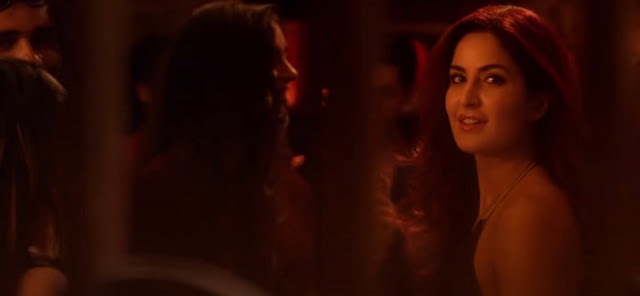
In O Rangrez from Bhaag Milkha Bhaag, Milkha (Farhan Akhtar) sings, "Apne hi rang mein, mujh ko rang de, dheeme dheeme rang mein, mujh ko rang de." In Sun Saathiya from Any Body Can Dance 2, Vinnie (Shraddha Kapoor) performs a dance and says, "Barsa de ishqa ki syahiyaan. Rang jaaun, rang rang jaaun." In Fitoor, the color of Firdaus' (Katrina Kaif) deep red hair symbolized love and passion. The song Rangaa Re in the film talked lover getting dissolved in the soul like a color. "Main rang ban ke pighli hoon tere saath. O dil ranga re, tere rang ranga re, teri rooh mein main ghul gayi." Becoming a color, she has melted alongside her lover. Her heart is colored in your colors, and she is dissolved in his soul.
In the recent Atrangi Re, there was the song Tere Rang, whose lyrics are again based on Radha-Krishna's story and talk about being merged with the color of the lover. It is the time of Holi, and everyone is playing with colors. The woman (Sara Ali Khan) wants to meet her lover (Akshay Kumar), but she avoids getting colored by anyone else. She stops the kids. She stops her family members. She stops the people on the streets. The only person she allows to put color on her is her lover. "Tere rang ranga, mann mehkega," she adds.
There have been other many songs in this theme where the feeling of love brings color to the life of lovers. However, I keep returning to the glorious Satrangi Re from Dil Se, which added a new layer to this theme. It beautifully ties the seven stages of love defined in Arabic literature to the seven colors of the rainbow. The seven stages of love are hub (attraction), uns (infatuation), ishq (love), akidat (trust/reverence), ibadat (worship), junoon (madness) followed by maut (death). And in the song, we actually see the seven colors of the rainbow—violet, indigo, blue, green, yellow, and orange. Love, after all, is like a rainbow that brings with it the many colors of life.
Other Reading:
1. On Satrangi Re—The Seven Stages of Love—Link

Dialogue of the Day:
"Kesariya tera ishq hai, Piya, rang jaaun toh haath lagaun."
—Kesariya, Brahmastra

Sunday, July 10, 2022

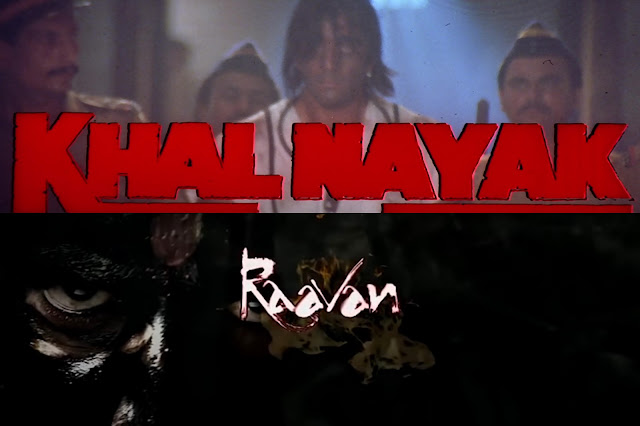
The Saintly Demons in Khal Nayak and Raavan

Subhash Ghai's Khal Nayak and Mani Ratnam's Raavan are adapted from the story of Ramayana. There have been many other films based on the epic story of Ram and Sita. However, these two films differ from others as they depict their story through the eyes of Raavan, the reviled demon king. Both films humanize Raavan and portray his conflict and turmoil. 
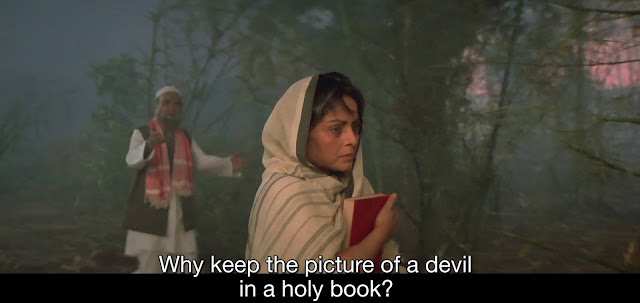
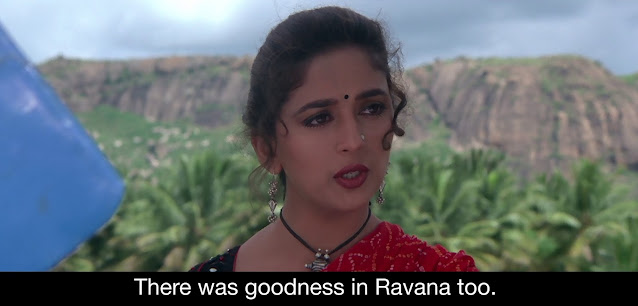
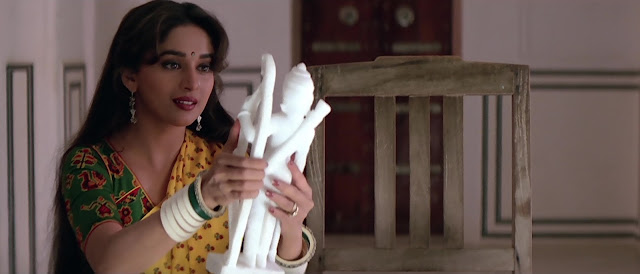
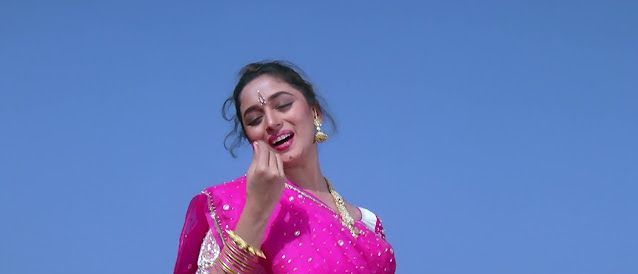
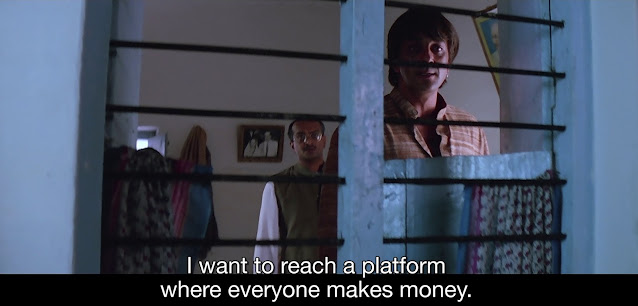
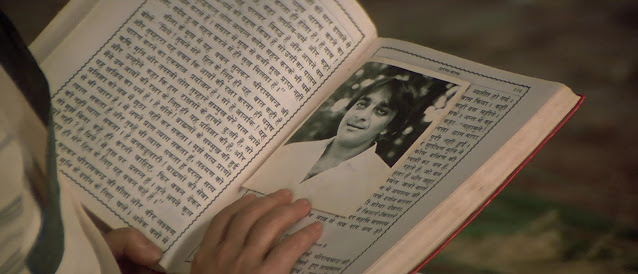
Early in Khal Nayak, Aarti Devi (Rakhee) sits with a photograph of her son Ballu Balram (Sanjay Dutt) in the Ramayana. When her friend Shaukat (A. K. Hangal) sees her, he comments, "Ramayana me Raavan ki photo rakhne se kya fayda." In these early moments, Khal Nayak tells us that it is a tale of the Ramayana. Ballu, the hardened criminal, is Raavan. Ram Kumar Sinha (Jackie Shroff), the police inspector, is Ram. Ganga (Madhuri Dixit), another police inspector in love with Ram, is Sita. Khal Nayak's premise is that there is a nayak (hero) in every khal nayak (villain). "Raavan me bhi to kahin na kahin nayakpan tha," Ganga tells Ballu at some stage, just like there is a Ram in Ballu Balram. Ballu became a khal nayak because he felt wronged by the system. Poverty, unemployment, and his father's rigid principles disillusioned him with life. He wanted to make money and become rich. Taking advantage of Ballu's anger, Roshi Mahanta (Pramod Moutho) lured him towards the path of crime. Ballu, thus, became a ruthless criminal. Khal Nayak explores his journey to becoming a nayak from a khal nayak, and Ganga helps him bring about this change.
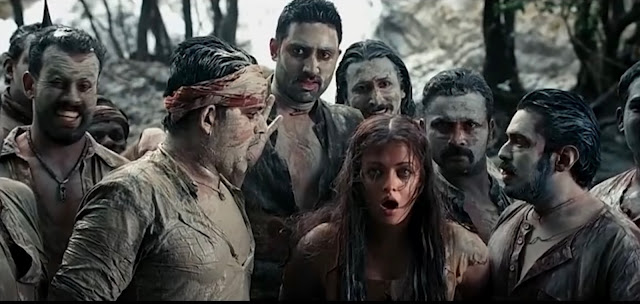
Mani Ratnam's Raavan, as the title suggests, is also the tale of Raavan from the Ramayana. Beera (Abhishek Bachchan), who plays a local bandit and a populist hero, is Raavan. "Raavan hai ya Robinhood," a character comments about him. Beera's archnemesis is police inspector Dev (Vikram), befittingly named after the Gods. He is Ram. Beera abducts Dev's wife, Ragini (Aishwarya Rai), who is Sita. Beera and his family suffered great injustice and brutality at the hands of the police. Therefore, he decided to fight against it and ran a parallel government in his village Lal Mati. He became a thorn in the police's eyes. Raavan's premise is, thus, similar to Khal Nayak's where it says that injustice forces people to take the path of crime.
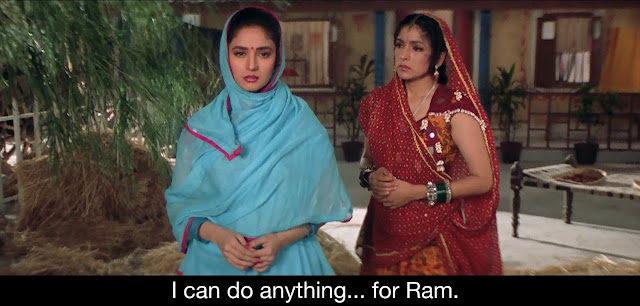
In Khal Nayak, Ballu is captured by Ram, but he manages to escape. Ganga then takes on the mantel of saving the maryada of her Ram. She decides to capture Ballu. She disguises herself as a dancing woman in a troupe. She finds Ballu and runs away with him, hoping that she will lead him to the police. It is here that Khal Nayak does something different. Sita goes to Lanka of her own volition. She is not kidnapped as such by Raavan (Ballu). Traveling with Ballu, however, makes Ganga see his different side. Beneath his hardcore criminal exterior lies a kind man who feels short-changed in life. At one point, he even saves a group of villagers dealing with electoral violence while pretending to be a policeman. Ballu becomes Ram in these moments. He also receives blessings from the entire village for this act. Ganga then starts to develop a feeling of kindness towards Ballu. It is not love per se, as she still loves Ram, but there is definitely some affection for Ballu in her. Ganga also saves him from being shot dead by the police and helps him escape again.
In Raavan, Ragini is kidnapped by Beera, as it happens in Ramayana. She, too, sees another side of Beera when she is held captive. She learns more about the villagers and their goodness and innocence. At one stage, she even becomes one of them when she dresses like them, prompting Beera to call her Mahua. But Ragini also learns about a different side of her Dev and the police. She learns about the inhuman torture meted out by him and other policemen to the villagers. Raavan and Khal Nayak are similar in humanizing Raavan, but they differ in where Raavan shows a darker side of Ram. Beera had a reason for his anger against the police, while Dev was inhumanely violent against the villagers without any major reasons. Even at the time when Beera sends his brother for peace talks, Dev shoots him dead. Dev is portrayed to be more vile and scheming than Beera. In Khal Nayak, Ram is the saint, except perhaps for one instant, when he completely loses his cool and beats the daylights out of Ballu in jail. His peers are stunned by his brutality, but it is the only moment that shows the violent side of Ram.
There is a point in Khal Nayak when Ganga calls Ballu an animal—jaanwar. In response, Ballu comes all shaved and dressed up like a gentleman. He also gifts Ganga an idol of Ram. She imagines the time with her real-life Ram, hoping he will come to her. "Aaja saajan aaja," she sings. Ballu, however, is unaware that Ganga is betrothed to Ram. Once he learns about the object of Ganga's affection, he is jealous and feels betrayed as he has fallen in love with Ganga. In Raavan, too, Ragini compares Beera to an animal. And in a similar staging in Raavan, Ragini prays to the broken statue of Lord Vishnu, asking to not make her weak by showing the goodness of the villagers. The statue is a stand-in for her Dev, her Ram. Beera asks Ragini about her husband. She tells him that Dev is like bhagwaan. Beera replies that he feels jealous of her husband because he gets to be with Ragini. Beera has also fallen in love with her. Jealousy makes him feel like Dev's equal. It is the film's best scene where Beera acknowledges his human and emotional side.
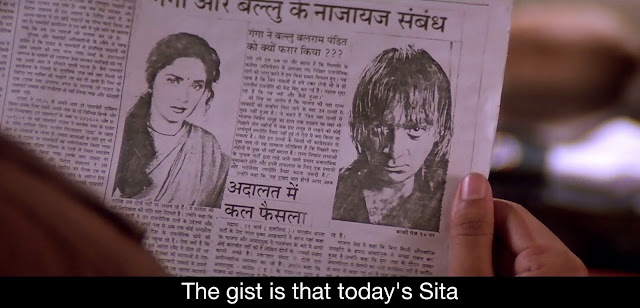
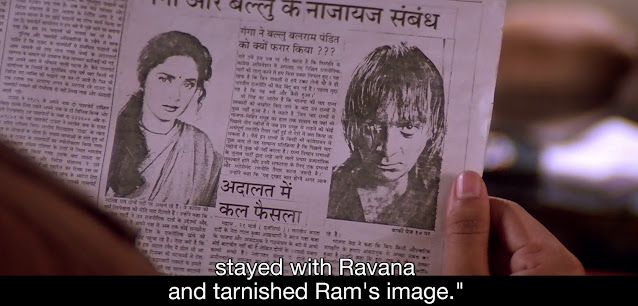
The Agni Pariksha of Sita provides additional Ramayana-based context to the two films. In Khal Nayak, when Ganga protects Ballu from being shot by the police, she is charged with criminal conspiracy. She is put in jail and is called a traitor. The world accuses her of developing feelings for Ballu and tarnishing Ram's image. Even Ram refuses to stand up for her, just as Lord Ram renounced Sita after listening to a laundryman. Ram's Ganga becomes maili. Ganga is put on trial in court. However, Ballu comes to her rescue. He claims in court that she is innocent. It is a telling statement that a criminal's statement carries more weight than an innocent woman's words. Nevertheless, Ganga is released. In this Ramayana, Sita gets to be with Ram. Ballu gets his chance to become a nayak and surrenders.
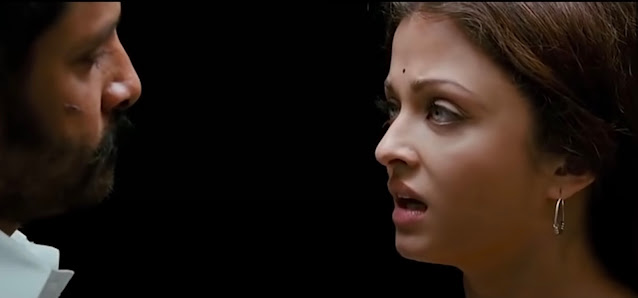
In Raavan, the Agni Pariksha moment appears when Dev questions Ragini if Beera touched her inappropriately. He also asks her to take a polygraph test. He tries to provoke her because he has an ulterior motive. He, perhaps, knew that Ragini would go to Beera to ask questions, and then he would be able to catch him. In Ramayana, Raavan had tricked Sita by luring her out of Lakshman Rekha. In Raavan, Ram tricks Sita by sending her to Raavan. It is what also happens. Beera is ultimately killed by Dev.
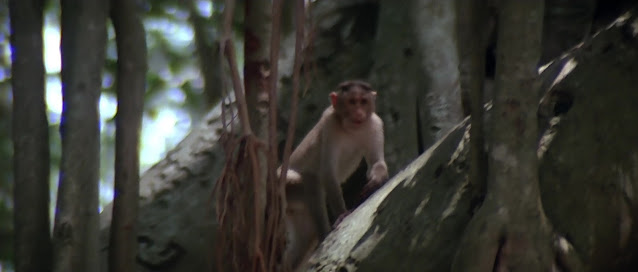
There are other little things in the two films. In Khal Nayak, when Ganga goes with Ballu during Palki Mein Hoke Saawar Chali Re, she drops her ring, hoping that someone will give them to Ram, just as Sita threw her jewelry in Ramayana. When Ram and Ballu fight in the jungle, a bunch of monkeys are shown, who represent the vaanar sena. Ballu feels angered by the events that happened to his sister like Raavan felt wronged by the treatment meted out to his sister Surpanakha by Ram and Lakshman. In Raavan, Dev finds Ragini's clothes when he tries to find Beera's hideout. He has his vaanar sena in the police, and Sanjeevani (Govinda) is the Hanuman. Beera decides to take revenge against Dev because his sister was also assaulted by his policemen. At one particular moment, a police inspector holds Beera's sister by the nose, replicating the events from Ramayana.
In Khal Nayak, Ballu's grandfather was a freedom fighter. His father, too, followed the principled path of honesty. But Ballu and his family remained poor, with no opportunities to climb the social mobility ladder. At one point, he is so frustrated that he even throws mud on his grandfather's name on the road sign outside his house. Therefore, Ballu joins Roshi Mahanta's business as he wants to become rich. He is an advocate of capitalism, but being rich was considered to be evil in that era. Khal Nayak tries to bring him towards the path of nationalism and becoming a good Indian. In Raavan, Beera and other villagers took to arms because of state brutality against them. They have shades of Maoist ideology as they carry out planned attacks against the state. Beera is the leader of Lal Mati, which hints that the soil is controlled by the Maoist party. Khal Nayak gives a path of redemption to Ballu, while Raavan treats Beera harshly when he is killed. 
While Khal Nayak and Raavan are both fascinating films, especially in their treatment of Raavan, I find Khal Nayak to be a superior film. Khal Nayak comments on many other things and seems a little ahead of time. It depicts nature-versus-nurture conflict and the role of parents in making a criminal. When Ballu was a young kid, he used to steal pencils in school. When Roshi Mahanta comes to bribe Ballu's father on Diwali, Ballu steals some crackers from the said bribe. He always had these criminal instincts, but his mother protected him, further developing them. His mother accepts her role in making him a criminal. In another scene towards the end, Ballu's mother goes to a church, hoping that Ballu is hiding there. She questions the church's priest if he has seen her son. The priest asks her about Ballu's appearance. Arti looks around, points towards the painting of Jesus Christ with his long hair, and tells the priest that Ballu looks like Jesus. Ballu, too, has long hair. In this sense, Khal Nayak also likens Ballu to God. The father tells her that maybe her son has lost his way, and he will soon be back. Ballu did lose his way in life when he went on the path of crime. But the most memorable thing for me about Ballu in the film appears during Khal Nayak Hoon Main song when he reveals how he lost his way in life. Hai pyaar kya mujhako kya khabar, bas yaar nafrat ke laayak hoon main. It is a stunning moment where a villain sings about love while wearing an eye-popping red heart. As we see, there is a heart in Raavan as well.
Dialogue of the Day:
"Hum jal rahe hai toh lag raha hai humse bada koi hai hi nahi. Jalan kismatvalon ko naseeb hoti hai."
—Beera, Raavan

Saturday, June 11, 2022

The Objects of Affection in Modern Love: Mumbai

Every Friday, the New York Times publishes a column called Modern Love. It has stories about love and life in the contemporary world. Anyone can submit a story and get published (after it manages to make it past the editors). More than the story, I like the writing in the columns—touching, moving, and grieving. Sometimes, just one thought makes the column insanely beautiful. I keep dreaming that I will get published in it someday. Two seasons of Modern Love have been released in the last few years that adapted some of these stories into a show. Neither of those seasons really worked for me. It is probably because the joy of feeling someone's writing gets lost in the cinematic depiction. The show was not bad at all, but there was not much in there that moved me. It is the same feeling I had while watching the Hindi adaptation of the series called Modern Love: Mumbai on Amazon Prime Video. There are six stories, each depicting a different form of love. However, the series is mainly dull, and it left me cold. The six stories have an object of affection, using which the writers bring out the different films' themes.
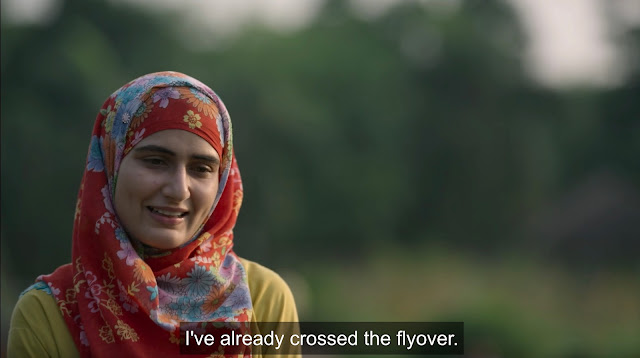
The theme of Shonali Bose's Raat Rani is love for the self. There is a Kashmiri domestic help Lalzari (Fatima Sana Sheikh), whose husband Lutfi (Bhupendra Jadawat) has left her. He used to drop Lalzari at her employer's home on a scooter, but now she rides a bicycle to work. It is a struggle for her when she has to cross a flyover on the way. She gets tired and exhausted. She even tries to jump off it at one point due to frustration. However, she huffs and puffs but manages to not give up for a few days. And, gradually, she learns to ride the cycle over the bridge. The film uses this flyover as a symbol of her emancipation. Like Rani (Kangana Ranaut) in Queen, she goes to thank her husband for leaving her because, otherwise, she would have been sleeping all her life. She repairs the roof of her house and makes it her own Taj Mahal. She starts a small business of her own. She learns to enjoy the ice cream on her own. Later, she also crosses the Sea Link, where two-wheelers are forbidden. It is in defiance of all the forced rules that society put on her. She has crossed the flyover, surpassing everything she was told not to do.
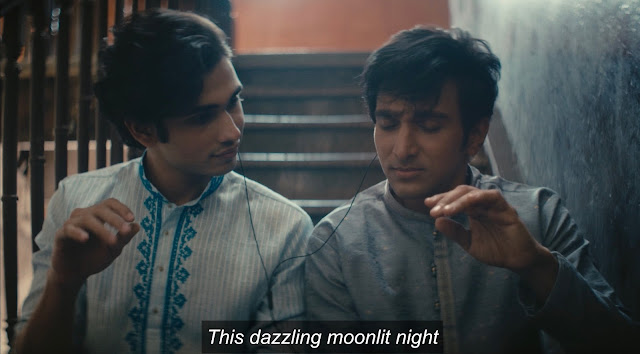
Same-sex love forms the crux of Hansal Mehta's Baai. There is Manzu (Pratik Gandhi), a gay Muslim man who comes back to visit his ailing grandmother Baai (Tanuja). He works in Goa and is engaged to a chef Rajveer (Ranveer Brar). Manzu is out to his family except for Baai, who does not know about his sexuality. The object of the affection in the film is music. Manzu has his first tryst with love over the staircases of Lucky Manzil while listening to music with a friend. Later, Manzu becomes a professional singer at a high-end resort in Goa, where he meets Rajveer. At one point, he tells Rajveer that music has no barriers. It equalizes everything. It was because of music that he met new people in life. It was music that helped him get a voice.
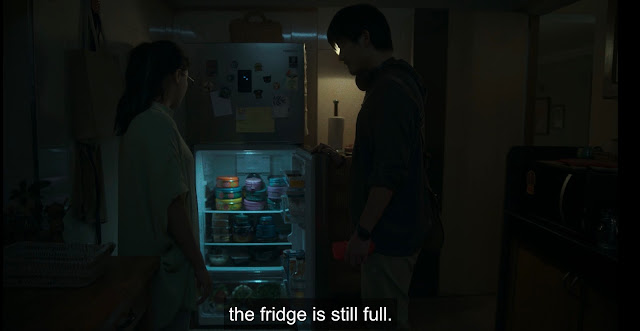
Vishal Bhardwaj depicts parental love in Mumbai Dragon. Set in the Chino-Indian community of Mumbai, the film depicts the story of Sui (Yann Yann Yeo), who cannot accept her son Ming's choices (Meiyang Chang). Ming is in love with a Gujarati girl Megha (Wamiqa Gabbi). Sui believes that Megha will turn her son vegetarian, and he will forget his roots. The film uses food to symbolize Sui's overbearing love for her son. She sends non-vegetarian food to his son daily, who lives as a paying guest with Megha in her father's house. The refrigerator has no space to keep more of it. It is a representation that her mother cannot let go of her son as she keeps filling it with her love. Ming calls it a cage where no one else except her is allowed to love him. Towards the film's end, Sui sends three boxes, and one of them has vegetable stir fry. Sui will probably never be able to let go, but she is at least trying to make some space for a vegetarian dish in her son's refrigerator.
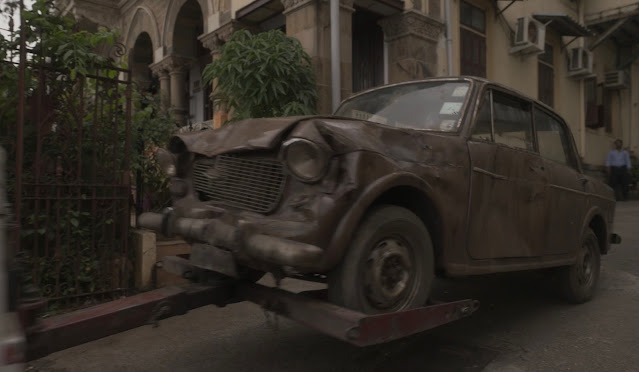
Alankrita Shrivastava's My Beautiful Wrinkles depicts the story of forbidden love between a young man Kunal (Danesh Razvi), and his elder tutor Dilbar (Sarika). Having shades of Shrivastava's Lipstick Under My Burkha, the film makes the point that age is no bar for love. Kunal fantasies about Dilbar, who is initially disturbed when she learns about it. However, they gradually accept their fantasies for each other and continue to remain friends. The object of affection in this film is an old car owned by Dilbar's lover Iqbal, who tragically died in a car accident. Dilbar never sold the car and kept it with her all through the years, even though it was idling away. Dilbar takes inspiration from a former classmate's book Confessing Your Way To Happiness, gets rid of the car, and learns to move on in life.
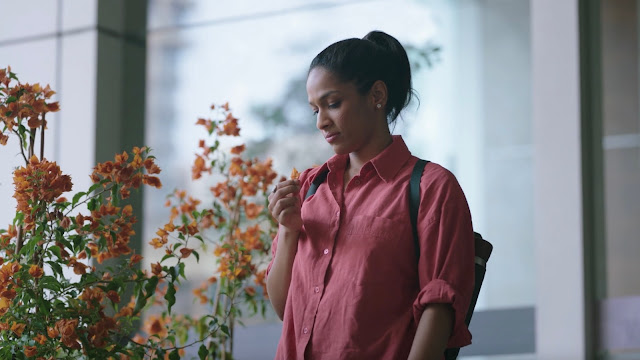
In Dhruv Sehgal's I Love Thane, there is the theme of young love. Saiba (Masaba Gupta) is a landscape architect, tired of meeting unlikeable guys on dating apps. She meets Parth (Ritwik Bhowmik), who works in the government office. Parth never left Thane and wants to make it an idyllic place for its residents. He is not interested in any social media websites, such as Instagram. The film uses artificial trees as Saiba's quest to look for something real. "Nobody cares if it is real or synthetic," a client tells her. Saiba's dating profile says, "Keep it real." Parth wants to make the park in Thane because "Life breathes here." In the end, Saiba finds someone real and honest in Parth.
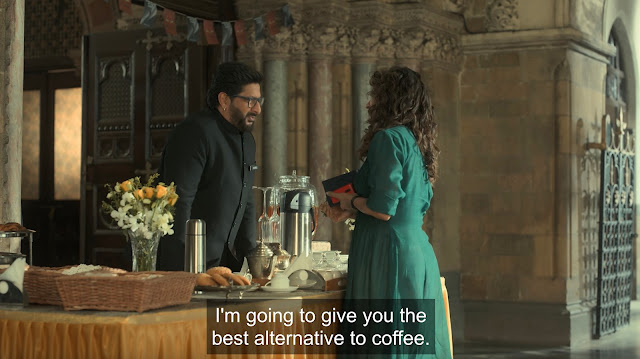
In Nupur Asthana's Cutting Chai, marital love takes center stage where a homemaker Latika (Chitrangada Singh), struggles to finish her first novel due to the sheer amount of household work. Her husband, Daniel (Arshad Warsi), does not really support her. True to her profession of being a writer, Latika imagines the different scenarios in her head if she had chosen to build a life with her ex-boyfriend Vikram (Siddhant Karnick). Using cutting chai, the film belabors the point that our chances and choices make us who we become in life. Latika had met Daniel at a function where he offered her cutting chai instead of bland coffee. Her life changed after the encounter. The film also uses trains to make its point. Latika does not get on the train with Vikram, but she rides the train (of life) with Daniel. She might think about her past but does not regret her choices. She might struggle to give a story to her characters, but it does not mean she will eliminate them from her life.
I wonder if Modern Love: Mumbai did not work for me because it is too real. Everything is too subtle. I love the joyful romances. I love the star-crossed doomed lovers. I love the reincarnated lovers. Nobody is making good romantic films these days. Yes, reality makes us grounded, but sometimes, we all need to escape to a world that is larger than life.

Dialogue of the Day:
"Pyaar ko rokna bhi toh nafrat phailane jaisa hai."
—Shaheen, Baai (Modern Love: Mumbai)